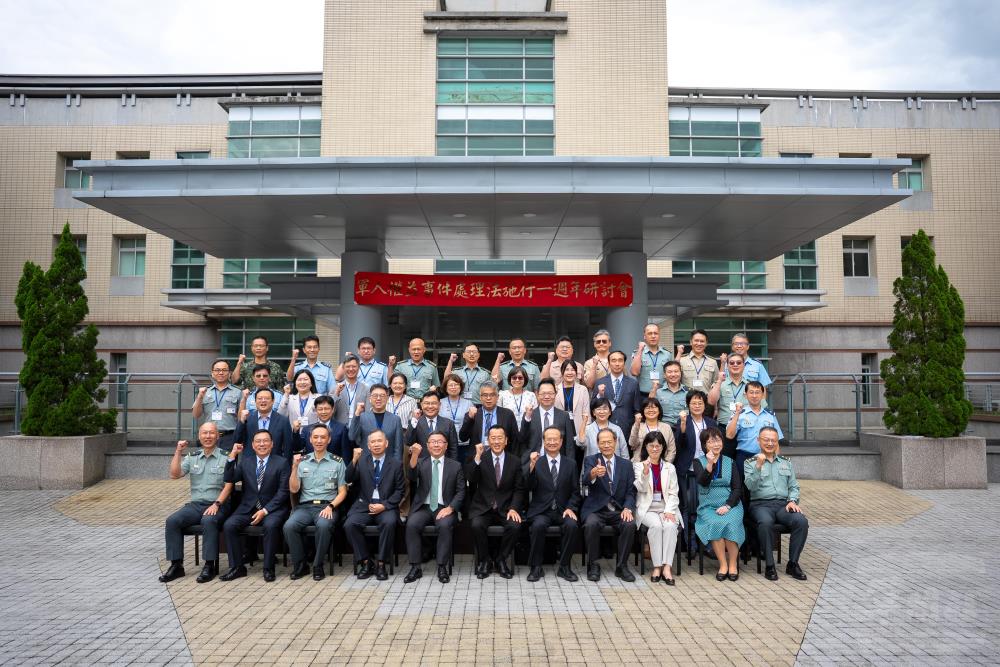
A symposium marking the first anniversary of the implementation of the Servicemember Relief Act was held today at the Northern Military Judicial Complex. In his remarks, Minister of National Defense Wellington Koo Li-hsiung said the new system integrates the internal remedies previously available through administrative appeals, complaints, and servicemember rights protection procedures. It places disputes concerning servicemembers’ rights on a statutory footing and provides for their adjudication and review by the Service Tribunal of the High Court of Military Justice and Servicemember Rights Protection Committee through objective, professional, and efficient procedures prescribed by law. By protecting servicemembers’ rights while maintaining military discipline, the system represents an important milestone in the Armed Forces’ progress toward a human rights-based legal framework.
The Servicemember Relief Act has now been in effect for one year since its implementation on August 6, 2025. The Ministry’s Department of Legal Affairs invited former Judicial Yuan President Hsu Tzong-li to deliver a keynote address. Minister without Portfolio Lin Ming-hsin and Judicial Yuan Department of Administrative Litigation and Discipline Director-General Kuo Shu-chen also attended. Participants exchanged views on the servicemember rights protection system and its practical implementation, with the aim of continuing to improve the Armed Forces’ rights-relief mechanisms.
Minister Koo noted that during the system’s first year, the Servicemember Rights Protection Committee has handled petitions for deliberation and re-appeals filed by servicemembers. They have also identified specific deficiencies in flawed administrative dispositions, regularly compiled and analyzed the reasons such dispositions were revoked, and proposed improvements. Through regional forums and professional exchanges, the committees have helped improve the quality of administrative dispositions issued by military units and enhance public confidence in military administration. In addition to hearing administrative litigation concerning disciplinary measures and discharge for unfitness for active service, the Service Tribunal handles compulsory enforcement cases involving the recovery of publicly funded benefits. Military judges have also continued strengthening exchanges with judicial authorities to enhance their professional knowledge and adjudicative capabilities.
Minister Koo outlined three expectations for the military legal personnel attending the symposium: to become “a source of support for commanders,” “an advocate for servicemembers,” and “the most professional team.” He emphasized that administration in accordance with the law is a fundamental requirement of a modern military. Military legal personnel should provide commanders at all levels with sound legal advice to ensure that all policies and measures are implemented lawfully. They should also proactively assist servicemembers and their families with legal issues, serving them with professionalism and dedication so that personnel can focus on combat readiness and training without undue concern. Military legal personnel should also continue developing expertise in legal affairs, administrative appeals, procurement, personnel affairs, disciplinary measures, human rights in the military, legal and disciplinary investigations, military operations, and other fields.
Finally, Minister Koo thanked the Executive Yuan, Judicial Yuan, and other government agencies and ministries for assisting the Ministry in implementing the new system under the Servicemember Relief Act. He emphasized that the Armed Forces would continue upholding due process, consolidating the statutory foundations of remedial mechanisms for protecting servicemembers’ rights, and demonstrating its determination to protect human rights within the military.