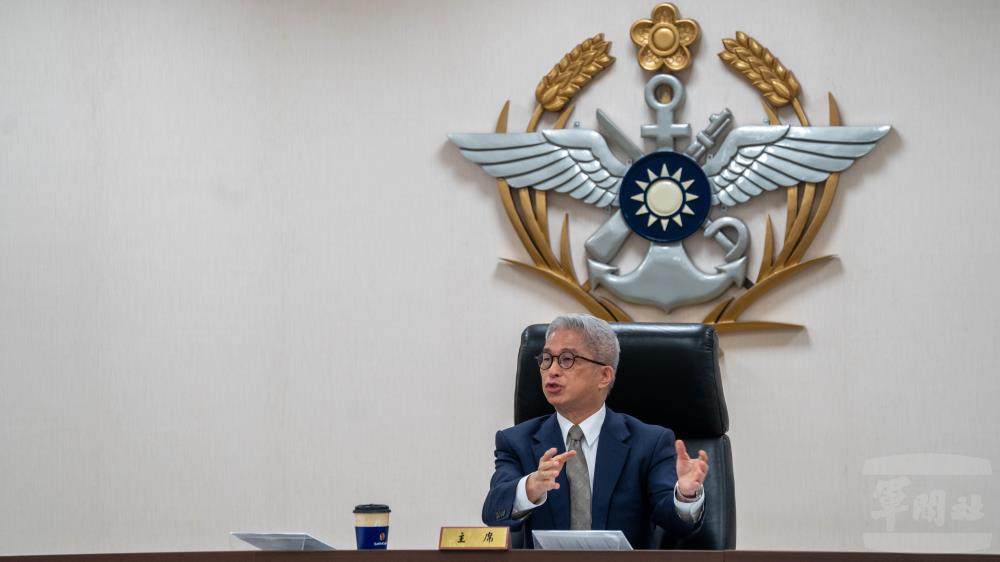
The Ministry of National Defense held its fourth preparatory meeting for the Government Defence Integrity Index (GDI) external expert assessment today at Bo’ai Camp. Chaired by Vice Minister of National Defense Hsu Szu-chien, the meeting brought together leading domestic experts in government ethics and integrity. Through external assessment and internal-external collaboration, the Ministry hopes to gather a broad range of recommendations, enhance transparency and accountability in defense governance, and align its practices with current international trends in integrity and good governance.
Vice Minister Hsu explained that the GDI comprehensively assesses countries across five risk areas: political affairs, finance, personnel, military operations, and procurement. It is also an important performance indicator under the Executive Yuan’s “National Integrity Building Action Plan.” Taiwan has participated in three previous GDI assessments and received a B rating, indicating a low risk of corruption, on each occasion. In the most recent assessment, New Zealand was the only one of the 86 countries evaluated to receive an A rating, while Taiwan was the only Asian country to rank among the top 10. These results demonstrate the resilience of Taiwan’s defense institutions and their ability to support the development of a robust and credible deterrent force.
Integrity is a vital foundation of national defense, Vice Minister Hsu emphasized. In recent years, Taiwan has steadily advanced defense investment, indigenous defense capabilities, and related reforms. The Ministry has also continued promoting integrity education throughout the Armed Forces, strengthening internal and external controls, and improving integrity governance. Participation in the global GDI assessment allows the Armed Forces, through the collective efforts of government agencies, scholars, experts, and nongovernmental organizations, to demonstrate a law-abiding, pragmatic, and integrity-driven military culture. This further strengthens public confidence in force development, combat readiness, major exercises, and disaster prevention and relief preparations.
Vice Minister Hsu also noted that “gender equality” would be introduced as a new topic in the forthcoming GDI assessment. The Ministry has progressively increased the number of women serving as volunteer personnel, continued advancing gender mainstreaming and equality, and worked to create a respectful and inclusive workplace.
In closing, Vice Minister Hsu stressed that Taiwan’s strong GDI results had not been achieved overnight. They reflected the combined efforts of government officials, scholars, experts, and every member of the Armed Forces. Their dedication continues to drive the Ministry’s progress. He invited the external scholars and experts attending the meeting to work with the Ministry during the ensuing discussions to further improve its systems and ensure that unlawful conduct, opportunistic wrongdoing, infiltration, and sabotage have no place to hide.