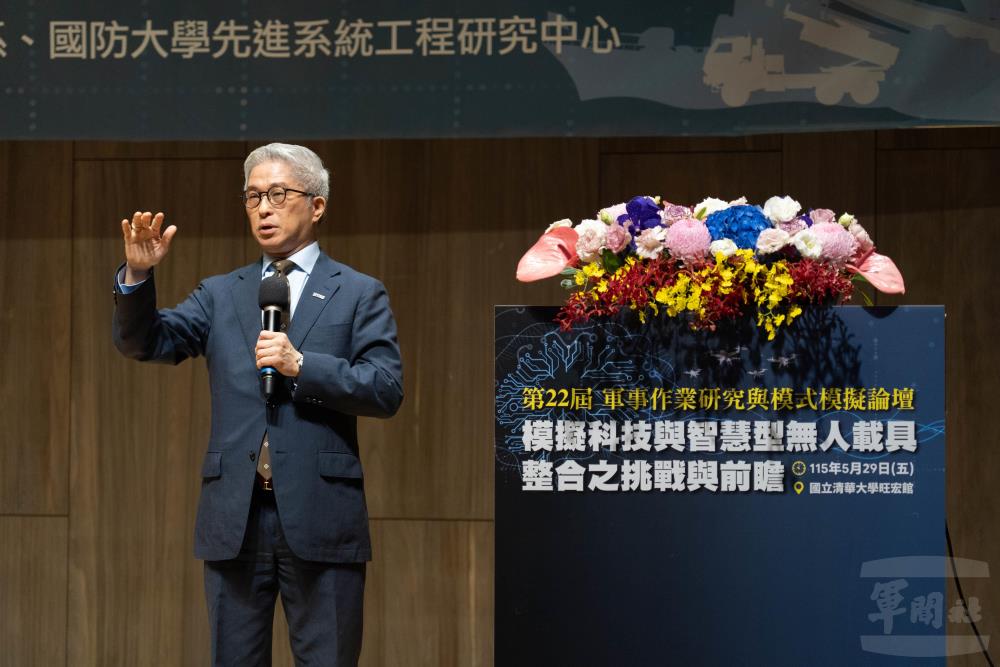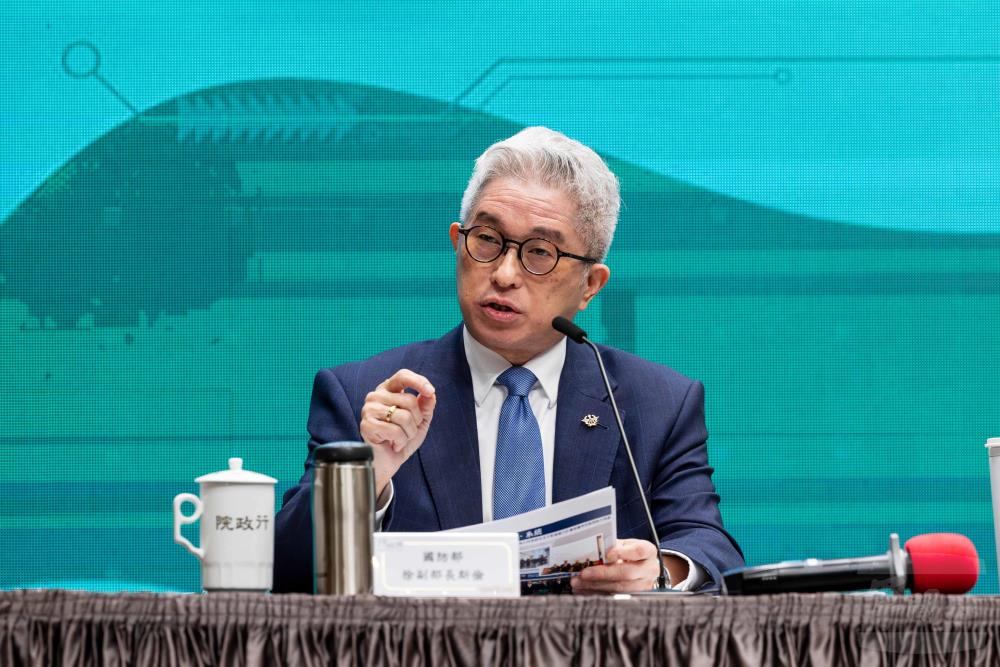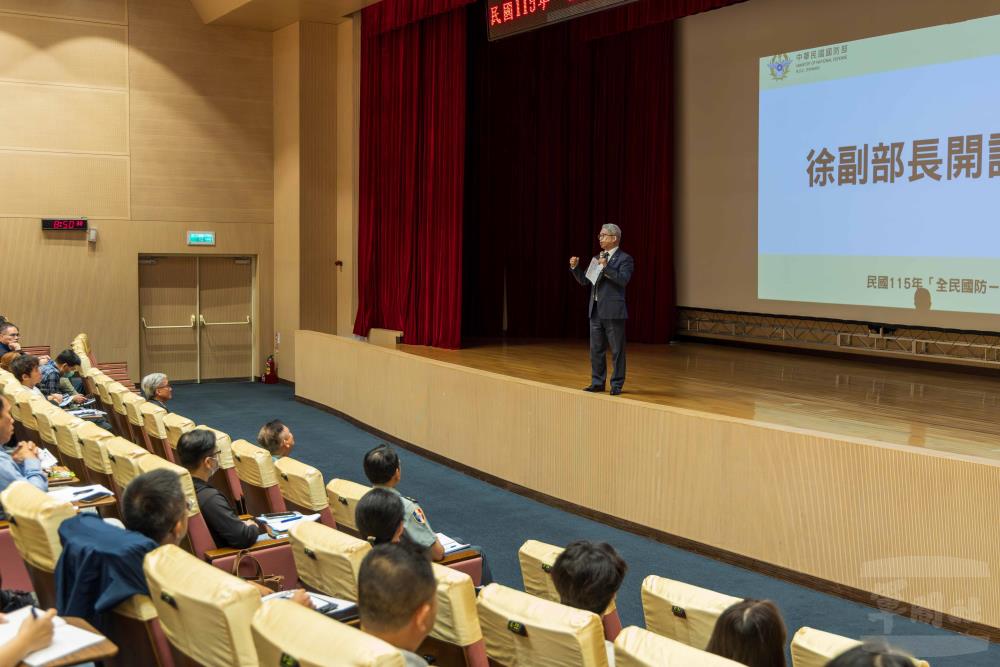
Vice Minister of National Defense Hsu Szu-chien presided today over the Republic of China 2026 “All-Out Defense Education – Social Education” Seed Instructor Training Workshop. On behalf of Minister Wellington Koo Li-hsiung, he welcomed participants from various sectors and encouraged them to strengthen teaching capabilities through professional study, expand the foundation for promoting all-out defense education, build consensus among the public, and enhance Whole-of-Society Defense Resilience.
The workshop was held this morning at the Bo’ai Camp. All-out defense affairs personnel recommended by various county and city governments, along with scholars from civil society, participated in the training. The curriculum covered topics such as “National Defense Policy,” “International Situation,” “Media Literacy,” and “All-Out Defense.” Experts and scholars including Director Su Tzu-yun and Researcher Lee Che-chuan from the Institute for National Defense and Security Research were invited to deliver special lectures and analyses. In addition, the Department of Strategic Planning explained the “Special Act on Defense Procurement,” enabling participants to understand its importance to overall national defense.
Vice Minister Hsu stated that, facing the future task of promoting all-out defense education, seed instructors had to clearly convey national defense concepts to the public, explaining “why we fought and for whom we fought” — that was, to safeguard the homeland, protect their way of life, and ensure the safety of the 23 million people in Taiwan, Penghu, Kinmen, and Matsu, while clearly recognizing the current security challenges.
Vice Minister Hsu pointed out that the war in Ukraine had shown that national defense did not rely solely on military combat power; the key had lain in the will of the entire population to defend the country. Only through the joint participation of the whole society could overall defense strength be formed. He also emphasized that war depended not only on weapons and equipment but also required strong will and resilience to effectively respond to various challenges.
Vice Minister Hsu further explained that the forms of modern warfare had evolved rapidly, and unmanned systems had become a key element in operations. Taiwan had possessed advantages in the relevant industry supply chain, particularly holding a critical position in the “non-red supply chain,” and should continue to strengthen development capabilities. At the same time, as Taiwan had been located at the core of the First Island Chain, it had needed to enhance overall defense capabilities in response to changes in the regional situation.
Regarding the special defense budget, Vice Minister Hsu pointed out that the relevant planning had been carefully formulated based on overall operational requirements and had covered areas such as strike firepower, intelligence, surveillance and reconnaissance systems, command and control operations, and sustained combat capabilities. He emphasized that all military buildup elements had to be constructed holistically and work in coordination to effectively enhance national defense combat power.
Vice Minister Hsu stressed that the allocation of the special budget had been based on overall national defense development needs and coordinated with domestic industry capabilities. Through stable planning and long-term investment, it had strengthened defense self-reliance and supply chain resilience, ensuring the continuous advancement of military buildup and readiness.