- Search
Search
Search " Live-Fire" ,Match:13 results
-
 Minister Koo: Presidential Inspection Will Not Affect Han Kuang Exercise Objectives; No Live-Fire Drills Planned on Taiwan ProperMinister of National Defense Wellington Koo Li-hsiung spoke to the media today before attending the second joint meeting of the Legislative Yuan’s Economics, Foreign Affairs and National Defense, and Finance Committees. He said that President Lai Ching-te’s inspection of military units was intended to gain an understanding of preparations for exercises and training and to encourage service members. The visit would not affect the scheduled activities or validation objectives of the Han Kuang Exercise. The Armed Forces currently have no plans to conduct live-fire drills on Taiwan proper and will not arrange any specifically for the presidential inspection. Responding to a question about whether President Lai’s inspection would run counter to the original purpose of military training, Minister Koo explained that the exercise uses realistic training under conditions resembling actual combat to strengthen the Armed Forces’ joint operational capabilities. The President’s visit would neither disrupt routine training nor alter any scheduled activities or validation objectives. Minister Koo also stressed that media reports claiming that the Armed Forces would conduct live-fire drills on Taiwan proper were inaccurate. Although the President’s inspection itinerary was still being adjusted, no live-fire activities would be specially arranged. Regarding a report by the National Audit Office noting that NT$3.7 billion in maintenance funding had been allocated for the Air Force’s AT-3 trainer aircraft despite their impending retirement, Minister Koo explained that the report addressed expenditures from last year. The AT-3 fleet would not begin to be phased out until July this year, so expenses for contractor-provided maintenance and other support remained necessary. Maintenance costs will decline as the aircraft are gradually withdrawn from service. Responding to concerns raised in the National Audit Office’s final accounts report that the Armed Forces’ counter-drone systems do not cover the 5.1 GHz frequency band or address emerging threats such as fiber-optic-controlled and AI-enabled autonomous drones, Lieutenant General Sun Li-fang, Director of the Administration Office of the Minister and Ministry spokesperson, explained that the National Chung-Shan Institute of Science and Technology launched its current counter-drone system project in 2021. The system was designed primarily to counter commercial drones operating on the 2.4 GHz, 5.8 GHz, 1.2 GHz, and 1.5 GHz frequency bands. After China introduced the use of the 5.1 GHz band in 2023, NCSIST planned a system upgrade to incorporate that band into its detection and countermeasure coverage. Lieutenant General Sun further explained that portions of the S-band used by the BeiDou Navigation Satellite System are primarily employed for transmitting and receiving short messages and are not among the frequency bands currently used primarily by drones. These frequencies are also important to Taiwan’s domestic 4G and 5G mobile communications. Under National Communications Commission regulations, they may not be used by general-purpose/civilian drones and were therefore not included in the current counter-drone system. Fiber-optic-controlled and AI-enabled autonomous drones have emerged only in recent years and were not included in the original project. The Ministry is now working through its Defense Innovation Unit to identify mature domestic and overseas suppliers while combining commercial solutions with indigenous research and development to plan future countermeasure systems. Addressing foreign media reports that the PLA had constructed replicas of the Presidential Office Building, government agencies, naval bases, and other facilities for simulated attack or occupation training, Lieutenant General Sun said that the facilities and related PLA activities were within the scope of the Armed Forces’ intelligence, surveillance, and reconnaissance. Following the principle of preparing for the broadest range of enemy capabilities, the Ministry is developing appropriate responses to possible PLA operations against Taiwan while continually strengthening force development, combat readiness, and training. Lieutenant General Sun emphasized that the reports underscored the severity of the current threat. The Armed Forces will respond prudently and continue enhancing all aspects of combat readiness. He also called on the public to support both the annual defense budget and the special defense budget so the military can secure the resources required to improve its training, readiness, and defense capabilities. Regarding the recovery of Taiwan’s share of F-16 development costs, Lieutenant General Sun explained that under US foreign military sales procedures, the maximum recoverable amount of R&D cost-sharing reimbursement under the “Peace Phoenix Rising Program” for the F-16 Block 20 is US$319 million. Approximately US$245 million has been recovered to date. The Air Force will continue using project management mechanisms and regular meetings to monitor other countries’ participation in the program and the reconciliation of foreign military sales accounts, while seeking the R&D cost-sharing reimbursement to which Taiwan is entitled.2026/07/27
 -
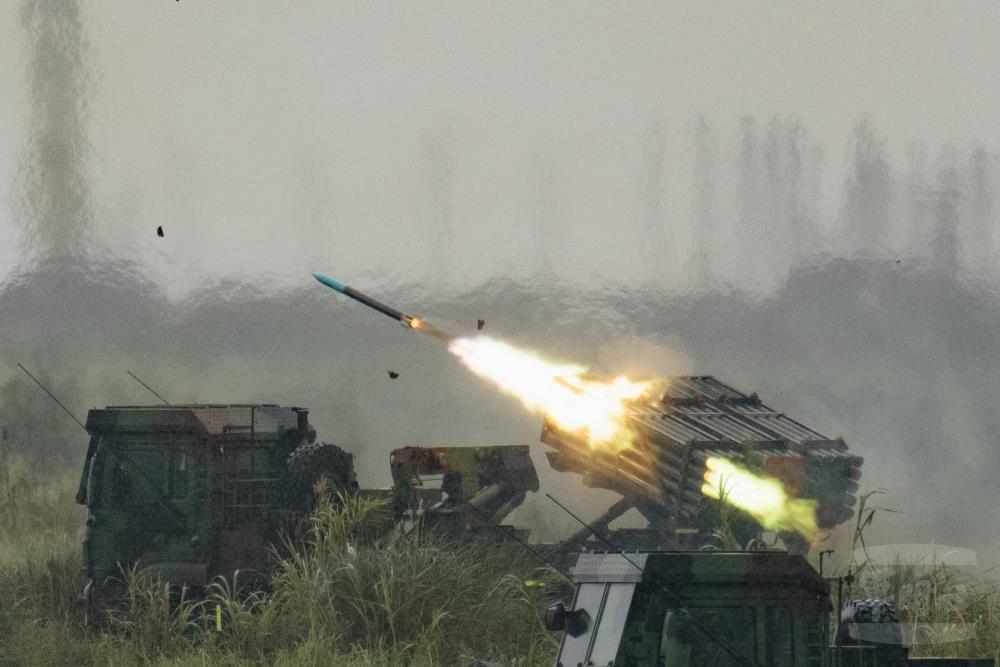 Fifth Theater of Operations Conducts Heavy Artillery Live-Fire Exercise, Demonstrates Strong Defensive CapabilitiesThe Fifth Theater of Operations conducted a heavy artillery live-fire exercise today around the northern and southern banks of the Dajia River estuary in Taichung. The exercise integrated forces from the 58th Artillery Command, the 234th and the 586th Combined Arms Brigade. Conducted with troops and live ammunition, the exercise demonstrated the Armed Forces’ rigorous training standards and unwavering commitment to safeguarding national security. According to the Fifth Theater of Operations, the exercise featured six types of organic weapons systems, including the Thunderbolt-2000 Multiple Launch Rocket System (MLRS), M109A2 self-propelled howitzers, M110A2 self-propelled howitzers, 155mm howitzers, 120mm mortars, and TOW missile carrier vehicles armed with TOW 2A and TOW 2B missiles. The drill was conducted simultaneously across a 20-kilometer-wide front and eight separate firing positions. Through realistic combat scenarios, participating units validated joint-fire effectiveness and the operational kill chain. A major highlight of the exercise was the Thunderbolt-2000 MLRS, an indigenous system developed by the National Chung-Shan Institute of Science and Technology (NCSIST), which conducted live-fire firing missions within the operational area for the first time in seven years. The exercise simulated enemy amphibious forces attempting to invade central Taiwan. During the initial phase, the Thunderbolt-2000 MLRS conducted area bombardment against simulated enemy forces landing on Baishatun Beach. Subsequently, M109A2 and M110A2 self-propelled howitzers, together with 155mm howitzers, delivered concentrated fires against key objectives, effectively disrupting and degrading enemy combat capabilities at Jianan Beach. TOW missile carrier vehicles and 120mm mortars then continued suppressive fire operations against advancing enemy forces, successfully accomplishing all assigned fire missions. The Fifth Theater of Operations emphasized that the exercise integrated heavy artillery and newly fielded weapons systems into a defensive operations scenario conducted directly within the designated operational area, thereby enhancing the realism and effectiveness of combat-oriented training. Through the exercise, service members further reinforced the principle that “everywhere is a battlefield and training is continuous,” while strengthening command and control capabilities and implementing the core concepts of “new training, new thinking, new equipment, and new technology.” The exercise also contributed to enhancing overall defensive combat readiness and operational effectiveness.2026/06/09
 -
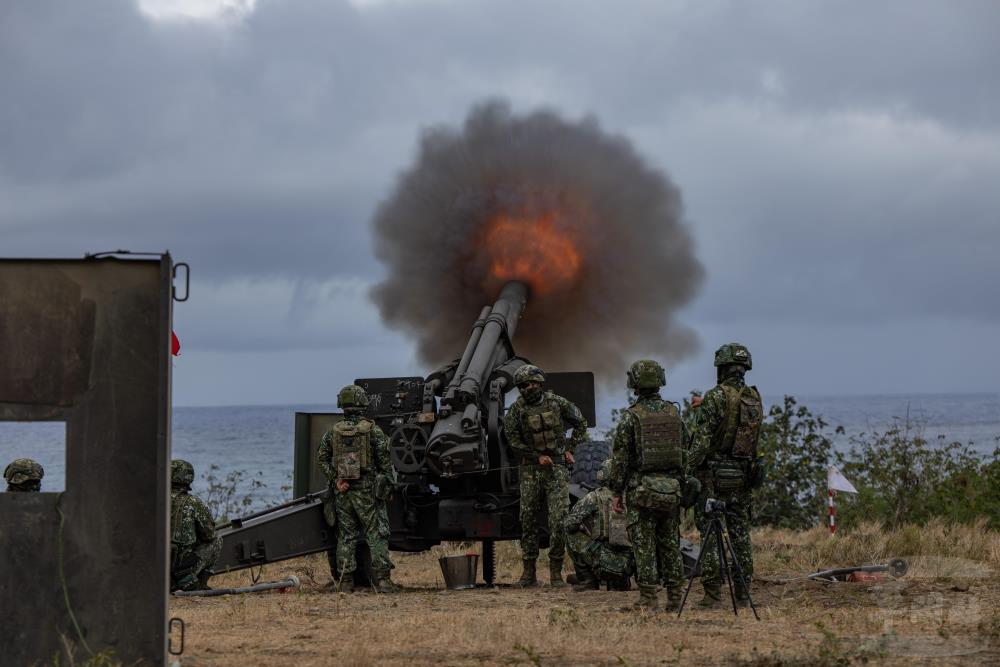 Fourth Theater of Operations Demonstrates Determination to Defend the Homeland Through Heavy Artillery FiringThe Armed Forces' Fourth Theater of Operations conducted its annual Heavy Artillery Maintenance Firing Exercise at the Fonggang North Position on June 4. Soldiers from the Artillery Battalion of the Army's 333rd Combined Arms Brigade operated organic artillery systems and executed firing missions under simulated combat conditions. The exercise verified the readiness and operational effectiveness of weapons and equipment while demonstrating the military's commitment and determination to defend the homeland. During the exercise, the unit first completed artillery deployment and pre-firing preparations. Following a simulated enemy threat, the Fire Direction Center issued firing orders in accordance with requirements from the Joint Firepower Coordination Center. Using 155mm howitzers, the unit conducted three training tasks in sequence: harassing and interdiction fire, destructive fire against key objectives, and counterattack fire. In addition to verifying the operational performance of the artillery systems, the Heavy Artillery Maintenance Firing Exercise enhanced the unit's proficiency in fire direction, surveying, observation, communications, and artillery drill through live-fire training. The exercise achieved its objective of strengthening service members' military competence and professional skills.2026/06/05
 -
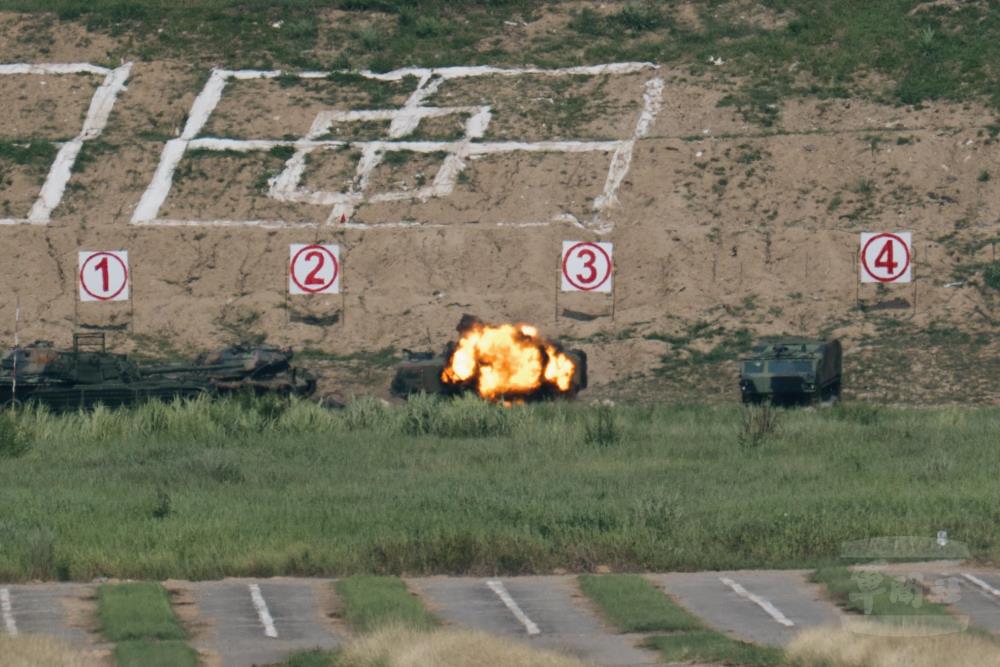 Attack Drones Demonstrate Asymmetric Warfare Capability in Live-Fire ExerciseThe Army Unmanned Systems Training Command conducted a live-fire exercise featuring First-Person View (FPV) and munition-dropping drones on June 3. General Lu, Kun-xiu ,Chief of Army, personally supervised the training. The exercise simulated realistic battlefield conditions and conducted precision strikes against various armored vehicles and enemy positions. The drill fully demonstrated the military’s ability to integrate modern warfare trends and employ effective asymmetric warfare capabilities. The Command stated that the live-fire exercise drew upon international combat experience from recent conflicts, including the Russia–Ukraine War. It adopted a development approach for attack drones centered on low cost, high efficiency, and modularity. The exercise was divided into multiple training scenarios, including single-drone operations and dual-drone coordinated strike tactics. The training aimed to familiarize commanders and drone operators with the complete kill chain process of reconnaissance, target designation, tracking, target acquisition, engagement, and battle damage assessment. It also served to verify the operational effectiveness of integrating domestically developed explosive payload kits with unmanned aerial systems. During the FPV drone exercise, operators wore VR goggles and controlled the drones through a first-person perspective supported by real-time video transmission. They demonstrated a high level of proficiency in flight control. The drones were equipped with 3.5-inch high-explosive anti-armor warheads and executed frontal and flank attacks against CM12 tanks, CM24 armored ammunition carriers, and High Mobility Multipurpose Wheeled Vehicles (HMMWVs). The operators conducted dive attacks from optimal strike angles to engage the designated targets. In the munition-dropping drone training scenario, the exercise evaluated damage effects against enemy wheeled vehicles and dispersed infantry formations. The drones demonstrated excellent loitering capability and optical targeting performance. After ascending to designated altitudes, the operators locked onto the tops of CM12 tanks, including those equipped with cage armor, as well as HMMWVs. They then released 6-inch fin-stabilized high-explosive anti-armor munitions with precision, inflicting devastating damage on enemy personnel and equipment. During his remarks, General Lu stated that precision strikes on the battlefield were never achieved overnight. He noted that successful examples observed in international conflicts had resulted from hundreds or even thousands of failures and extensive training. General Lu emphasized, “Flight operation skills are the most fundamental requirement. Just as tactical discussions are meaningless if a shooter cannot accurately fire a pistol, advanced tactics and strategies are equally ineffective if drone operators lack proficiency and precision.” He added that the impressive attack angles demonstrated during the exercise reflected the operators’ rigorous daily training. The Command emphasized that, in response to current threats and future operational environments, offensive and defensive drone operations had become a core area of continuous tactical development. The exercise not only enabled operators to verify flight parameters under live-munition conditions but also effectively strengthened their ability to perform under pressure in realistic combat environments.2026/06/04
 -
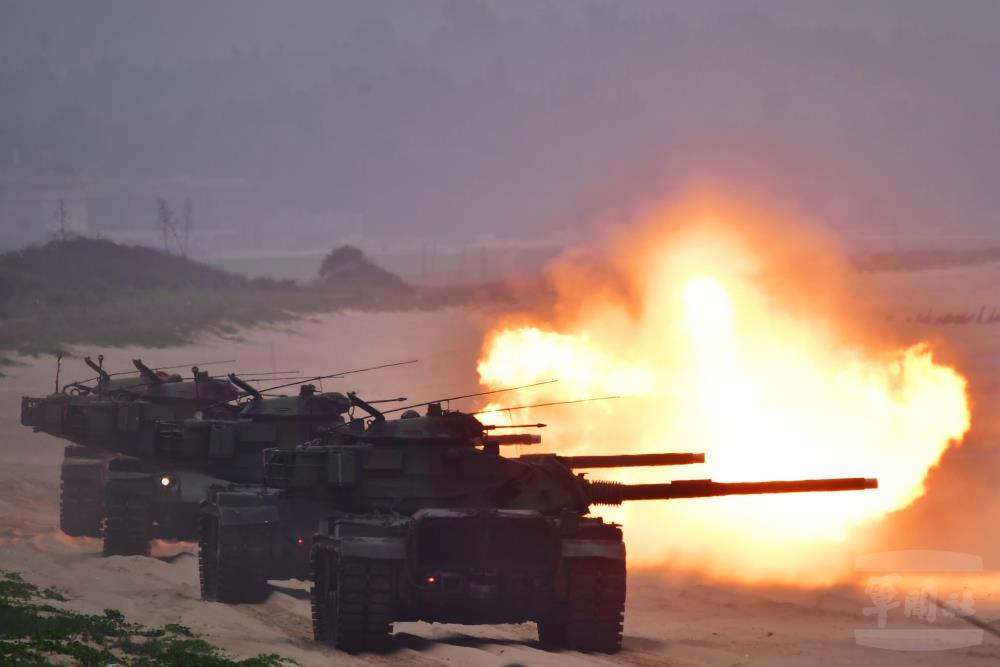 Kinmen Defense Command Conducts Taiwu Exercise – Live-Fire Shooting Demonstrates Solid Combat PowerThe Army’s Kinmen Defense Command conducted the second-quarter “Taiwu Exercise” today. Officers and enlisted personnel completed tasks such as entering positions and combat in the main position zone in accordance with orders. The Kinmen Garrison Battalion deployed M60A3 tanks, CM21 armored vehicles, and Javelin missiles, in coordination with the Kinmen Defense Command’s mixed artillery battalion’s 8-inch howitzers, 155mm cannons, and other organic weapons to conduct live-fire shooting. They also used the “Team Awareness Kit (TAK)” to strengthen command and control resilience, and employed “unmanned aerial vehicles” for target reconnaissance and battlefield control, thereby enhancing joint arms combat effectiveness. To validate the unit’s ability to respond to multiple threats, the Kinmen Garrison Battalion’s tank battalion, mechanized infantry battalion, and anti-armor company, in coordination with the long-range strike firepower of the mixed artillery battalion, simultaneously conducted the quarterly “Taiwu Exercise” live-fire training from different locations. Through the method of “real troops, real locations, and real ammunition,” they executed key area fire destruction and limited target attack tasks, thereby improving the officers and enlisted personnel’s ability to respond and defeat the enemy. This exercise also invited local leaders, gentry, and police representatives from Kinmen County to witness the results of the military’s rigorous training. After the command post issued the situation, 8-inch howitzers, 155mm cannons, and 120mm mortars in the positions first conducted “key area fire destruction.” This was followed by the main position zone combat phase. Officers and enlisted personnel conducted “Javelin missile” live-fire shooting for the first time in this exercise area, simulating strikes against enemy forces advancing from the sea and covering the maneuver of armored vehicles. Finally, M60A3 tanks and CM21 armored vehicles carried out limited target attacks to block and annihilate enemy forces attempting beach landings. In this Taiwu Exercise, the Kinmen Defense Command, based on composite scenarios, dispatched armored vehicles for maneuver and used Javelin missiles to precisely lock onto sea targets, combining with the intense firepower of artillery units to successfully complete the mission, demonstrating the officers and enlisted personnel’s determination to defend the homeland and not yield an inch of ground.2026/05/13
 -
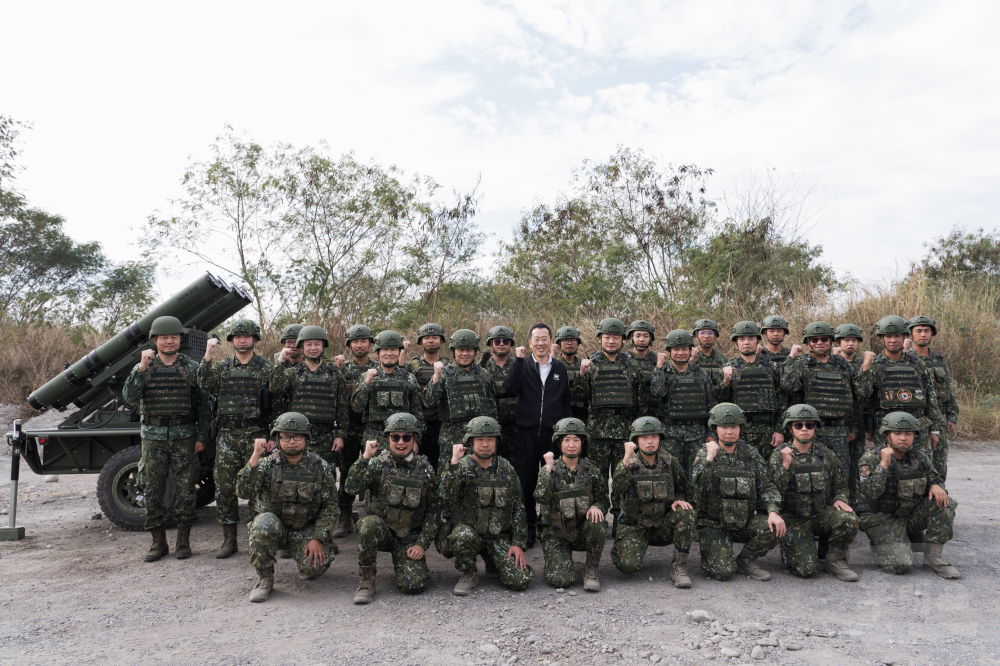 Ministry of National Defense: Minister Wellington Koo Li-hsiung Inspects Altius-600M Attack Drone Acceptance Live-Fire ExerciseAltius-600M Attack Drone Conducts First Live-Fire Shooting—Minister Koo Visits the Site to Commend Personnel Minister of National Defense Wellington Koo Li-hsiung inspected the “Altius-600M Attack Drone Acceptance Live-Fire Exercise” today (December 18), commending the personnel’s dedication and efforts in training and encouraging everyone to continue implementing combat readiness preparations, demonstrating the determination to defend the homeland. In the morning, accompanied by Chief of Army Headquarters General Lu and relevant officers, Minister Koo inspected the live status of the attack drone exercise, received a mission briefing, understood the unit’s firing situation, and commended the exercise personnel for their hard work. This live-fire shooting was conducted around the Zhuoshui River, performed by the Unmanned Aircraft System Training Center and various artillery commands, verifying unit operational procedures and overall command-and-control effectiveness. The exercise first conducted performance testing with training drones to confirm the firing airspace and target area environment, then proceeded with live-fire drones to validate personnel proficiency in equipment operation and troubleshooting, as well as the effectiveness of system and command-and-control integration. After the exercise concluded, Minister Koo personally went to the site to commend the participating units, expressing appreciation for the personnel’s teamwork and demonstration of training results; he also expressed expectations that through post-exercise reviews and other measures, areas for improvement will be identified, combat readiness preparations will continue to be implemented, and the determination to defend the homeland and safeguard national security will be demonstrated.2025/12/18
 -
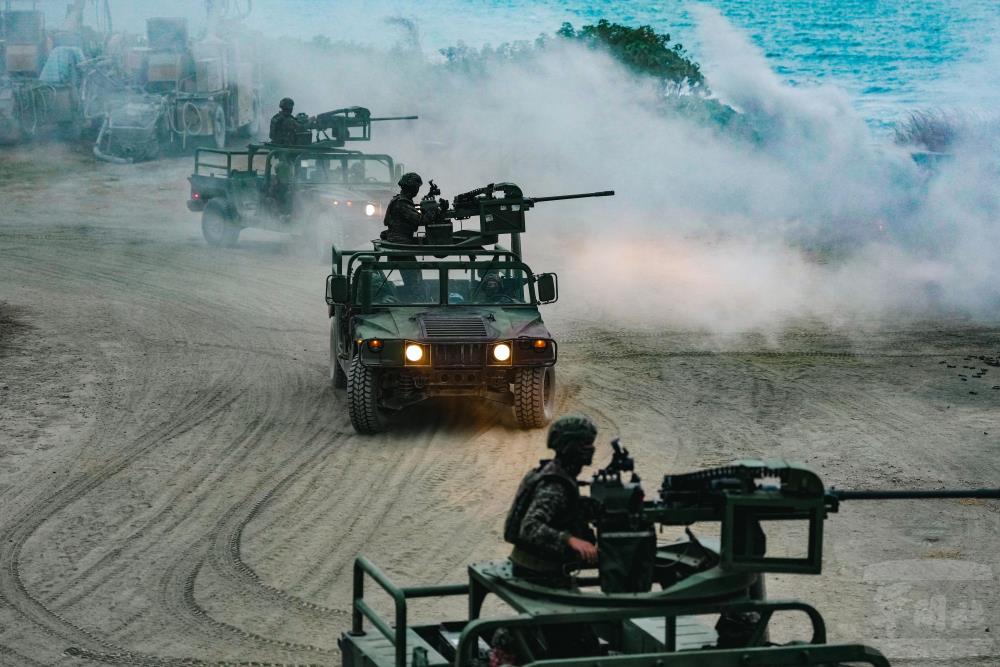 Marine Corps Conducts Live-Fire Exercise in Second Half of 2025 Operational Plan Drill – Enhancing Beach Defense Combat CapabilitiesTo strengthen beach defense combat capabilities, the Marine Corps Command conducted the “Second Half of 2025 Operational Plan Live-Fire Exercise” yesterday (November 4). Based on enemy threat situations and possible enemy actions, the exercise validated command, control, and communications; fire coordination; target acquisition and transmission; integration of the ICS communication system; logistics and maintenance; and command staff procedures. It integrated six units, including the air defense and guard group, to jointly execute situation response and live-fire drills, demonstrating coordinated combat capabilities and assessing unit combat readiness training results. The exercise was divided into different operational phases: “routine crisis management,” “pre-combat deployment,” “joint counter-landing,” and “coastal and beach combat.” Live firing involved ten types of light and heavy weapons, including 105mm howitzers, 40mm grenade launchers, 20mm cannons, and T74 machine guns. Combined with surveillance drones, it completed target acquisition and live-fire procedures, enhancing personnel proficiency in live-fire operations and command-and-control effectiveness. Notably, this exercise incorporated the Team Awareness Kit (TAK), utilizing real-time imagery and frontline surveillance data return to integrate battlefield intelligence and share it across endpoints, creating a common operational picture and improving unit coordinated combat capabilities. This comprehensive combat exercise not only trained each unit’s response effectiveness when facing maritime landing threats but also strengthened commanders’ real-time adaptability, fire coordination, position transition, and joint defense sector integration capabilities, enhancing overall joint combat and rapid reaction capabilities to ensure the security of maritime domains in the face of various threats.2025/11/05
 -
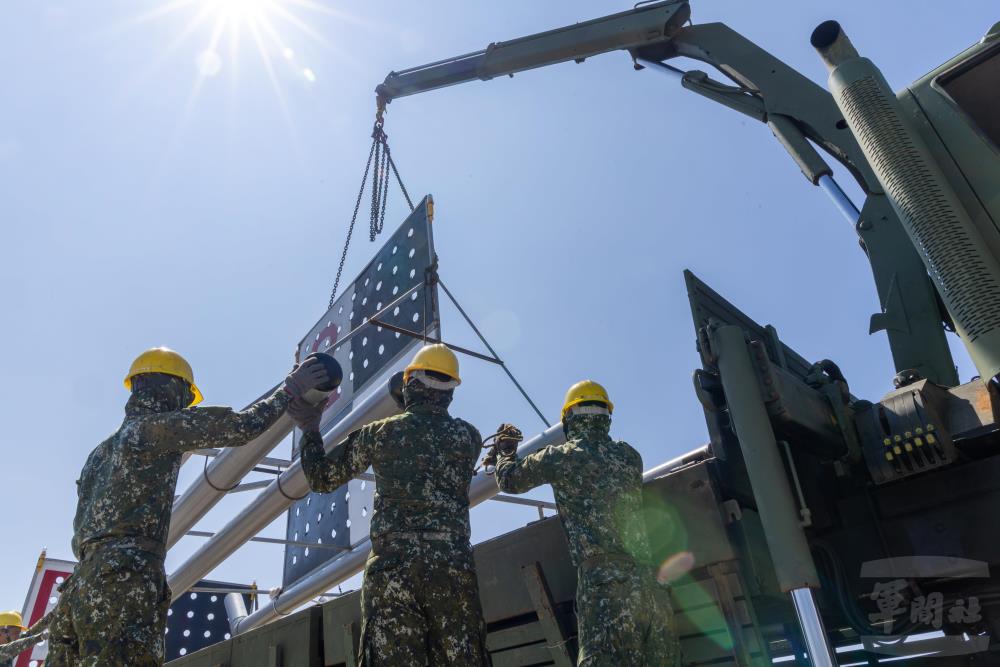 Target Ship Fabrication Group of the Penghu Type B Combined Maintenance Depot — Unsung Hero Behind the Live-Fire Exercises“Logistics capability is not only the source of military strength, but also the key to combat result.” In addition to its responsibility of maintaining and repairing various general-purpose equipment for the 1st Theater of Operations, the Penghu Type B Combined Maintenance Depot also assists in the fabrication of target ships for training and exercises by applying its technical expertise. This effort has significantly enhanced both the training effectiveness of the defense zone and the overall defense and combat readiness. During the exercise conducted in the Penghu defense zone, various weapons systems will be used for live-fire drills to designated maritime targets area. Among them, tank cannons and Javelin missiles will be used in conjunction with target ships built by personnel with related specialties from the Penghu Type B Combined Maintenance Depot. These target ships not only assist shooters in aiming during the exercise but also serve to verify firing accuracy and evaluate the overall effectiveness of the drill. Three to four weeks prior to the firing mission, the target ship fabrication group at the Penghu Type B Combined Maintenance Depot begins preparatory work. Each step in the process is essential and cannot be omitted, including task assignment, material selection, angle iron cutting, piping fabrication, frame welding, and wooden panels drilling. Once all components are completed, they are assembled into the final product. Due to the large size of the target ships, the fabrication group from the Penghu Type B Combined Maintenance Depot will transport the completed components and welding equipment to the dock ahead of the exercise to carry out on-site assembly. Once assembled, the target ships are hoisted into the water using the crane of a 3.5-ton heavy-duty truck. A contracted ship company then tows the target ships to the designated firing area, where they are anchored, completing the setup of the live-fire targets area. Sergeant Major CHEN of the Penghu Type B Combined Maintenance Depot explained that to ensure the target ship’s stability and buoyancy, angle iron must be cut according to precise specifications and welded into a solid frame. In addition, holes are drilled into the wooden panels to reduce wind resistance and enhance structural stability, which are essential for withstanding the strong winds and waves in the Penghu sea area. He also noted that, since the Javelin missile uses infrared guidance, the fabrication of the target ship must include the installation of heat sources to aid the missile and shooter in tracking, targeting, and striking. Lieutenant Colonel PAN, Director of the Penghu Type B Combined Maintenance Depot, stated that during the exercises, the depot is not only responsible for ensuring the operational readiness of participating equipment, but also for verifying the effectiveness of equipment repairs and target ship fabrication carried out by the maintenance unit. These tasks test the communication and coordination skills of the personnel, as well as validate the logistical and technical expertise developed during routine operations. The depot will continue working closely with frontline combat units in the future, dedicating its efforts to the defense of the homeland.2025/06/22
 -
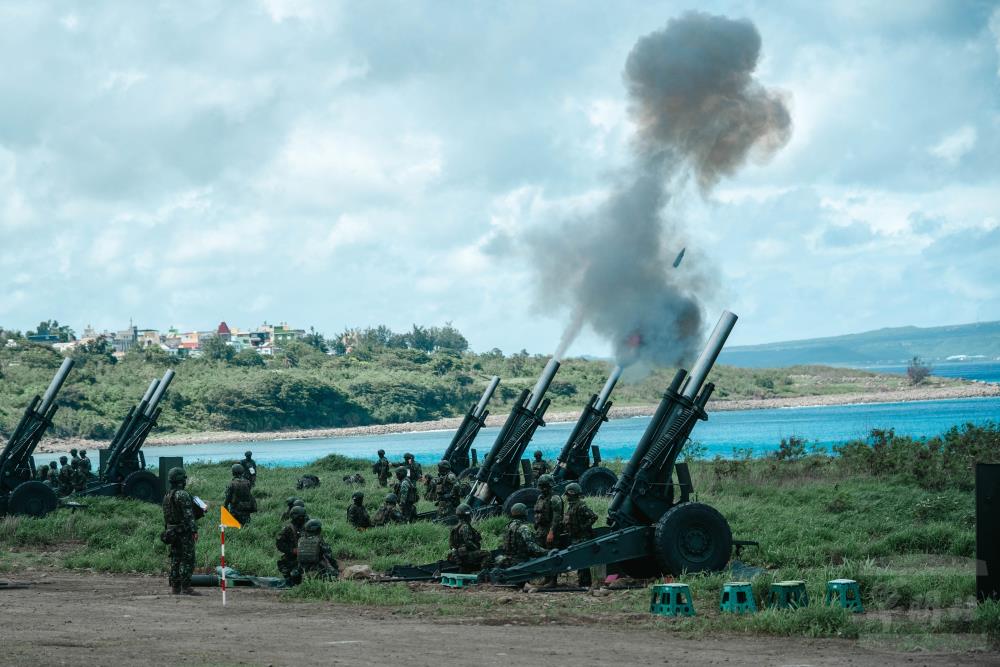 The 4th Theater of Operations Conducts Heavy Artillery Maintenance and Firing to Strengthen Defensive Combat CapabilitiesThe 4th Theater of Operations of R.O.C. Armed Force conducted today the “Heavy Artillery Maintenance and Firing” for the first half of the year in Pingtung area. Participating units included the Army’s 43rd Artillery Command and the Huadong Defense Command. Through the firing procedures, the troops were validated the results of routine training and discipline, refined command control and fire coordination, and enhanced the use of firepower and overall combat capabilities. The heavy artillery maintenance and firing for the first half of the year was conducted this morning in Pingtung area, with a total of 44 155mm-towed howitzers. Participating units conducted three subject drills in sequence: “registration fire,” “Time-On-Target,” and “high angle fire,” which were designed to verify the artillery readiness and to train the live-fire procedures. Additionally, through the artillery body movement produced during firing, the weapon equipment and capabilities are tested. The exercises also allowed personnel to further familiarize with firing procedures, build professional expertise, and bolster the overall defensive combat power in the theater of operations. The 4th Theater of Operations stated that the R.O.C. Armed Forces will continue to carry out various combat readiness exercises and training. Through hands-on field drills, the troops can enhance their control of battlefield environments, and the personnel can improve their proficiency in operating weapon systems and firing procedures. The command-and-control mechanisms and equipment performance are validated at the same time, serving as crucial references for future training planning and force development, with the goal of building a strong and reliable elite fighting force.2025/06/11
 -
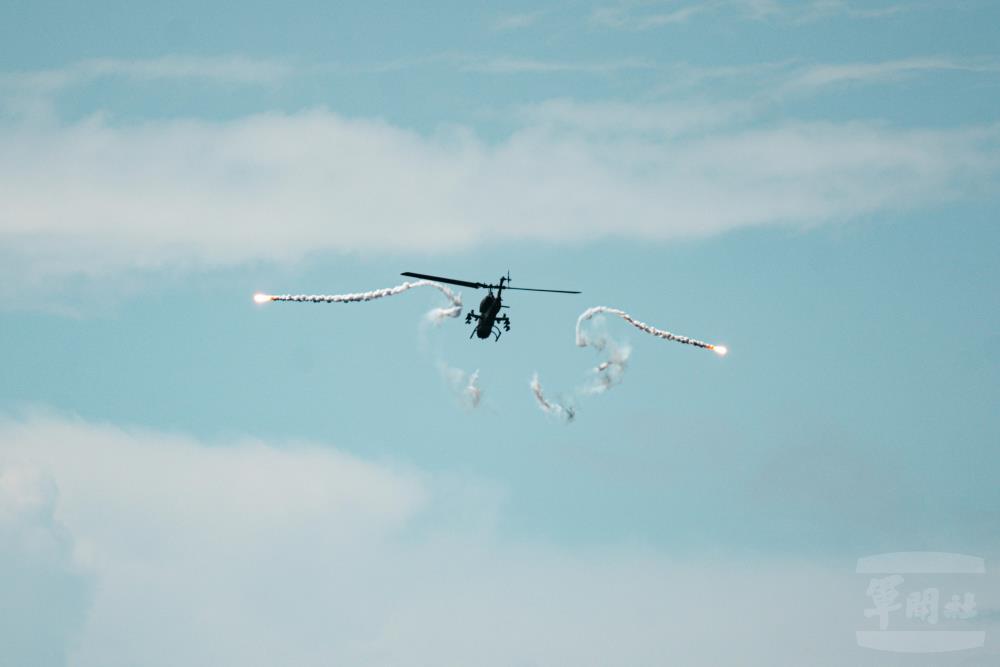 Army Aviation Eagle Strike Exercise Validates Combat Training OutcomesThe ROC Army’s 2025 “Precision Missile Firing—Eagle Strike Exercise” commenced yesterday (July 14) in the southern region. On the first day, units including the Army Aviation 601st and 602nd Brigades and the Flight Training Command participated, deploying AH-64E and AH-1W attack helicopters and OH-58D reconnaissance helicopters equipped with Hellfire missiles to engage maritime targets, verifying the routine training outcomes and battlefield adaptability of Army Aviation personnel. Yesterday’s exercise included daytime live-fire shooting and scheduled nighttime operations. In low-visibility conditions, pilots utilized night vision equipment to precisely lock onto maritime targets. After launching Hellfire missiles, the missiles’ tail flames trailed light, piercing the night sky and tracing brilliant arcs in the air, accompanied by explosive sounds as the missiles accurately struck their targets. Subsequently, pilots deployed flares and executed tactical disengagement. Through nighttime live-fire shooting, pilots gained practical combat experience while demonstrating the Army Aviation units’ all-weather combat and nighttime firing capabilities. The “Eagle Strike Exercise” is a key annual firing training for the ROC Army, designed to train pilots in independent decision-making under various scenarios, test on-the-spot reactions and target acquisition, enhance proficiency in combat procedures, strengthen formation coordination and fire control capabilities, and verify routine training outcomes to bolster overall combat capabilities.2025/05/15