- Search
Search
Search " Lu Kun-xiu" ,Match:2 results
-
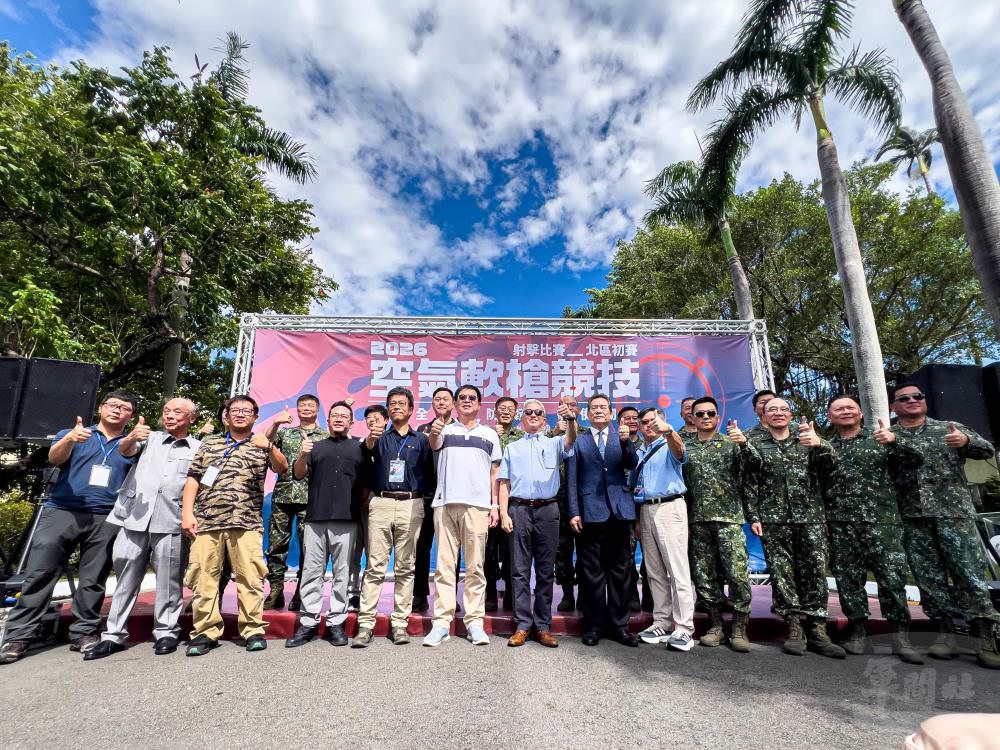 Vice Minister Hsu Presides Over Northern Preliminary Round of Airsoft Shooting Competition, Strengthening Whole-of-Society Defense ResilienceThe Ministry of National Defense’s “2026 National Airsoft Shooting Competition, Northern Preliminary Round” opened today at Fu Hsing Kang College. Presided over by Vice Minister of National Defense Hsu Szu-chien, the event featured competitive airsoft shooting, close-quarters battle (CQB), and simulated battlefield scenarios. Twenty teams comprising 107 reservists from cities and counties across northern Taiwan participated. Military equipment displays and drone demonstrations also attracted nearly 10,000 visitors. The event aimed to deepen all-out defense education and strengthen whole-of-society defense resilience. Vice Minister Hsu presided over the opening ceremony at the National Defense University’s Fu Hsing Kang College campus. Attendees included National Security Council Advisors Huang Chung-yen and Liu Te-chin; Deputy Secretary-General Lii Wen; National Cultural Association of Taiwan Secretary-General Lee Hou-ching; Chief of Army General Lu Kun-xiu; All-out Defense Mobilization Agency Director-General Lieutenant General Liao Chien-shing; Reserve Command Commander Lieutenant General Yu Wen-chen; National Defense University Vice President Lieutenant General Liu Pei-chih; Sixth Army Corps Commander Lieutenant General Lien Chih-wei; Political Warfare Bureau Director-General Lieutenant General Shih Shun-wen; and local village and neighborhood chiefs. In his opening remarks, Vice Minister Hsu first expressed his sincere appreciation to the National Security Council and the organizing units, while paying his highest respects to all participating teams. He said the competition had been made possible by everyone’s collective effort and participation. Hsu explained that the airsoft shooting competition series was initiated at the President’s direction. Under the guidance of the National Security Council and with assistance from the Ministry of the Interior, education authorities, the National Cultural Association of Taiwan, and other organizations, the MND organized the event in partnership with the National Defense Education Association and Formosa Defense Vision. Taiwan’s national security is underpinned not only by its semiconductor and AI industries, but also by the many civil society organizations and businesses that support the country. Reservists and civil defense teams likewise play a vital role in strengthening whole-of-society defense resilience, Vice Minister Hsu noted. Hsu emphasized that the competition was more than a sporting event. It also served as an important platform for strengthening whole-of-society defense resilience. Competitive shooting helps participants develop concentration, judgment, mental resilience, and the ability to respond under pressure, while most importantly fostering teamwork. He added that the value of the competition lay not merely in winning or losing, but in exchanging experience, learning from one another, and growing together. He encouraged participants to uphold the principles of “safety first, fair competition, and friendship through shooting,” follow the rules, respect the judges’ decisions, and demonstrate good sportsmanship. Regardless of the results, every participant who embraced the challenge and gave their all deserving recognition as a winner. Vice Minister Hsu and the attending guests then conducted the opening ceremony and fired the ceremonial first shots. He subsequently visited exhibits presented by the police, fire services, reservists, and the Armed Forces to learn more about their displays. He also thanked participating service members for their hard work and presented an additional food allowance to the units involved. Held in conjunction with the opening of Fu Hsing Kang College campus to the public, the event also featured military equipment displays, drone demonstrations, and interactive all-out defense education exhibits. Through these diverse displays and direct public engagement, the Ministry hopes to deepen all-out defense education, promote whole-of-society defense resilience, and put into practice the conviction to “preserve peace through strength and defend our homeland through action.”2026/07/25
 -
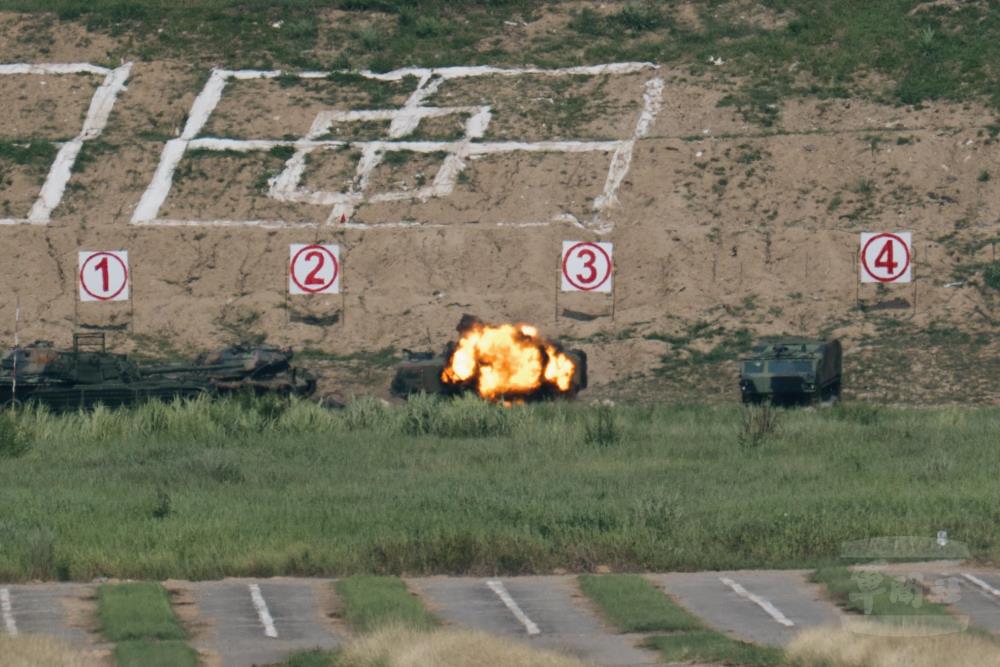 Attack Drones Demonstrate Asymmetric Warfare Capability in Live-Fire ExerciseThe Army Unmanned Systems Training Command conducted a live-fire exercise featuring First-Person View (FPV) and munition-dropping drones on June 3. General Lu, Kun-xiu ,Chief of Army, personally supervised the training. The exercise simulated realistic battlefield conditions and conducted precision strikes against various armored vehicles and enemy positions. The drill fully demonstrated the military’s ability to integrate modern warfare trends and employ effective asymmetric warfare capabilities. The Command stated that the live-fire exercise drew upon international combat experience from recent conflicts, including the Russia–Ukraine War. It adopted a development approach for attack drones centered on low cost, high efficiency, and modularity. The exercise was divided into multiple training scenarios, including single-drone operations and dual-drone coordinated strike tactics. The training aimed to familiarize commanders and drone operators with the complete kill chain process of reconnaissance, target designation, tracking, target acquisition, engagement, and battle damage assessment. It also served to verify the operational effectiveness of integrating domestically developed explosive payload kits with unmanned aerial systems. During the FPV drone exercise, operators wore VR goggles and controlled the drones through a first-person perspective supported by real-time video transmission. They demonstrated a high level of proficiency in flight control. The drones were equipped with 3.5-inch high-explosive anti-armor warheads and executed frontal and flank attacks against CM12 tanks, CM24 armored ammunition carriers, and High Mobility Multipurpose Wheeled Vehicles (HMMWVs). The operators conducted dive attacks from optimal strike angles to engage the designated targets. In the munition-dropping drone training scenario, the exercise evaluated damage effects against enemy wheeled vehicles and dispersed infantry formations. The drones demonstrated excellent loitering capability and optical targeting performance. After ascending to designated altitudes, the operators locked onto the tops of CM12 tanks, including those equipped with cage armor, as well as HMMWVs. They then released 6-inch fin-stabilized high-explosive anti-armor munitions with precision, inflicting devastating damage on enemy personnel and equipment. During his remarks, General Lu stated that precision strikes on the battlefield were never achieved overnight. He noted that successful examples observed in international conflicts had resulted from hundreds or even thousands of failures and extensive training. General Lu emphasized, “Flight operation skills are the most fundamental requirement. Just as tactical discussions are meaningless if a shooter cannot accurately fire a pistol, advanced tactics and strategies are equally ineffective if drone operators lack proficiency and precision.” He added that the impressive attack angles demonstrated during the exercise reflected the operators’ rigorous daily training. The Command emphasized that, in response to current threats and future operational environments, offensive and defensive drone operations had become a core area of continuous tactical development. The exercise not only enabled operators to verify flight parameters under live-munition conditions but also effectively strengthened their ability to perform under pressure in realistic combat environments.2026/06/04