- Search
Search
Search " Attack Drones" ,Match:9 results
-
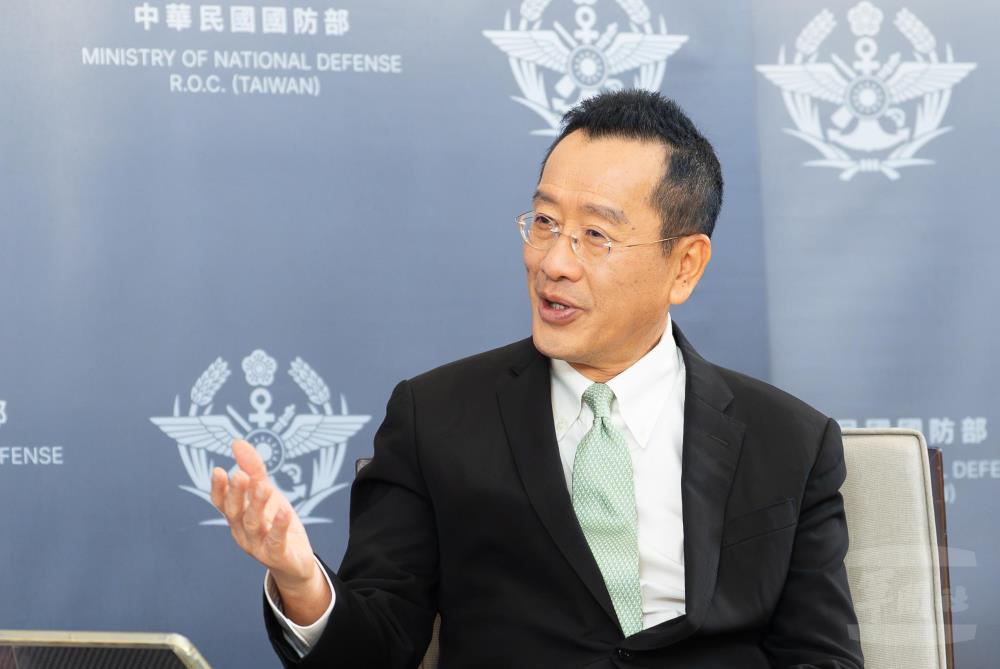 Minister Koo: Deepening Security Cooperation and Defense Self-Reliance to Build Taiwan’s Layered Defense CapabilitiesMinister of National Defense Wellington Koo Li-hsiung said in a recent media interview that, in the face of China’s escalating military threats, Taiwan will strengthen its self-defense capabilities while deepening security cooperation with like-minded countries to create collective deterrence. The Ministry of National Defense is also advancing programs for the domestic production of unmanned systems, counter-drone capabilities, and the “Taiwan Dome,” using layered defense and intelligence fusion to enhance Taiwan’s overall defense capabilities. Minister Koo recently sat down for interviews with the Central News Agency and other media outlets, accompanied by Vice Chief of the General Staff (Executive) General Huang Chih-wei, Director-General of the Department of Strategic Planning Lieutenant General Huang Wen-chi, and Deputy Chief of the General Staff for Operations and Planning Lieutenant General Hou Chia-lun. During the interviews, he responded to questions on regional security, security cooperation, defense self-reliance, and unmanned systems. Addressing security in the Indo-Pacific, Minister Koo said countries should increase defense spending, strengthen their self-defense capabilities, expand training, and bolster their military capabilities. Together, these efforts can create collective deterrence against any attempt to unilaterally alter peace and stability across the Taiwan Strait through force or coercion, requiring China to consider the potential responses of both Taiwan’s Armed Forces and other countries in the region before taking such action. Minister Koo noted that the waters east of Taiwan are also vital sea lines of communication for Japan and South Korea. Should the regional security environment undergo a major change, Taiwan would not be the only country required to confront and address the consequences. Regarding Japan’s concept of a “survival-threatening situation,” Minister Koo said Japan is itself facing pressure from Chinese gray-zone activities and joint Chinese-Russian patrols. If Japan determines that circumstances have reached the threshold of a survival-threatening situation, whether it exercises its right of self-defense is a decision for the Japanese government to make based on its own assessment. Turning to Taiwan-U.S. security cooperation, Minister Koo stressed that cooperation extends far beyond the arms sales visible to the public and encompasses a broad range of areas. Personnel seen participating in exchanges during exercises and training activities represent only a small part of the overall relationship. The Armed Forces will continue drawing lessons from the operational experience of friendly partners and adapting them to Taiwan’s defense requirements, the threats it faces, and PLA tactics and methods. These lessons will inform adjustments to Taiwan’s own tactics, techniques, exercises, and training to enhance its defensive capabilities. On defense self-reliance, Minister Koo said Taiwan possesses highly flexible manufacturing capabilities. Going forward, Taiwan will integrate expertise from various countries in defense industries and emerging technologies while excluding supply chains that pose security concerns, including Chinese flight-control systems and communications modules. To this end, the Ministry has proposed a NT$210 billion special budget for unmanned systems, focusing on coastal surveillance and reconnaissance drones, coastal attack drones, and small one-way attack unmanned surface vessels. Through sustained, large-scale demand from the Armed Forces, the Ministry hopes to encourage domestic manufacturers to invest and establish a comprehensive production chain at scale that is free from China-linked supply chains. On counter-drone capabilities, Minister Koo noted that a wide range of soft-kill and hard-kill options are available, including electronic jamming, lasers, high-power microwave systems, automated gun turrets, and various interceptors. The Armed Forces will deploy appropriate countermeasures based on unit echelon, threat type, and cost-effectiveness. Technologies that have reached sufficient maturity will be advanced through formal acquisition programs or small-batch procurement, while the National Chung-Shan Institute of Science and Technology (NCSIST) will continue related research and development. Counter-drone capabilities must also be integrated into the broader air-defense and fire-coordination architecture so that the most efficient countermeasure can be assigned according to the nature of each threat. Asked about progress on the “Strong Bow” missile and the “Taiwan Dome,” Minister Koo said the Strong Bow missile has completed testing and evaluation and will be included in the relevant budget. The Taiwan Dome, meanwhile, is intended to establish a layered defense encompassing capabilities against ballistic missiles, combat aircraft, long-range fires, and unmanned systems. The Armed Forces will integrate U.S.-made and domestically developed systems, enhance the capabilities of various sensors, and fuse the intelligence and data they provide. The most appropriate effector can then be assigned according to the nature of the threat, improving the efficiency of fires across the overall air-defense architecture. Asked about weapons and equipment acquisition, Minister Koo said future procurement will emphasize mobility, survivability, and operational flexibility, while also reducing the identifiability of military assets and employing a diverse range of platforms to perform missions. Director-General of the Department of Strategic Planning Lieutenant General Huang Wen-chi added that the Armed Forces have moved away from the former mindset of simply “buying what is available.” Systems and platforms are now evaluated according to their suitability for the defense of Taiwan and Penghu, with dual-use, military, and civilian platforms all considered in force-development planning. Regarding legislative review of the special budget for unmanned systems, Minister Koo said the Ministry of National Defense continues to hope that the Executive Yuan’s NT$210 billion proposal will be approved and will maintain dialogue with the Legislative Yuan. If the Executive Yuan’s version does not pass, the relevant programs would have to return to the annual budget process. However, he cautioned against placing all categories of unmanned systems, including aerial, surface, ground, and underwater platforms, along with testing facilities and industrial development expenditures, under a single NT$40 billion annual ceiling, as doing so could constrain future capability development and force-development flexibility. Minister Koo added that, beyond the unmanned systems and Strong Bow missile programs already discussed, the Ministry is continuing to advance programs involving Rui Yuan UAVs, counter-drone systems, ammunition production, and Tactical Assault Kit (TAK) capabilities. A supplementary budget is also being prepared. The Ministry will continue proposing the defense funding required under its joint operations plans, capability-development priorities, and actual operational requirements to strengthen Taiwan’s indigenous defense industry and overall defense capabilities.2026/08/03
 -
 Special Act on Unmanned Systems Reviewed; Minister Koo Calls for Support for Executive Yuan’s VersionThe Legislative Yuan’s Economics, Foreign Affairs and National Defense, and Finance Committees today held the second joint meeting of the fifth session of the 11th Legislative Yuan to review draft versions of the Special Act for the Procurement of Domestically Developed Unmanned Vehicles for National Defense proposed by the Executive Yuan and various legislative caucuses. With the exception of Proposal No. 13, which will undergo further review at a later date, the proposals were referred for cross-party negotiations before being submitted to the legislative plenary for deliberation. Minister of National Defense Wellington Koo Li-hsiung said that a special act must have a clearly defined purpose and specific procurement targets. The Executive Yuan’s version focuses on coastal reconnaissance drones, coastal attack drones, and small one-way attack unmanned surface vessels. These systems would be acquired through a special budget to meet operational requirements for the defense of the Taiwan Strait and strengthen overall defense resilience. Minister Koo explained that unmanned systems encompass a wide range of aerial, ground, surface, and underwater platforms. Including within a single act the specific systems currently planned for procurement, other platforms that may be developed in the future, indigenous production, and overseas procurement would leave the procurement targets insufficiently defined. Defense procurement should be conducted by the Ministry of National Defense based on its professional assessments and operational requirements, while the Ministry of Economic Affairs should guide industrial development. Although the two functions do not conflict, they should not be conflated. Deputy Minister of Economic Affairs Ho Chin-tsang agreed that his Ministry could not decide which platforms the Ministry of National Defense should procure. Designating the Ministry of National Defense as the competent authority would provide a clearer division of responsibilities. Regarding procurement methods, Minister Koo explained that the Executive Yuan’s bill primarily covers the acquisition of Category I and Category II drones. The Ministry has completed assessments of domestic production capacity and market conditions. Subsequent procurement will use open tendering with multiple awards, allowing qualified domestic manufacturers to participate. If the National Chung-Shan Institute of Science and Technology has systems that meet the Ministry’s operational requirements, they will be acquired separately through commissioned production. Procurement programs will also require contractors to continually improve the performance of flight-control software, communications modules, and other components. Long-term orders will help drive iterative innovation throughout Taiwan’s domestic industry. Regarding funding, Deputy Minister Ho said the Executive Yuan’s version sets a ceiling of NT$210 billion and provides funding through a special budget. As the budget would not be subject to the restrictions under Article 23 of the Budget Act, it could provide a stable, long-term source of funding. This approach would reduce procurement uncertainty arising from competition with other budgetary requirements, funding cuts, or delays in the review process, thereby increasing manufacturers’ willingness to invest. Minister Koo cautioned that bringing all unmanned systems under the legislation and requiring the central government to allocate a fixed amount in its annual budget could create discrepancies between actual requirements and the statutory funding level. It could also raise questions about how the Legislative Yuan would subsequently review the funding. The Executive Yuan’s version specifies three types of unmanned systems, but this does not mean that they represent the Ministry’s only requirements, Minister Koo emphasized. Other large and medium-to-large drones, unmanned ground vehicles, and unmanned underwater vehicles that may be procured once the necessary technologies mature will still undergo project planning based on operational requirements. Funding will then be included separately in annual budgets or other procurement programs. Citing the delivery of MQ-9B unmanned aircraft as an example, Minister Koo said the relevant funding is provided through the annual budget. Different types of unmanned systems serving different purposes should therefore be funded through mechanisms appropriate to their specific operational requirements. Addressing domestic-content requirements proposed in some versions of the bill, Deputy Minister Ho said that unmanned systems vary considerably. The feasibility of domestic production for each platform is also affected by uncertainties such as the pace of technological development and changes in market conditions. Writing a uniform domestic-content percentage into law could therefore create difficulties during implementation and subsequent procurement. Minister Koo added that military unmanned systems procured from overseas could not readily comply with a fixed domestic-content requirement. The Ministry’s procurement of unmanned systems must remain based on military specifications that meet operational requirements. Existing industry support mechanisms and related programs already cover research and development subsidies, investment tax credits, talent development, testing and certification, and supply chain integration. Some legislative proposals also addressed testing sites, production bases, readiness stockpiles, and deployment arrangements. Minister Koo explained that testing sites involve the respective responsibilities of the Ministry of National Defense, Ministry of Transportation and Communications, and local governments and should therefore be coordinated at the Executive Yuan level. Military exercise areas or restricted military zones should not be directly designated by law as testing sites. Similarly, the quantities of unmanned systems held in readiness and their deployment locations should be determined by the Ministry of National Defense according to operational requirements and professional planning. Publicly stipulating such information in legislation could create national security concerns. The Ministry hopes that the Legislative Yuan will support the Executive Yuan’s version, which clearly defines the procurement targets, competent authorities, and source of funding, allowing resources to be concentrated on acquiring priority equipment.2026/07/27
 -
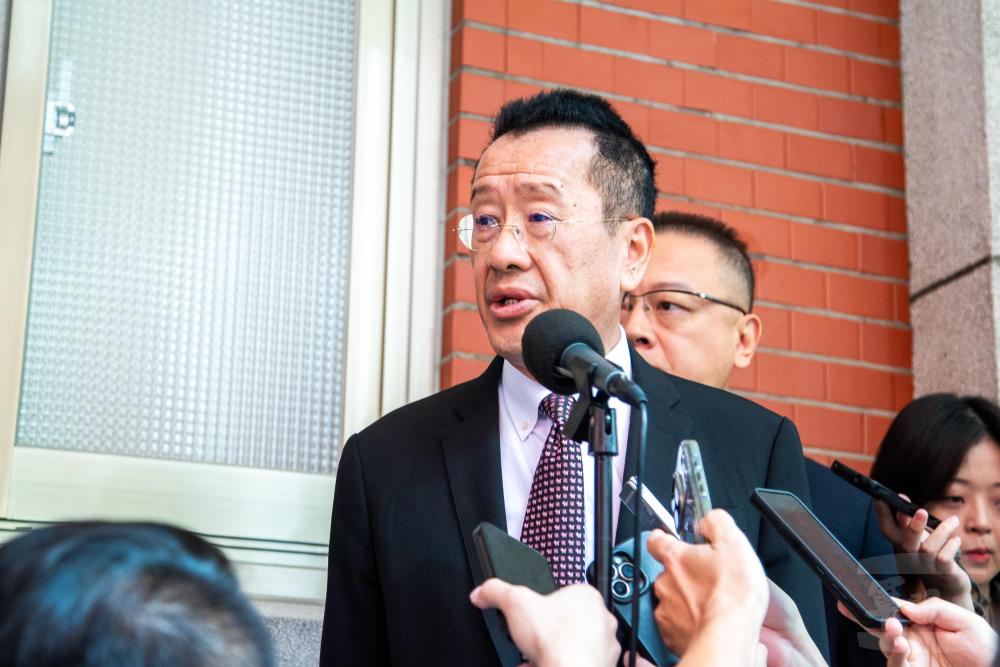 Minister Koo: Presidential Inspection Will Not Affect Han Kuang Exercise Objectives; No Live-Fire Drills Planned on Taiwan ProperMinister of National Defense Wellington Koo Li-hsiung spoke to the media today before attending the second joint meeting of the Legislative Yuan’s Economics, Foreign Affairs and National Defense, and Finance Committees. He said that President Lai Ching-te’s inspection of military units was intended to gain an understanding of preparations for exercises and training and to encourage service members. The visit would not affect the scheduled activities or validation objectives of the Han Kuang Exercise. The Armed Forces currently have no plans to conduct live-fire drills on Taiwan proper and will not arrange any specifically for the presidential inspection. Responding to a question about whether President Lai’s inspection would run counter to the original purpose of military training, Minister Koo explained that the exercise uses realistic training under conditions resembling actual combat to strengthen the Armed Forces’ joint operational capabilities. The President’s visit would neither disrupt routine training nor alter any scheduled activities or validation objectives. Minister Koo also stressed that media reports claiming that the Armed Forces would conduct live-fire drills on Taiwan proper were inaccurate. Although the President’s inspection itinerary was still being adjusted, no live-fire activities would be specially arranged. Regarding a report by the National Audit Office noting that NT$3.7 billion in maintenance funding had been allocated for the Air Force’s AT-3 trainer aircraft despite their impending retirement, Minister Koo explained that the report addressed expenditures from last year. The AT-3 fleet would not begin to be phased out until July this year, so expenses for contractor-provided maintenance and other support remained necessary. Maintenance costs will decline as the aircraft are gradually withdrawn from service. Responding to concerns raised in the National Audit Office’s final accounts report that the Armed Forces’ counter-drone systems do not cover the 5.1 GHz frequency band or address emerging threats such as fiber-optic-controlled and AI-enabled autonomous drones, Lieutenant General Sun Li-fang, Director of the Administration Office of the Minister and Ministry spokesperson, explained that the National Chung-Shan Institute of Science and Technology launched its current counter-drone system project in 2021. The system was designed primarily to counter commercial drones operating on the 2.4 GHz, 5.8 GHz, 1.2 GHz, and 1.5 GHz frequency bands. After China introduced the use of the 5.1 GHz band in 2023, NCSIST planned a system upgrade to incorporate that band into its detection and countermeasure coverage. Lieutenant General Sun further explained that portions of the S-band used by the BeiDou Navigation Satellite System are primarily employed for transmitting and receiving short messages and are not among the frequency bands currently used primarily by drones. These frequencies are also important to Taiwan’s domestic 4G and 5G mobile communications. Under National Communications Commission regulations, they may not be used by general-purpose/civilian drones and were therefore not included in the current counter-drone system. Fiber-optic-controlled and AI-enabled autonomous drones have emerged only in recent years and were not included in the original project. The Ministry is now working through its Defense Innovation Unit to identify mature domestic and overseas suppliers while combining commercial solutions with indigenous research and development to plan future countermeasure systems. Addressing foreign media reports that the PLA had constructed replicas of the Presidential Office Building, government agencies, naval bases, and other facilities for simulated attack or occupation training, Lieutenant General Sun said that the facilities and related PLA activities were within the scope of the Armed Forces’ intelligence, surveillance, and reconnaissance. Following the principle of preparing for the broadest range of enemy capabilities, the Ministry is developing appropriate responses to possible PLA operations against Taiwan while continually strengthening force development, combat readiness, and training. Lieutenant General Sun emphasized that the reports underscored the severity of the current threat. The Armed Forces will respond prudently and continue enhancing all aspects of combat readiness. He also called on the public to support both the annual defense budget and the special defense budget so the military can secure the resources required to improve its training, readiness, and defense capabilities. Regarding the recovery of Taiwan’s share of F-16 development costs, Lieutenant General Sun explained that under US foreign military sales procedures, the maximum recoverable amount of R&D cost-sharing reimbursement under the “Peace Phoenix Rising Program” for the F-16 Block 20 is US$319 million. Approximately US$245 million has been recovered to date. The Air Force will continue using project management mechanisms and regular meetings to monitor other countries’ participation in the program and the reconciliation of foreign military sales accounts, while seeking the R&D cost-sharing reimbursement to which Taiwan is entitled.2026/07/27
 -
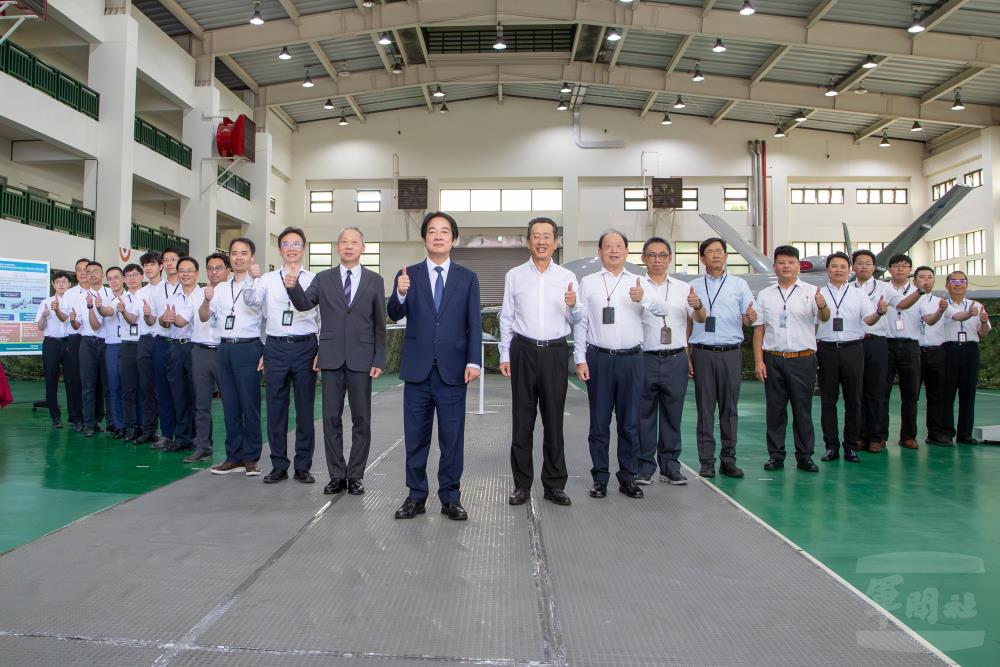 President Lai Inspects NCSIST Drone Development and Calls on Legislature to Support Special Defense BudgetPresident Lai Ching-te today visited the Aeronautical Systems Research Division of the National Chung-Shan Institute of Science and Technology (NCSIST). He said that China has intensified its political and military intimidation of Taiwan, united-front infiltration within the country, and transnational repression in recent years. Taiwan must answer the international call for collective defense and burden-sharing. Describing drones as a representative weapon of asymmetric warfare, President Lai called on the Legislative Yuan to support the special defense budget and the development of a national drone offensive and defensive system. This would allow the relevant programs to be rapidly put in place, safeguarding national security and maintaining peace and stability in the Indo-Pacific. Accompanied by National Security Council Secretary-General Joseph Wu, Minister of National Defense Wellington Koo Li-hsiung, NCSIST President Li Shih-chiang, and Aeronautical Systems Research Division General Director Chiou Chu-hsiang, President Lai inspected the progress of NCSIST’s drone development program this morning. He also received briefings on its anti-radiation unmanned attack system and various types of NCSIST-developed drones. In his remarks, President Lai reiterated that China has increasingly subjected Taiwan to political and military intimidation, united-front infiltration, and transnational repression. To demonstrate Taiwan’s resolve to defend the nation, preserve stability across the Taiwan Strait, and maintain peace in the Indo-Pacific, Taiwan must respond to the international call for collective defense and burden-sharing. President Lai said that the Ministry of National Defense had previously proposed an eight-year special budget totaling NT$1.25 trillion for legislative review. However, the Legislative Yuan approved only NT$780 billion, cutting NT$470 billion. The approved funding was insufficient even to cover arms procurement from the United States. The NT$470 billion cut from the proposal had been intended for international cooperation, commissioned projects, indigenous research and development, and the advancement of the defense industry. Most importantly, the entire budget for drone-related programs was removed. President Lai noted that the Russia-Ukraine war, the Israel-Hamas conflict, and the ongoing hostilities between the United States and Iran had demonstrated the critical importance of drones on the battlefield. Drones could be considered the quintessential weapon of asymmetric warfare. The Executive Yuan had therefore not abandoned the initiative. President Lai thanked Minister Koo and his colleagues for proposing another special act on drones, with total funding of NT$210 billion. A further NT$200 billion to NT$300 billion would be allocated through a supplementary budget and next year’s budget to restore the NT$470 billion previously removed by the legislature. Regrettably, the opposition parties had still not supported drone development. Moreover, some drone legislation proposed by opposition parties would place the Ministry of Economic Affairs, rather than the Ministry of National Defense, in charge. Citing Minister Koo’s remarks during legislative questioning, President Lai said, “The money for rice cannot be confused with the money for soy sauce.” He explained that the proposed funding was intended to procure the military drones required by the Ministry of National Defense. If the drone industry development legislation proposed by legislators were administered by the Ministry of Economic Affairs, its funding could be used only for commercial and civilian applications and would not meet Taiwan’s force development requirements. President Lai emphasized that the Ministry of National Defense and the Ministry of Economic Affairs have different mandates and responsibilities. The Ministry of Economic Affairs is responsible for supporting industry by building the supply chain and helping manufacturers produce the drones required by the Ministry of National Defense. Furthermore, the Executive Yuan has already provided the Ministry of Economic Affairs with NT$44.2 billion under a six-year program to establish this supply chain. There is therefore no need for the Legislative Yuan to provide the Ministry with additional funding. The President expressed hope that the Legislative Yuan would support the nation and enable everyone in the Ministry of National Defense, from the Minister and military leaders to every individual service member, to continue fulfilling their duties. President Lai said that he was deeply impressed by NCSIST’s research and development achievements. Taiwan’s drone technology is already keeping pace with international developments, with the National Security Council, Ministry of National Defense, Ocean Affairs Council, Ministry of the Interior, and other relevant Executive Yuan agencies all contributing to the effort. Through international exchanges, the Ministry of National Defense has also developed a comprehensive blueprint for drone operations. NCSIST, the Industrial Technology Research Institute, the Institute for Information Industry, and research institutions at universities are all in position, as is the Taiwan Excellence Drone International Business Opportunities Alliance (TEDIBOA). “In other words, everything is ready except the final impetus,” President Lai said. If the Legislative Yuan supports the Ministry of National Defense, the Executive Yuan, and the nation in building an integrated drone attack and defense system, the President said he was confident in assuring the public that the government would safeguard national security and preserve peace and stability in the Indo-Pacific. President Lai acknowledged that competition and confrontation among political parties are inevitable. However, the national interest and the lives and property of the people must never be used as bargaining chips in political conflict. He said it was deeply disheartening to repeatedly see Minister Koo and his colleagues having to visit plenary sessions, legislative committees, and individual legislators’ offices to explain the proposals. The time and energy spent on these efforts could instead allow the Minister, commanders at every level, and service members to focus on training and maintaining combat effectiveness. President Lai emphasized that he had come to NCSIST specifically to explain the matter to the public and seek support for the government’s determination to defend national security and protect peace and stability in the Indo-Pacific. The government is confident that once the Legislative Yuan approves the special defense budget, all the relevant programs can be rapidly put in place. President Lai stressed that the funding should be provided through a special budget rather than annual budgets, as force development and defense preparedness require stable, long-term government funding. Taiwan has also historically used special budgets to fund major defense development and preparedness programs. He called on the public to express its support and thereby encourage the opposition parties to do the same. He also urged parties across the political spectrum to jointly support national security and industrial development, demonstrating to the international community Taiwan’s resolve to defend itself.2026/07/17
 -
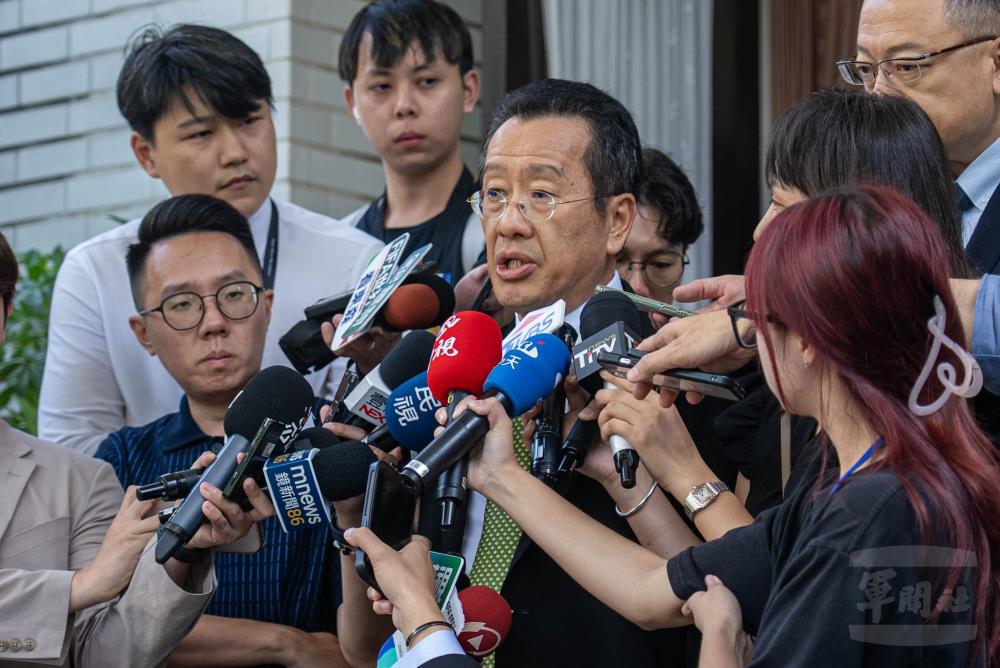 Minister Koo: Joint Defense Exercise Validates Decentralized Command and Control, Enhancing Joint Operations CapabilitiesMinister of National Defense Wellington Koo spoke to the media today before appearing at the Legislative Yuan for questioning, addressing issues including the Joint Defense Exercise, the Special Act for the Procurement of Indigenous Unmanned Systems for National Defense, and intelligence sharing. Minister Koo stated that the Joint Defense Exercise builds on the Immediate Combat Readiness Exercise. Conducted ahead of the Han Kuang Exercise, it employs a decentralized command-and-control structure to strengthen coordination and cooperation among the military services, conduct joint operations, and validate defense operation plans. Asked whether the special act would cover new types of unmanned systems, given Ukraine’s shift toward integrated systems, Minister Koo said that the Special Act was drafted based on operational requirements. The systems to be procured include coastal surveillance and reconnaissance drones, coastal attack drones, unmanned underwater vehicles, unmanned surface vessels, and unmanned ground vehicles, among other emerging technologies. Minister Koo further explained that some unmanned systems would be procured in small quantities for testing and validation, while others would be studied through research projects commissioned from the National Chung-Shan Institute of Science and Technology. Requirements relating to systems integration and AI-assisted command and control will also be included in future annual or supplementary budget proposals. Regarding intelligence sharing, Minister Koo explained that the Ministry closely monitors PLA’s activities through its joint intelligence, surveillance, and reconnaissance systems and diverse intelligence channels. The Ministry also maintains a close coordination mechanism with the National Security Council and operates in accordance with that mechanism.2026/07/14
 -
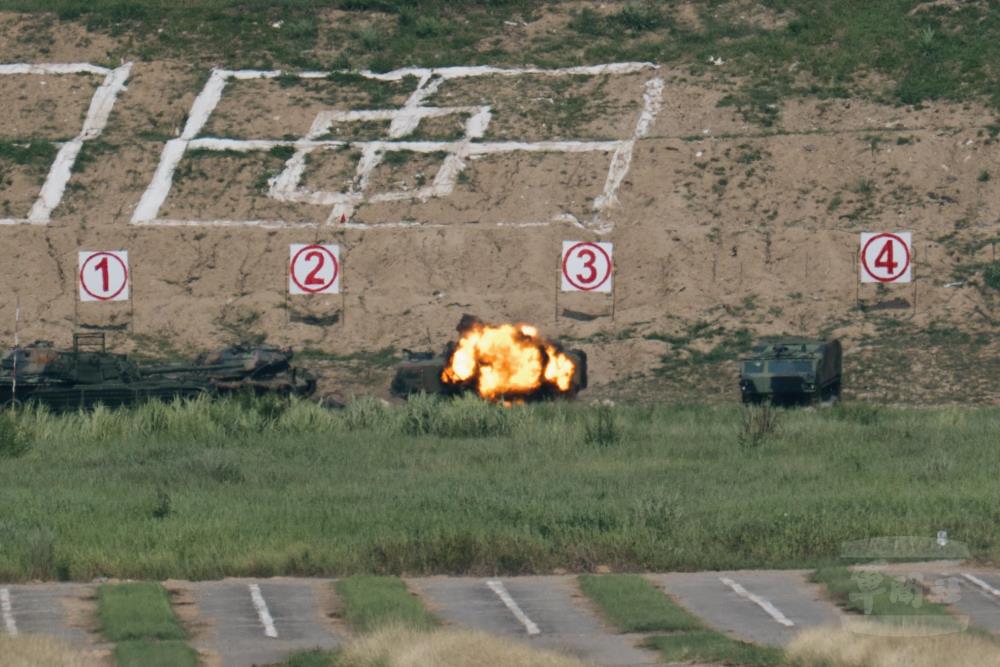 Attack Drones Demonstrate Asymmetric Warfare Capability in Live-Fire ExerciseThe Army Unmanned Systems Training Command conducted a live-fire exercise featuring First-Person View (FPV) and munition-dropping drones on June 3. General Lu, Kun-xiu ,Chief of Army, personally supervised the training. The exercise simulated realistic battlefield conditions and conducted precision strikes against various armored vehicles and enemy positions. The drill fully demonstrated the military’s ability to integrate modern warfare trends and employ effective asymmetric warfare capabilities. The Command stated that the live-fire exercise drew upon international combat experience from recent conflicts, including the Russia–Ukraine War. It adopted a development approach for attack drones centered on low cost, high efficiency, and modularity. The exercise was divided into multiple training scenarios, including single-drone operations and dual-drone coordinated strike tactics. The training aimed to familiarize commanders and drone operators with the complete kill chain process of reconnaissance, target designation, tracking, target acquisition, engagement, and battle damage assessment. It also served to verify the operational effectiveness of integrating domestically developed explosive payload kits with unmanned aerial systems. During the FPV drone exercise, operators wore VR goggles and controlled the drones through a first-person perspective supported by real-time video transmission. They demonstrated a high level of proficiency in flight control. The drones were equipped with 3.5-inch high-explosive anti-armor warheads and executed frontal and flank attacks against CM12 tanks, CM24 armored ammunition carriers, and High Mobility Multipurpose Wheeled Vehicles (HMMWVs). The operators conducted dive attacks from optimal strike angles to engage the designated targets. In the munition-dropping drone training scenario, the exercise evaluated damage effects against enemy wheeled vehicles and dispersed infantry formations. The drones demonstrated excellent loitering capability and optical targeting performance. After ascending to designated altitudes, the operators locked onto the tops of CM12 tanks, including those equipped with cage armor, as well as HMMWVs. They then released 6-inch fin-stabilized high-explosive anti-armor munitions with precision, inflicting devastating damage on enemy personnel and equipment. During his remarks, General Lu stated that precision strikes on the battlefield were never achieved overnight. He noted that successful examples observed in international conflicts had resulted from hundreds or even thousands of failures and extensive training. General Lu emphasized, “Flight operation skills are the most fundamental requirement. Just as tactical discussions are meaningless if a shooter cannot accurately fire a pistol, advanced tactics and strategies are equally ineffective if drone operators lack proficiency and precision.” He added that the impressive attack angles demonstrated during the exercise reflected the operators’ rigorous daily training. The Command emphasized that, in response to current threats and future operational environments, offensive and defensive drone operations had become a core area of continuous tactical development. The exercise not only enabled operators to verify flight parameters under live-munition conditions but also effectively strengthened their ability to perform under pressure in realistic combat environments.2026/06/04
 -
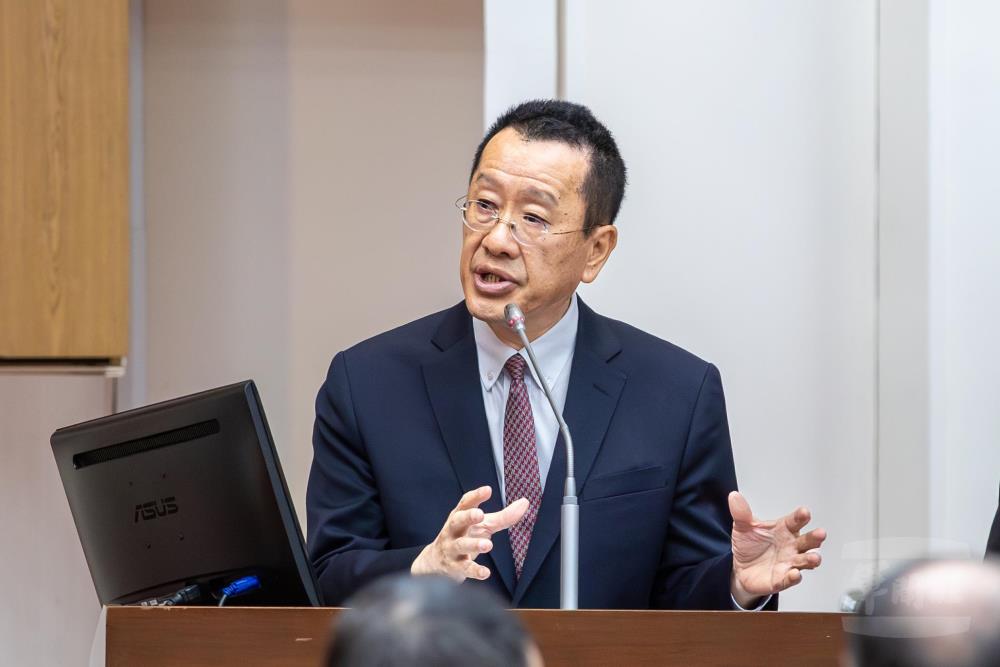 Minister Koo Presents Report on M109A7 and Other Equipment–Urges Legislative Yuan to Support Budget AllocationMinister of National Defense Wellington Koo Li-hsiung attended a joint session of the Legislative Yuan’s Finance Committee and Foreign Affairs and National Defense Committee today to present a report on the draft “Special Act on Procurement for Safeguarding National Security and Strengthening Asymmetric Warfare Capabilities.” During the briefing, Minister Koo stated that the Ministry of National Defense plans to procure several major weapons systems under the special act, including the M109A7 self-propelled howitzer, the HIMARS multiple launch rocket system, anti-armor loitering munition systems, TOW 2B anti-tank missiles, and Javelin anti-tank missile systems. All systems already received Letters of Offer and Acceptance (LOA) from the United States. He urged the Legislative Yuan to approve the related budget allocations to ensure Taiwan’s armed forces possess the capabilities necessary to safeguard national security. Minister Koo noted that the first tranche of procurement items under Article 5, Paragraph 1, Items 1 through 5 of the special act totals NT$294.99 billion. For fiscal year 2026, NT$8.812 billion has been allocated for weapons procurement, logistics support, engineering infrastructure, and associated program management expenses. Among the major procurement programs, the M109A7 self-propelled howitzer program was scheduled for implementation from 2026 to 2032 with a total budget exceeding NT$80.6 billion. The HIMARS procurement program totalled more than NT$159.7 billion, while the anti-armor loitering munition systems exceeded NT$33 billion. Additional funding would support replenishment of TOW 2B anti-tank missile inventories, TOW 2B launch systems, and Javelin missile systems. Minister Koo explained that the PRC continued to expand its blue-water operational capabilities while fielding next-generation fighter aircraft, integrated ISR strike drones, naval platforms, and precision-guided missile systems. Under these evolving threat conditions, the originally planned procurement quantities were no longer sufficient to meet Taiwan’s operational requirements for counter-landing and coastal defense operations, making additional acquisitions necessary. Regarding the M109A7, Minister Koo stated that the system integrated GPS-based positioning, automated fire control, digital command-and-control capabilities, and precision fires exceeding ranges of 30 kilometers. These capabilities would enable the armed forces to strike enemy command nodes, logistics facilities, and communications centers with greater accuracy and responsiveness. Addressing joint operational effectiveness, Minister Koo noted that during integrated air and missile defense operations, HIMARS systems could conduct long-range precision strikes against enemy missile launch platforms at ranges of up to 300 kilometers. Integrated with existing Patriot, Sky Bow, and short-range air defense systems, as well as AI-enabled decision-support systems, these capabilities would contribute to a more effective layered air and missile defense network. During joint counter-landing operations, HIMARS and M109A7 systems could coordinate with coastal anti-ship missile units to rapidly engage high-value enemy targets from littoral areas to landing beaches using precision fires. Minister Koo further stated that acquisition of systems such as the Albatross II tactical maritime surveillance UAV, vertical takeoff and landing unmanned aerial systems, and coastal surveillance UAVs would significantly improve maritime domain awareness and targeting capability. These systems could support precision-guided missiles,unmanned surface vessels, and coastal strike drones in rapidly detecting and engaging hostile naval forces, thereby enhancing early warning and rapid-response strike capabilities within Taiwan’s asymmetric defense framework. Minister Koo further explained that during joint homeland defense operations, the ROC Armed Forces would deploy large numbers of surveillance UAVs to track enemy maneuver elements while integrating AI-enabled decision-support systems, the Team Awareness Kit (TAK), and the Taiwan Tactical Network (TTN) to establish a common operational picture and accelerate the sensor-to-shooter kill chain. Using precision fires, anti-armor missile systems, attack drones, and mobile interdiction operations in coordinated operations, Taiwan’s armed forces would seek to impose layered attrition against invading forces. Portable counter-UAS systems would also be deployed throughout the battlespace to defend against the PRC’s small- and medium-class drone threats. Minister Koo further stated that the HIMARS multiple launch rocket system and the M109A7 self-propelled howitzer would provide precision fire support at the operational level. Meanwhile, Javelin and TOW 2B anti-tank missiles, as well as anti-armor loitering munition systems, would enable precise engagement of enemy tanks and armored vehicles. Should Taiwan acquire a larger number of surveillance and attack UAVs, AI-enabled decision-support systems, the Team Awareness Kit (TAK), the Taiwan Tactical Network (TTN), and portable counter-UAS systems, these capabilities would significantly enhance rapid detect-and-strike operations and sustain long-term attrition against enemy forces, while also improving force protection for deployed units. Minister Koo emphasized that the procurement of the five major weapons systems, including the M109A7, would significantly enhance Taiwan’s overall joint operational capabilities. However, to fully establish the three critical pillars of a layered air defense network (the Taiwan Dome), asymmetric defense capabilities, and sustained long-term attrition against enemy forces, Taiwan also had to continue developing command-and-control systems, all-domain ISR capabilities, unmanned and counter-UAS systems, medium-range ballistic missile defense systems, and expanded domestic ammunition and equipment production capacity to enhance defense resilience.Only through the integrated development of these capabilities, Minister Koo stated, could Taiwan further strengthen its asymmetric warfare posture and defense resilience to safeguard national security.2026/05/25
 -
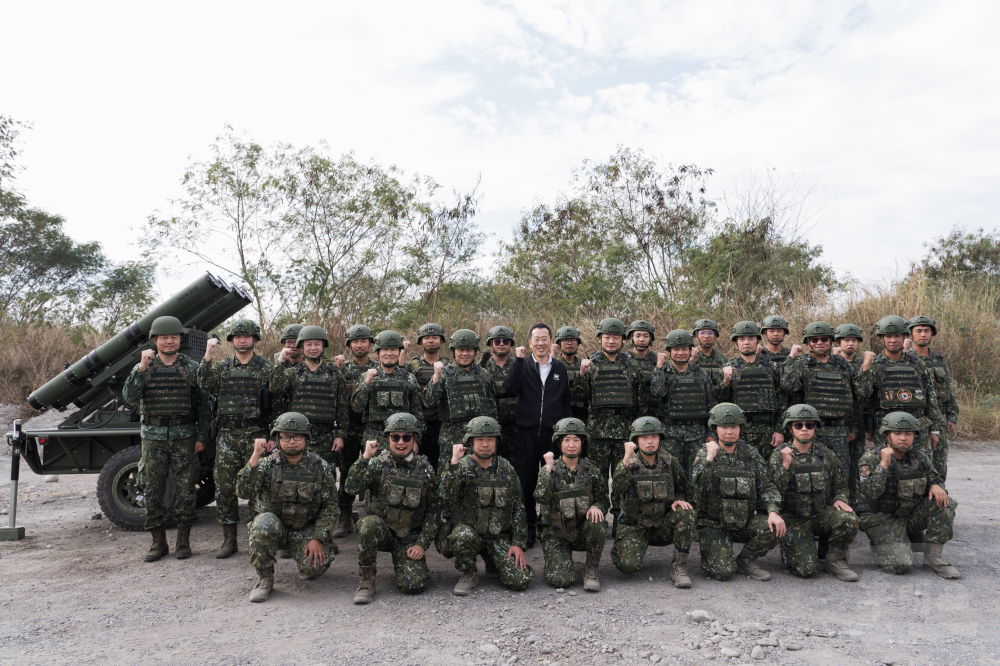 Ministry of National Defense: Minister Wellington Koo Li-hsiung Inspects Altius-600M Attack Drone Acceptance Live-Fire ExerciseAltius-600M Attack Drone Conducts First Live-Fire Shooting—Minister Koo Visits the Site to Commend Personnel Minister of National Defense Wellington Koo Li-hsiung inspected the “Altius-600M Attack Drone Acceptance Live-Fire Exercise” today (December 18), commending the personnel’s dedication and efforts in training and encouraging everyone to continue implementing combat readiness preparations, demonstrating the determination to defend the homeland. In the morning, accompanied by Chief of Army Headquarters General Lu and relevant officers, Minister Koo inspected the live status of the attack drone exercise, received a mission briefing, understood the unit’s firing situation, and commended the exercise personnel for their hard work. This live-fire shooting was conducted around the Zhuoshui River, performed by the Unmanned Aircraft System Training Center and various artillery commands, verifying unit operational procedures and overall command-and-control effectiveness. The exercise first conducted performance testing with training drones to confirm the firing airspace and target area environment, then proceeded with live-fire drones to validate personnel proficiency in equipment operation and troubleshooting, as well as the effectiveness of system and command-and-control integration. After the exercise concluded, Minister Koo personally went to the site to commend the participating units, expressing appreciation for the personnel’s teamwork and demonstration of training results; he also expressed expectations that through post-exercise reviews and other measures, areas for improvement will be identified, combat readiness preparations will continue to be implemented, and the determination to defend the homeland and safeguard national security will be demonstrated.2025/12/18
 -
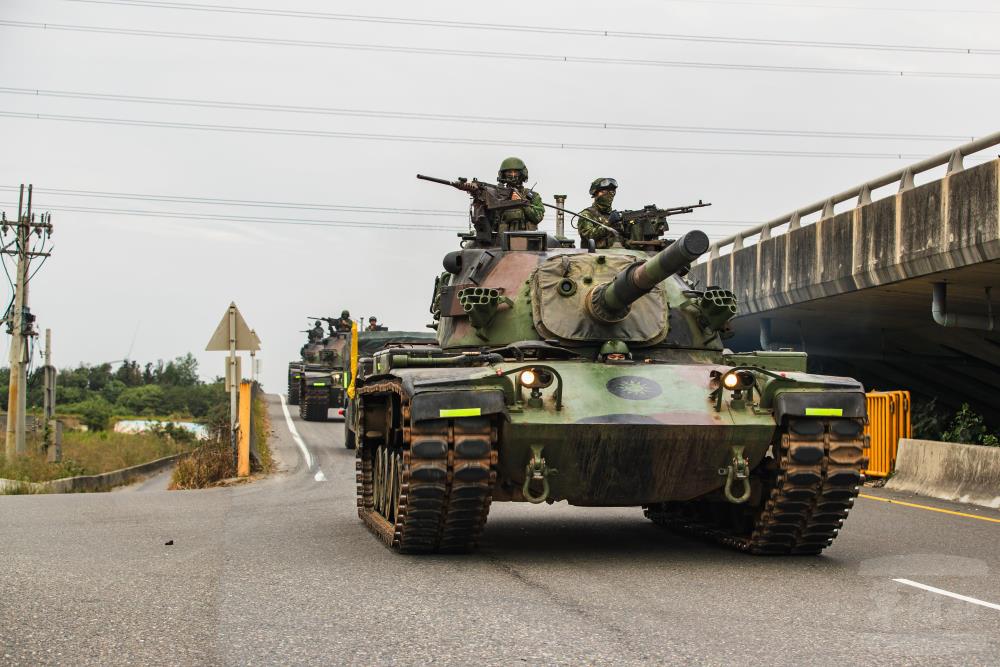 “Land Victory No. 1 Exercise” Concludes Successfully – Demonstrating Outcomes of Army Training TransformationThe ROC Armed Forces recently conducted the seven-day, six-night “Land Victory No. 1 Exercise” in the central region, which concluded successfully on October 31. The Army Education, Training and Doctrine Development Command served as the exercise control headquarters, integrating the 542nd Armored Brigade of the Sixth Army Corps and the 234th Mechanized Infantry Brigade of the Tenth Army Corps. The exercise was executed using real troops, real locations, and real equipment in offensive-defensive confrontation, with cross-regional maneuver exceeding 200 kilometers, validating brigade-level joint combat and command-and-control effectiveness. The exercise was based on defensive operations scenarios and adhered to the three major principles of “real troops and real equipment, free-play control, and phased management.” Through scenario induction, participating units were guided to complete subjects including attack, defense, meeting engagement, pursuit, and successive resistance, testing commanders at all levels in on-the-spot judgment and communications maintenance capabilities. The exercise integrated drones and the Team Awareness Kit (TAK), utilizing real-time imagery and surveillance information return to enhance battlefield awareness and command efficiency, achieving the objectives of “precise enemy situation awareness, rapid decision-making, and flexible troop employment.” This was the first time the Army Education, Training and Doctrine Development Command served as exercise control headquarters, responsible for planning, execution, and evaluation tasks from an objective and impartial standpoint, with exercise outcomes fed back into education, training, and doctrine revision. The drill incorporated real-world terrain and communications interference testing to hone units’ adaptability in complex situations. Personnel at all levels embodied the spirit of “training with the enemy in mind,” completing missions were accomplished under unscripted induction, strengthening defensive combat thinking. Due to the long-duration and long-distance nighttime maneuvers, the exercise posed significant mental and physical challenges to the personnel. Prior to the exercise, units conducted long-distance nighttime driving, equipment inspections, and on-site reconnaissance to familiarize personnel with terrain characteristics and civilian facility locations, facilitating subsequent tactical employment. During the exercise, civilian facilities supported field locations, and local residents enthusiastically assisted units with quartering and rest. They expressed that having the military train locally “brings the armed forces closer to the people.” Residents also stated that seeing tanks and service members operating in the community gave them a sense of the responsibility to defend the homeland and deepened public understanding of the hardships faced by military personnel. Following the conclusion of the exercise, the exercise control headquarters completed full-process evaluation and tactical review, compiling communications and operational data as a basis for future training improvements. The Army Education, Training and Doctrine Development Command stated that it will continue to refine education, training, and operational research based on these results to enhance overall unit combat effectiveness.2025/11/02