- Search
Search
Search " Kinmen Defense Command" ,Match:4 results
-
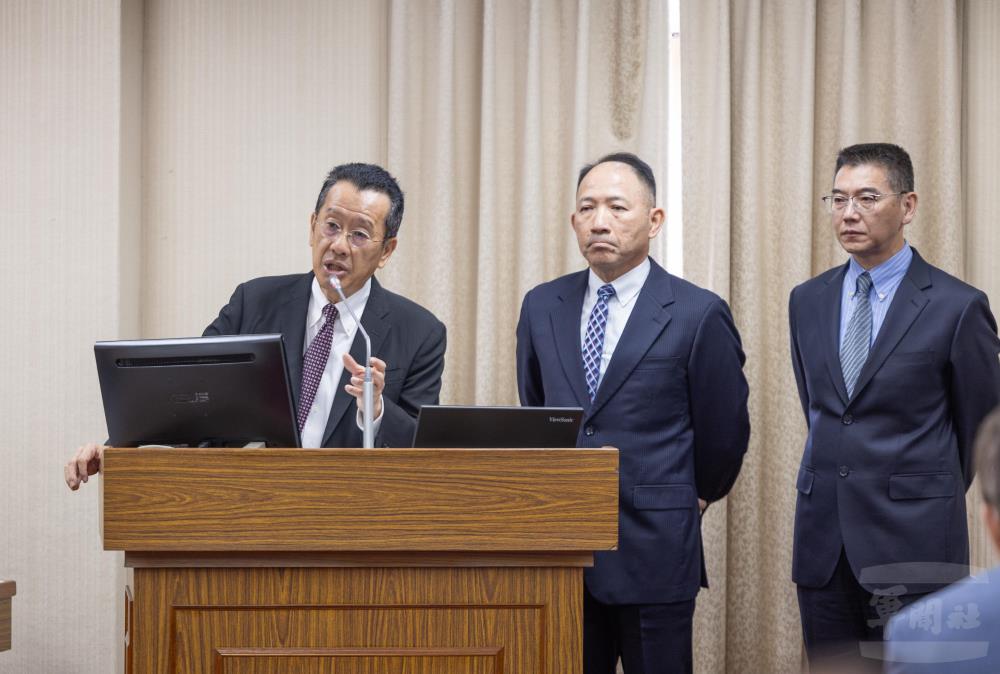 Minister Koo: ROC Armed Forces Closely Monitor Routine PRC Vessel Activities and Coordinate Appropriate Responses with Coast GuardMinister of National Defense Wellington Koo said today that the Armed Forces are closely monitoring the routine activities of PRC vessels in Taiwan’s surrounding waters, as well as China’s continued expansion of its military threats and gray-zone coercion. Through measured, orderly, and controlled responses, the Armed Forces are coordinating with the Coast Guard Administration to address these activities appropriately and safeguard national security and regional stability. Minister Koo appeared before the Legislative Yuan’s Foreign Affairs and National Defense Committee this morning to deliver a special report entitled “Response Measures for Routine Activities by Chinese Vessels in Taiwan’s Waters” and answer legislators’ questions. Lieutenant General Hou Chia-lun, Deputy Chief of the General Staff for Operations and Planning at the Ministry of National Defense, briefed the committee on the relevant response measures. Lieutenant General Hou said that China has increasingly normalized its incursions into waters surrounding Taiwan in recent years. Since August 2022, the PLA has regularly conducted combat readiness activities in waters around Taiwan. During targeted military exercises against Taiwan in late December 2025, PLA forces entered Taiwan’s 24-nautical-mile contiguous zone and approached its 12-nautical-mile territorial sea. PRC maritime law enforcement vessels have also conducted what Beijing describes as law enforcement patrols in the Taiwan Strait under the guise of “special maritime traffic law enforcement operations” and “maritime search and rescue exercises.” In June this year, China dispatched a formation to waters east of Taiwan, unilaterally expanding and abusing its claims of maritime jurisdiction to create the false impression that it exercises long-arm jurisdiction over the area. Lieutenant General Hou added that since February 2024, PRC Coast Guard vessels have entered and harassed Taiwan’s restricted waters around Kinmen and Matsu under the pretext of rights-protection patrols, subsequently expanding their patrol areas. Chinese research and oceanographic survey vessels, meanwhile, have used marine scientific research as a pretext to conduct long-term hydrographic data collection and battlefield preparation missions in waters surrounding Taiwan and beyond the First Island Chain. China’s approach has evolved from overt military intimidation into a pattern of “law enforcement as a pretext, military-coast guard coordination, and incremental encroachment at sea,” intended to mislead the international community. In response to the routine activities of PRC vessels, the Armed Forces will employ joint intelligence, surveillance, and reconnaissance systems integrating naval and air assets, shore-based radar, electronic reconnaissance, satellite intelligence, and unmanned systems. Under the established coordination mechanism between the Armed Forces and the Coast Guard, intelligence sharing, joint monitoring, real-time reporting, and coordinated command will enable the early detection of threats, timely assessments, and rapid responses. Lieutenant General Hou further explained that when maritime law enforcement is involved, the Coast Guard Administration will conduct inspections, monitoring, and ordering vessels to leave the area in accordance with the law. The Armed Forces will maintain naval and air readiness, closely track PRC vessel movements, and deploy appropriate forces based on the developing situation and level of threat. Should PRC government vessels conduct joint operations with naval and air forces, the Armed Forces will act under joint operations plans and the joint command mechanism to deploy forces rapidly, raise combat readiness levels, and strengthen command and control. During the session, a legislator asked whether the Ministry of National Defense and the Coast Guard had coordinated command-and-control measures in place for a worst-case scenario involving escalating confrontation with PRC Coast Guard vessels or warships. Minister Koo responded that when the PRC Coast Guard issues radio broadcasts, Taiwan must respond with maritime radio responses to assert its sovereignty. Nevertheless, the overarching principle remains to avoid escalating the confrontation. While seeking to prevent escalation, the Armed Forces will respond in accordance with established contingency measures and retain the capability to exercise self-defense, including taking necessary defensive actions, recognized under international law. Minister Koo added that these principles had been explained on numerous occasions. Legislators also asked whether relying on annual budgets instead of enacting the Special Act for the Procurement of Domestically Developed Unmanned Vehicles for National Defense would affect the procurement, production, and delivery schedules of unmanned systems. Minister Koo replied that annual budgets are inherently uncertain. It is therefore necessary to consider whether manufacturers could still support the goal of defense self-reliance and build complete industrial and supply chains under such uncertain conditions. Without appropriate policy support, current production capacity would be insufficient to meet defense requirements, making measures to strengthen the industry all the more necessary. Addressing concerns that special budgets might constitute a “blank check,” Minister Koo stressed that this was not the case. Both the special act and its associated special budgets must be submitted for review on a case-by-case basis. Each individual program may proceed only after being deliberated and approved by the Legislative Yuan. The process therefore remains subject to legislative oversight.2026/07/01
 -
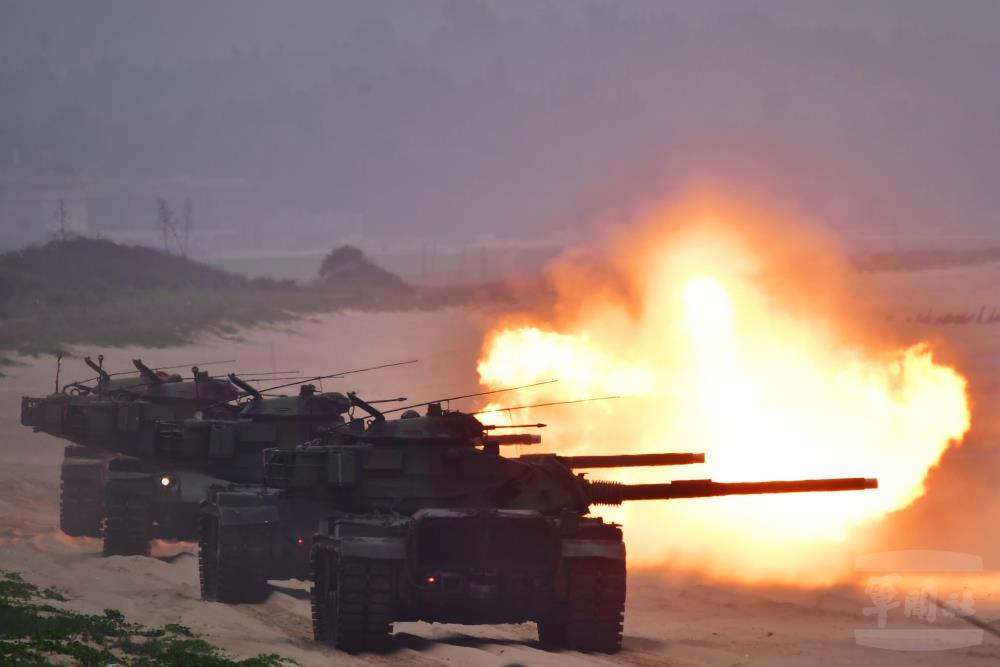 Kinmen Defense Command Conducts Taiwu Exercise – Live-Fire Shooting Demonstrates Solid Combat PowerThe Army’s Kinmen Defense Command conducted the second-quarter “Taiwu Exercise” today. Officers and enlisted personnel completed tasks such as entering positions and combat in the main position zone in accordance with orders. The Kinmen Garrison Battalion deployed M60A3 tanks, CM21 armored vehicles, and Javelin missiles, in coordination with the Kinmen Defense Command’s mixed artillery battalion’s 8-inch howitzers, 155mm cannons, and other organic weapons to conduct live-fire shooting. They also used the “Team Awareness Kit (TAK)” to strengthen command and control resilience, and employed “unmanned aerial vehicles” for target reconnaissance and battlefield control, thereby enhancing joint arms combat effectiveness. To validate the unit’s ability to respond to multiple threats, the Kinmen Garrison Battalion’s tank battalion, mechanized infantry battalion, and anti-armor company, in coordination with the long-range strike firepower of the mixed artillery battalion, simultaneously conducted the quarterly “Taiwu Exercise” live-fire training from different locations. Through the method of “real troops, real locations, and real ammunition,” they executed key area fire destruction and limited target attack tasks, thereby improving the officers and enlisted personnel’s ability to respond and defeat the enemy. This exercise also invited local leaders, gentry, and police representatives from Kinmen County to witness the results of the military’s rigorous training. After the command post issued the situation, 8-inch howitzers, 155mm cannons, and 120mm mortars in the positions first conducted “key area fire destruction.” This was followed by the main position zone combat phase. Officers and enlisted personnel conducted “Javelin missile” live-fire shooting for the first time in this exercise area, simulating strikes against enemy forces advancing from the sea and covering the maneuver of armored vehicles. Finally, M60A3 tanks and CM21 armored vehicles carried out limited target attacks to block and annihilate enemy forces attempting beach landings. In this Taiwu Exercise, the Kinmen Defense Command, based on composite scenarios, dispatched armored vehicles for maneuver and used Javelin missiles to precisely lock onto sea targets, combining with the intense firepower of artillery units to successfully complete the mission, demonstrating the officers and enlisted personnel’s determination to defend the homeland and not yield an inch of ground.2026/05/13
 -
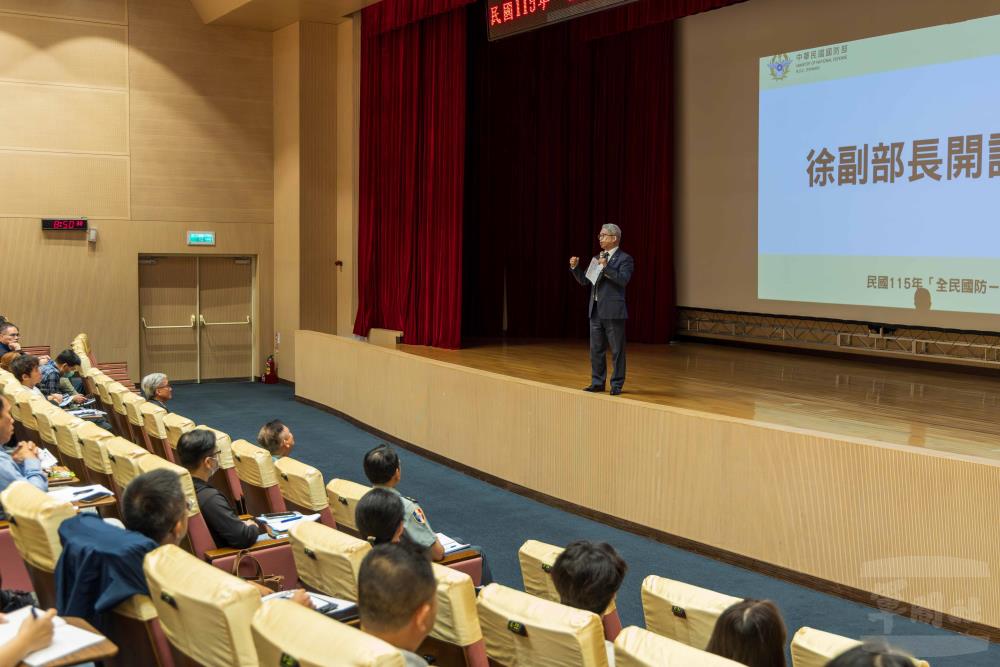 Vice Minister Hsu Presides over All-Out Defense Education Seed Instructor Training WorkshopVice Minister of National Defense Hsu Szu-chien presided today over the Republic of China 2026 “All-Out Defense Education – Social Education” Seed Instructor Training Workshop. On behalf of Minister Wellington Koo Li-hsiung, he welcomed participants from various sectors and encouraged them to strengthen teaching capabilities through professional study, expand the foundation for promoting all-out defense education, build consensus among the public, and enhance Whole-of-Society Defense Resilience. The workshop was held this morning at the Bo’ai Camp. All-out defense affairs personnel recommended by various county and city governments, along with scholars from civil society, participated in the training. The curriculum covered topics such as “National Defense Policy,” “International Situation,” “Media Literacy,” and “All-Out Defense.” Experts and scholars including Director Su Tzu-yun and Researcher Lee Che-chuan from the Institute for National Defense and Security Research were invited to deliver special lectures and analyses. In addition, the Department of Strategic Planning explained the “Special Act on Defense Procurement,” enabling participants to understand its importance to overall national defense. Vice Minister Hsu stated that, facing the future task of promoting all-out defense education, seed instructors had to clearly convey national defense concepts to the public, explaining “why we fought and for whom we fought” — that was, to safeguard the homeland, protect their way of life, and ensure the safety of the 23 million people in Taiwan, Penghu, Kinmen, and Matsu, while clearly recognizing the current security challenges. Vice Minister Hsu pointed out that the war in Ukraine had shown that national defense did not rely solely on military combat power; the key had lain in the will of the entire population to defend the country. Only through the joint participation of the whole society could overall defense strength be formed. He also emphasized that war depended not only on weapons and equipment but also required strong will and resilience to effectively respond to various challenges. Vice Minister Hsu further explained that the forms of modern warfare had evolved rapidly, and unmanned systems had become a key element in operations. Taiwan had possessed advantages in the relevant industry supply chain, particularly holding a critical position in the “non-red supply chain,” and should continue to strengthen development capabilities. At the same time, as Taiwan had been located at the core of the First Island Chain, it had needed to enhance overall defense capabilities in response to changes in the regional situation. Regarding the special defense budget, Vice Minister Hsu pointed out that the relevant planning had been carefully formulated based on overall operational requirements and had covered areas such as strike firepower, intelligence, surveillance and reconnaissance systems, command and control operations, and sustained combat capabilities. He emphasized that all military buildup elements had to be constructed holistically and work in coordination to effectively enhance national defense combat power. Vice Minister Hsu stressed that the allocation of the special budget had been based on overall national defense development needs and coordinated with domestic industry capabilities. Through stable planning and long-term investment, it had strengthened defense self-reliance and supply chain resilience, ensuring the continuous advancement of military buildup and readiness.2026/05/13
 -
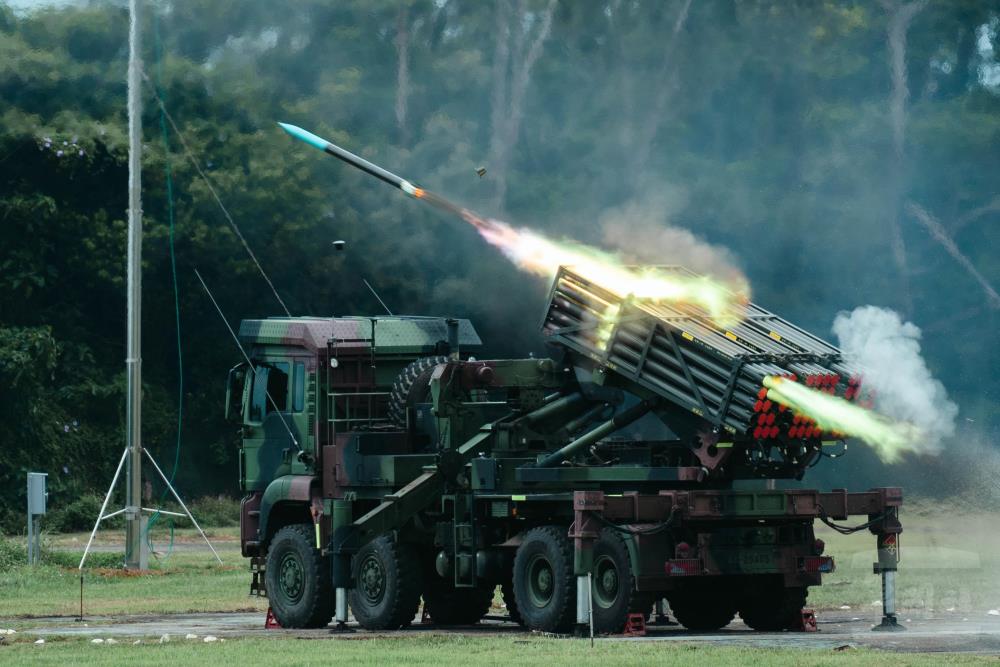 2025 Precision Missile Firing Exercise: Artillery Units Demonstrate Robust Combat StrengthTo validate training effectiveness, the Army conducted the 2025 Precision Missile Firing Training at Jiupeng Base in Pingtung today. In the morning, live-fire exercises of the Thunderbolt 2000 Multiple Rocket System were carried out, while in the afternoon, media were invited to observe the High Mobility Artillery Rocket System (HIMARS) firing, showcasing the Army artillery’s superior strike capabilities and training outcomes through media coverage. This morning, personnel from the rocket companies of the Army’s 21st, 58th, and 43rd Artillery Command, as well as units from the Kinmen Defense Command, Matsu Defense Command, and the 2nd Training Company of the Artillery Training Command, conducted the “Thunderbolt” exercise, simulating countering enemy landings by firing at sea targets to validate the training effectiveness of the troops. In the afternoon, the 58th Artillery Command conducted live-fire exercises with the HIMARS, demonstrating its high mobility and precision strike capabilities to the public through media coverage, highlighting the ROC Armed Forces’ firepower and military readiness achievements. The Army Command stated that the HIMARS is a high-mobility rocket launch platform procured from the United States, equipped with rapid deployment and precision strike capabilities. The first batch of 11 HIMARS units, acquired from the U.S., arrived last year and is currently undergoing integration training by the Army’s 58th Artillery Command. The Army Command noted that this firing exercise, aligned with the “Annual Precision Missile Firing Exercise,” verified the integration training effectiveness of the HIMARS. During the exercise, participating personnel demonstrated high professionalism and coordination, successfully completing the firing mission and accumulating valuable firing experience, achieving the goal of enhancing combat readiness.2025/05/12