- Search
Search
Search "National Tsing Hua University" ,Match:2 results
-
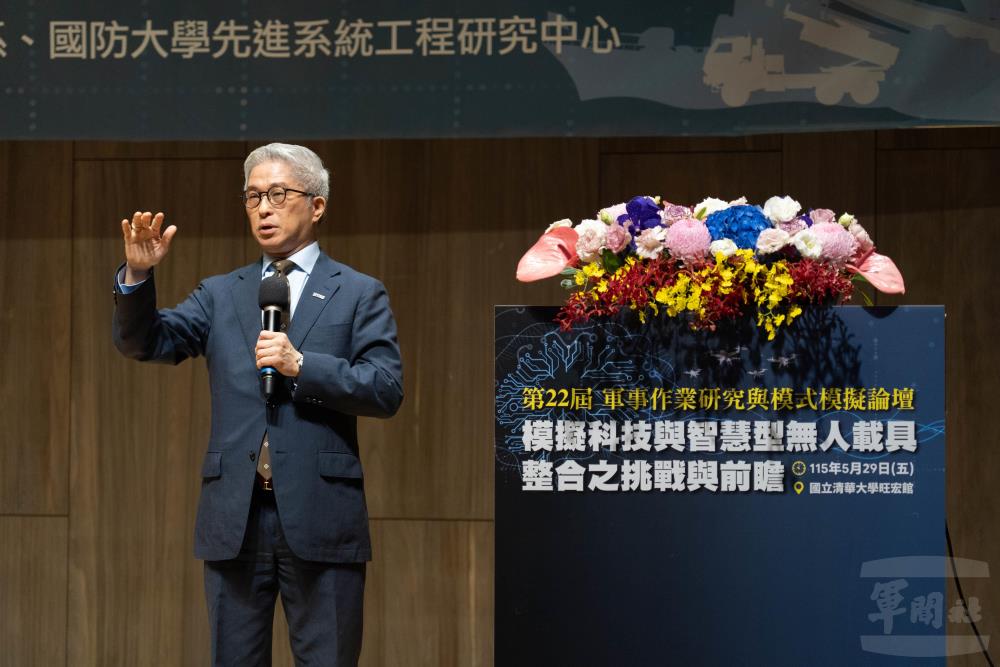 MND and National Tsing Hua University Hold Forum to Advance Defense Capabilities Through TechnologyThe 22nd Military Operations Research and Modeling and Simulation Forum was held today at National Tsing Hua University. Vice Minister of National Defense Hsu Szu-chien and National Tsing Hua University President W. John Kao jointly attended the opening ceremony. Experts and scholars from various sectors were invited to exchange views on key defense technology issues, including artificial intelligence (AI), modeling and simulation, autonomous systems, and unmanned systems, with the aim of enhancing the nation’s overall scientific research capabilities. Vice Minister Hsu stated that rapid changes in the international security environment and advances in technology had transformed the nature of modern warfare. He noted that unmanned systems and AI technologies had become critical components of future defense capabilities. Emphasizing that “technology is the future of the Republic of China, and Taiwan’s technological development has always remained at the forefront of innovation,” he expressed hope that Taiwan’s technology sector would continue contributing to the development of the national defense industry and strengthening the nation’s defense capabilities. Vice Minister Hsu further pointed out that one of the key challenges facing defense technology development involved not only unmanned systems themselves but also the integration of various weapons platforms and systems. This included the effective integration of domestically developed and foreign-procured equipment. He noted that substantial technological support was required to enable rapid target identification, threat assessment, and weapons allocation, thereby enhancing overall defense operational effectiveness. President W. John Kao stated that military technology had long served not only as a driving force behind national defense development but also as the source of many innovations that had transformed modern life. Technologies such as the Internet and the Global Positioning System (GPS) had originated from military research and development efforts, demonstrating that the defense sector had also been a significant catalyst for technological innovation. President Kao noted that National Tsing Hua University had long been committed to promoting technological innovation and technology transfer. Earlier this year, the university established the nation’s first university-led “Tsing Hua University Science Park” to further integrate campus research capabilities and accelerate the transition of research outcomes from laboratories to society and industry. He also announced that the university would soon launch the NT$1 billion “Tsing Hua Future Fund,” which would provide resources to help researchers, students, and industry partners overcome the so-called “valley of death” in the innovation process and further strengthen Taiwan’s technological competitiveness. During the keynote session, Professor Shang-Hong Lai of the Department of Computer Science at National Tsing Hua University delivered a presentation titled “Applications of Artificial Intelligence in National Defense,” in which he explored the use of AI technologies in defense-related scenarios. In addition, Dr. Shih-Pin Kou, Senior Advisor at the National Defense University, presented “How Autonomous Edge Uses Decentralized Command to Direct Autonomous Unmanned Operations,” sharing recent developments in autonomous operations and distributed command systems. Furthermore, exhibition booths established by universities, manufacturers, and enterprises from Taiwan and abroad were displayed around the forum venue, showcasing a wide range of defense-related technologies and capabilities. Exhibits included modeling and simulation systems, intelligent training solutions, AI-assisted decision-making technologies, unmanned aerial vehicles, unmanned ground vehicles, unmanned underwater vehicles, counter-drone systems, digital battlefield services, and autonomous command-and-control solutions. These exhibits highlighted the latest achievements in the development of intelligent defense technologies.2026/05/29
 -
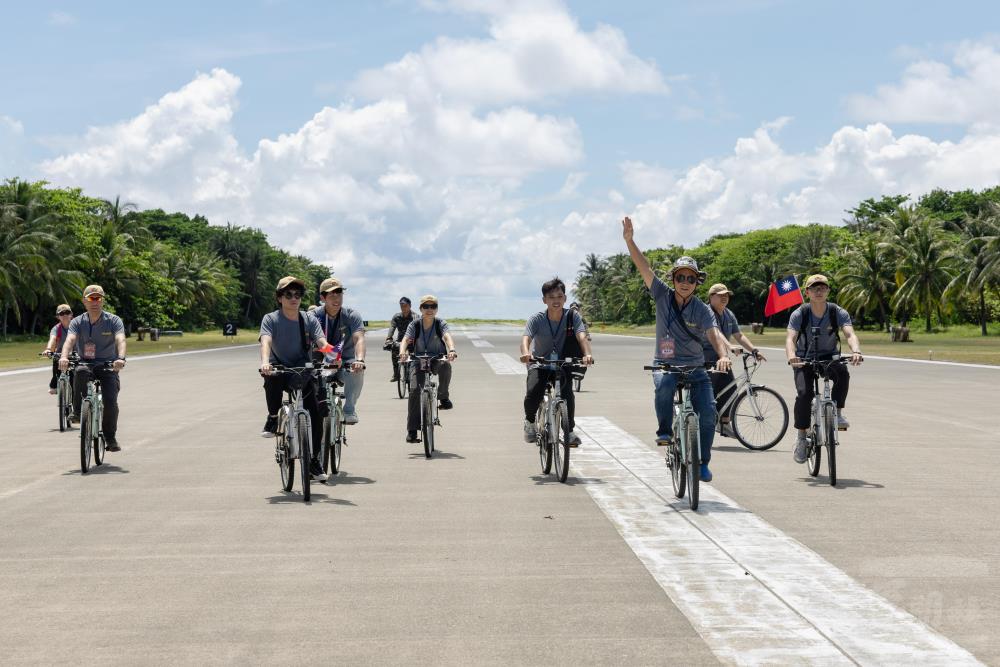 Students and Instructors of the Nansha Study Camp Accompany Navy Vessel on Southern Patrol – Witnessing the National Flag Flying Proudly over Taiping IslandThe first group of the 2025 “National Defense Education Nansha Study Camp” returned to Zuoying Military Port in Kaohsiung in recent days. A total of 10 instructors and students from National Kaohsiung University of Science and Technology, National Cheng Kung University, and National Tsing Hua University participated. In coordination with the Navy’s Nansha patrol mission, they boarded a Kang Ding-class frigate to visit Taiping Island, the southernmost territory of our nation. Through a nine-day, eight-night study itinerary, they deepened their awareness of national territorial sovereignty and broadened the effectiveness of national defense education for all citizens. The group departed on May 19 aboard Kang Ding-class frigate No. 1202 (ROCS Kang Ding) for Taiping Island in the Spratlys. The Ministry of National Defense arranged a diverse curriculum aboard the vessel. Army Academy instructor Lieutenant Colonel Chen Yi-ling delivered lectures on “Strategic Discourse on the South China Sea,” “Introduction to Our Nation’s Defense Policy and All-Volunteer Force System,” “Changes and Challenges in the Regional Situation,” “Media Literacy,” and “Countering Cognitive Warfare,” enabling participants to gain a profound understanding of the current military service system and our nation’s determination to manage the South China Sea while cultivating media literacy and establishing basic concepts for countering cognitive warfare. Instructors Huang Chi-feng from Tsing Hua University, Professor Chen Yen-chung from Cheng Kung University, and Military Training Instructor Lieutenant Colonel Tsai Pei-yuan from Kaohsiung University of Science and Technology respectively addressed topics such as “Foreign Military Occupation of Our Nansha Territories” and “Spatial Planning under Post-Military Jurisdiction,” drawing on international cases and their professional expertise to extend discussion on South China Sea issues. In addition, ROCS Kang Ding arranged practical courses including “light signal recognition,” “navigation watch and helmsman training,” “signal recognition and flag-hoisting drills,” “damage control,” “chart measurement and sextant operation,” “mooring line handling training,” and “knot-tying practice.” Through these hands-on experiences, all participants gained a real appreciation of the hard work Navy personnel perform in defending maritime territory. After a five-day, four-night voyage covering nearly 1,600 kilometers, the group arrived at the outer reef of Taiping Island on the morning of May 23 and transferred to a Coast Guard vessel for landing. Upon arrival, the instructors and students presented flower garlands to representatives of the stationed personnel in tribute to their dedication in guarding national territory. Guided by Coast Guard personnel, they subsequently visited the island’s livestock farm, No. 5 natural water well, Guanyin Temple, and the old Japanese pier, successively engaging in environmental tree-planting, mailing postcards, and conducting a beach cleanup, thereby taking concrete action to protect the magnificent ecological environment of our southernmost territory. The following dawn, the study camp participants joined stationed personnel at the Nansha Command Headquarters for the flag-raising ceremony, together witnessing the national flag of the Republic of China, azure sky with a white sun and red earth, rising majestically over the southern frontier of the nation, bringing a perfect conclusion to this year’s Nansha Study Camp activities.2025/08/07