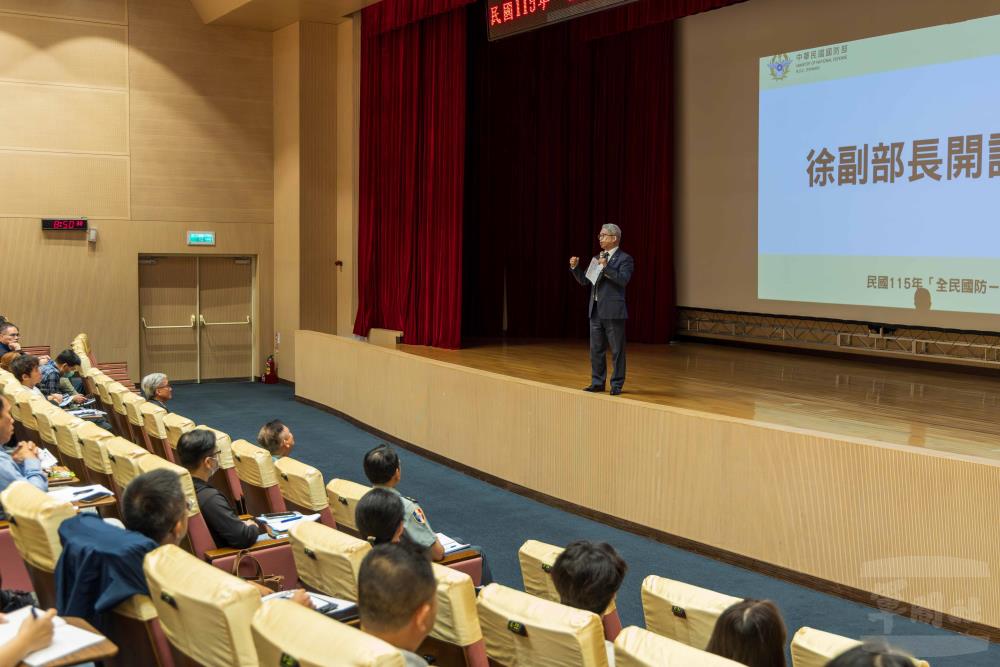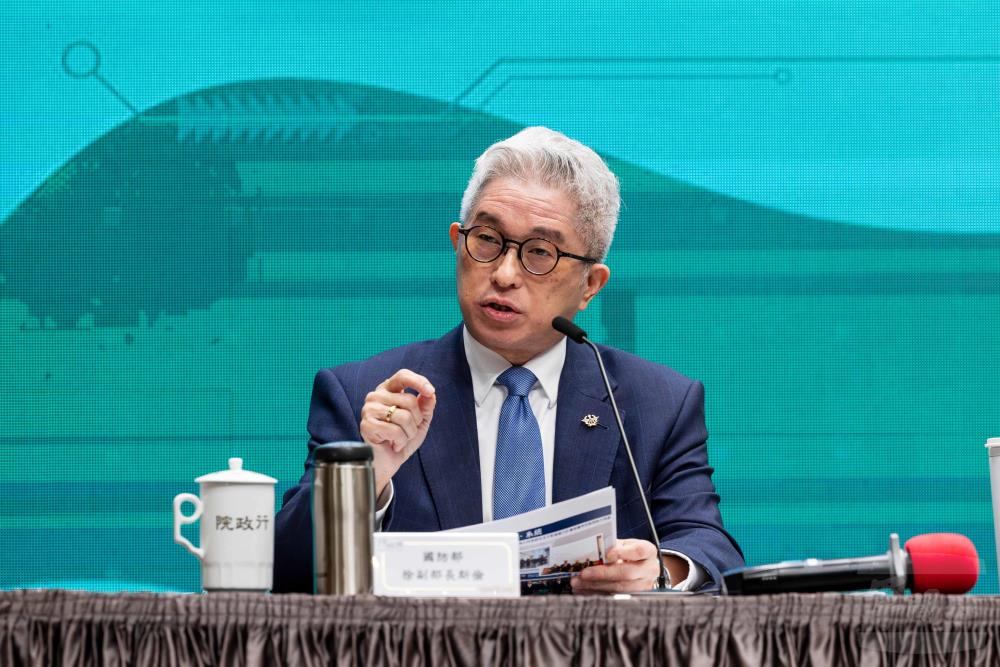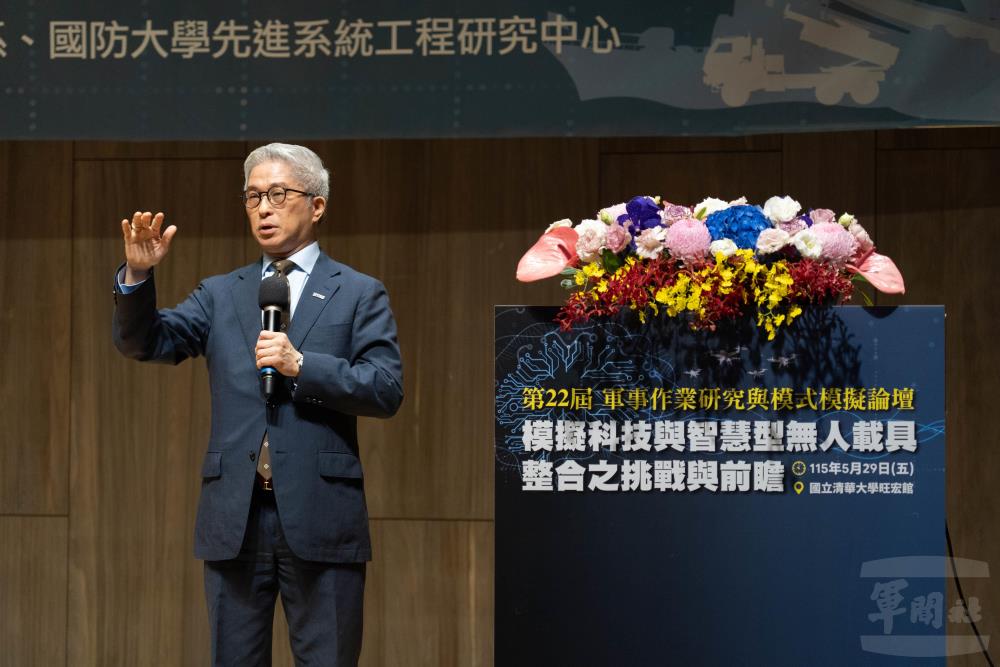
The 22nd Military Operations Research and Modeling and Simulation Forum was held today at National Tsing Hua University. Vice Minister of National Defense Hsu Szu-chien and National Tsing Hua University President W. John Kao jointly attended the opening ceremony. Experts and scholars from various sectors were invited to exchange views on key defense technology issues, including artificial intelligence (AI), modeling and simulation, autonomous systems, and unmanned systems, with the aim of enhancing the nation’s overall scientific research capabilities.
Vice Minister Hsu stated that rapid changes in the international security environment and advances in technology had transformed the nature of modern warfare. He noted that unmanned systems and AI technologies had become critical components of future defense capabilities. Emphasizing that “technology is the future of the Republic of China, and Taiwan’s technological development has always remained at the forefront of innovation,” he expressed hope that Taiwan’s technology sector would continue contributing to the development of the national defense industry and strengthening the nation’s defense capabilities.
Vice Minister Hsu further pointed out that one of the key challenges facing defense technology development involved not only unmanned systems themselves but also the integration of various weapons platforms and systems. This included the effective integration of domestically developed and foreign-procured equipment. He noted that substantial technological support was required to enable rapid target identification, threat assessment, and weapons allocation, thereby enhancing overall defense operational effectiveness.
President W. John Kao stated that military technology had long served not only as a driving force behind national defense development but also as the source of many innovations that had transformed modern life. Technologies such as the Internet and the Global Positioning System (GPS) had originated from military research and development efforts, demonstrating that the defense sector had also been a significant catalyst for technological innovation.
President Kao noted that National Tsing Hua University had long been committed to promoting technological innovation and technology transfer. Earlier this year, the university established the nation’s first university-led “Tsing Hua University Science Park” to further integrate campus research capabilities and accelerate the transition of research outcomes from laboratories to society and industry. He also announced that the university would soon launch the NT$1 billion “Tsing Hua Future Fund,” which would provide resources to help researchers, students, and industry partners overcome the so-called “valley of death” in the innovation process and further strengthen Taiwan’s technological competitiveness.
During the keynote session, Professor Shang-Hong Lai of the Department of Computer Science at National Tsing Hua University delivered a presentation titled “Applications of Artificial Intelligence in National Defense,” in which he explored the use of AI technologies in defense-related scenarios. In addition, Dr. Shih-Pin Kou, Senior Advisor at the National Defense University, presented “How Autonomous Edge Uses Decentralized Command to Direct Autonomous Unmanned Operations,” sharing recent developments in autonomous operations and distributed command systems.
Furthermore, exhibition booths established by universities, manufacturers, and enterprises from Taiwan and abroad were displayed around the forum venue, showcasing a wide range of defense-related technologies and capabilities. Exhibits included modeling and simulation systems, intelligent training solutions, AI-assisted decision-making technologies, unmanned aerial vehicles, unmanned ground vehicles, unmanned underwater vehicles, counter-drone systems, digital battlefield services, and autonomous command-and-control solutions. These exhibits highlighted the latest achievements in the development of intelligent defense technologies.