- Search
Search
Search "MND" ,Match:8 results
-
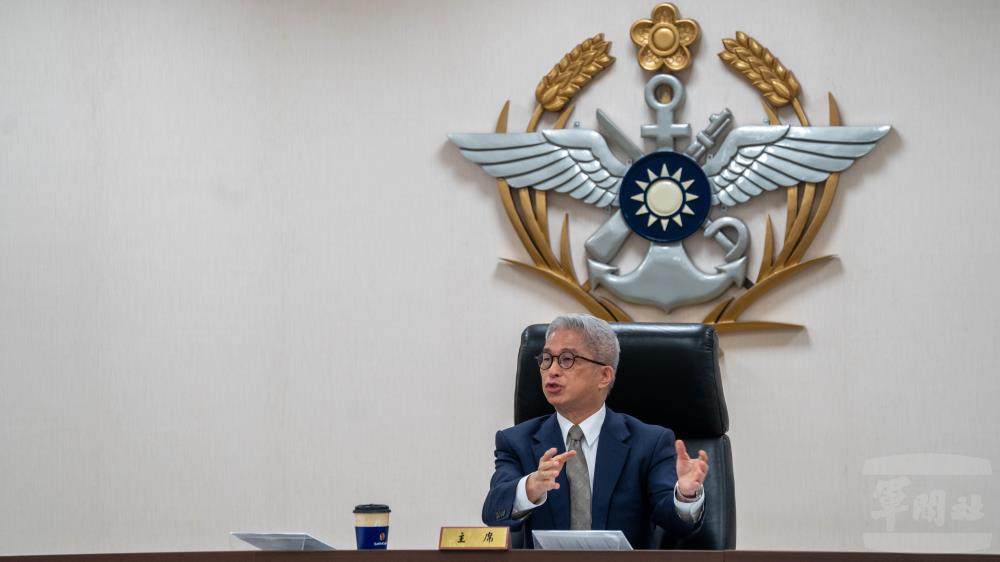 MND Holds Preparatory Meeting for GDI External Expert Assessment, Strengthening Integrity and Good GovernanceThe Ministry of National Defense held its fourth preparatory meeting for the Government Defence Integrity Index (GDI) external expert assessment today at Bo’ai Camp. Chaired by Vice Minister of National Defense Hsu Szu-chien, the meeting brought together leading domestic experts in government ethics and integrity. Through external assessment and internal-external collaboration, the Ministry hopes to gather a broad range of recommendations, enhance transparency and accountability in defense governance, and align its practices with current international trends in integrity and good governance. Vice Minister Hsu explained that the GDI comprehensively assesses countries across five risk areas: political affairs, finance, personnel, military operations, and procurement. It is also an important performance indicator under the Executive Yuan’s “National Integrity Building Action Plan.” Taiwan has participated in three previous GDI assessments and received a B rating, indicating a low risk of corruption, on each occasion. In the most recent assessment, New Zealand was the only one of the 86 countries evaluated to receive an A rating, while Taiwan was the only Asian country to rank among the top 10. These results demonstrate the resilience of Taiwan’s defense institutions and their ability to support the development of a robust and credible deterrent force. Integrity is a vital foundation of national defense, Vice Minister Hsu emphasized. In recent years, Taiwan has steadily advanced defense investment, indigenous defense capabilities, and related reforms. The Ministry has also continued promoting integrity education throughout the Armed Forces, strengthening internal and external controls, and improving integrity governance. Participation in the global GDI assessment allows the Armed Forces, through the collective efforts of government agencies, scholars, experts, and nongovernmental organizations, to demonstrate a law-abiding, pragmatic, and integrity-driven military culture. This further strengthens public confidence in force development, combat readiness, major exercises, and disaster prevention and relief preparations. Vice Minister Hsu also noted that “gender equality” would be introduced as a new topic in the forthcoming GDI assessment. The Ministry has progressively increased the number of women serving as volunteer personnel, continued advancing gender mainstreaming and equality, and worked to create a respectful and inclusive workplace. In closing, Vice Minister Hsu stressed that Taiwan’s strong GDI results had not been achieved overnight. They reflected the combined efforts of government officials, scholars, experts, and every member of the Armed Forces. Their dedication continues to drive the Ministry’s progress. He invited the external scholars and experts attending the meeting to work with the Ministry during the ensuing discussions to further improve its systems and ensure that unlawful conduct, opportunistic wrongdoing, infiltration, and sabotage have no place to hide.2026/07/29
 -
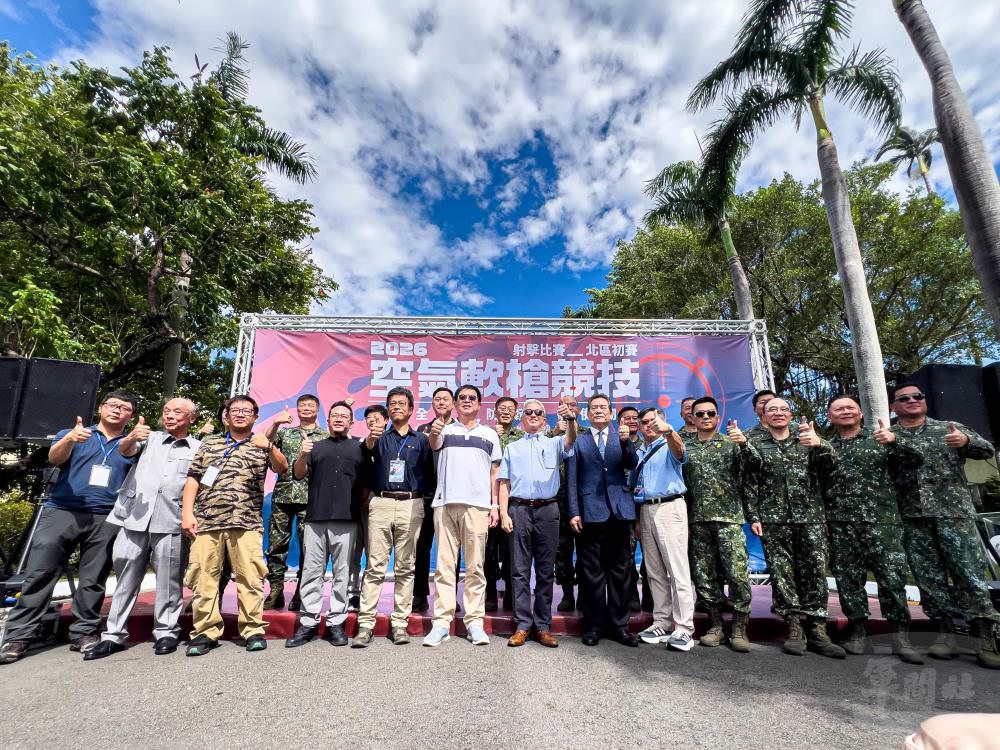 Vice Minister Hsu Presides Over Northern Preliminary Round of Airsoft Shooting Competition, Strengthening Whole-of-Society Defense ResilienceThe Ministry of National Defense’s “2026 National Airsoft Shooting Competition, Northern Preliminary Round” opened today at Fu Hsing Kang College. Presided over by Vice Minister of National Defense Hsu Szu-chien, the event featured competitive airsoft shooting, close-quarters battle (CQB), and simulated battlefield scenarios. Twenty teams comprising 107 reservists from cities and counties across northern Taiwan participated. Military equipment displays and drone demonstrations also attracted nearly 10,000 visitors. The event aimed to deepen all-out defense education and strengthen whole-of-society defense resilience. Vice Minister Hsu presided over the opening ceremony at the National Defense University’s Fu Hsing Kang College campus. Attendees included National Security Council Advisors Huang Chung-yen and Liu Te-chin; Deputy Secretary-General Lii Wen; National Cultural Association of Taiwan Secretary-General Lee Hou-ching; Chief of Army General Lu Kun-xiu; All-out Defense Mobilization Agency Director-General Lieutenant General Liao Chien-shing; Reserve Command Commander Lieutenant General Yu Wen-chen; National Defense University Vice President Lieutenant General Liu Pei-chih; Sixth Army Corps Commander Lieutenant General Lien Chih-wei; Political Warfare Bureau Director-General Lieutenant General Shih Shun-wen; and local village and neighborhood chiefs. In his opening remarks, Vice Minister Hsu first expressed his sincere appreciation to the National Security Council and the organizing units, while paying his highest respects to all participating teams. He said the competition had been made possible by everyone’s collective effort and participation. Hsu explained that the airsoft shooting competition series was initiated at the President’s direction. Under the guidance of the National Security Council and with assistance from the Ministry of the Interior, education authorities, the National Cultural Association of Taiwan, and other organizations, the MND organized the event in partnership with the National Defense Education Association and Formosa Defense Vision. Taiwan’s national security is underpinned not only by its semiconductor and AI industries, but also by the many civil society organizations and businesses that support the country. Reservists and civil defense teams likewise play a vital role in strengthening whole-of-society defense resilience, Vice Minister Hsu noted. Hsu emphasized that the competition was more than a sporting event. It also served as an important platform for strengthening whole-of-society defense resilience. Competitive shooting helps participants develop concentration, judgment, mental resilience, and the ability to respond under pressure, while most importantly fostering teamwork. He added that the value of the competition lay not merely in winning or losing, but in exchanging experience, learning from one another, and growing together. He encouraged participants to uphold the principles of “safety first, fair competition, and friendship through shooting,” follow the rules, respect the judges’ decisions, and demonstrate good sportsmanship. Regardless of the results, every participant who embraced the challenge and gave their all deserving recognition as a winner. Vice Minister Hsu and the attending guests then conducted the opening ceremony and fired the ceremonial first shots. He subsequently visited exhibits presented by the police, fire services, reservists, and the Armed Forces to learn more about their displays. He also thanked participating service members for their hard work and presented an additional food allowance to the units involved. Held in conjunction with the opening of Fu Hsing Kang College campus to the public, the event also featured military equipment displays, drone demonstrations, and interactive all-out defense education exhibits. Through these diverse displays and direct public engagement, the Ministry hopes to deepen all-out defense education, promote whole-of-society defense resilience, and put into practice the conviction to “preserve peace through strength and defend our homeland through action.”2026/07/25
 -
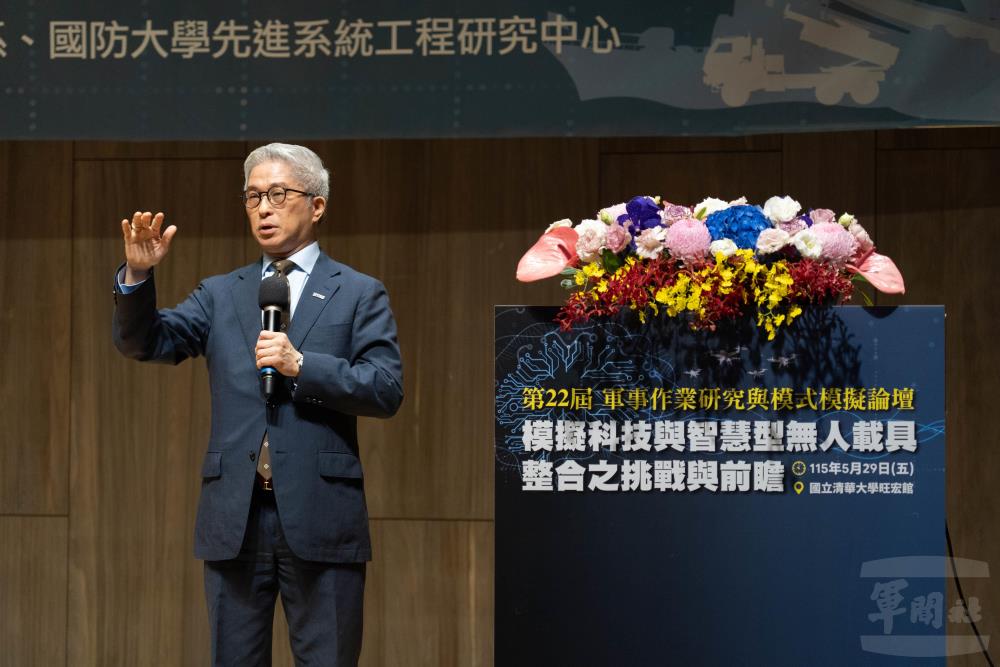 MND and National Tsing Hua University Hold Forum to Advance Defense Capabilities Through TechnologyThe 22nd Military Operations Research and Modeling and Simulation Forum was held today at National Tsing Hua University. Vice Minister of National Defense Hsu Szu-chien and National Tsing Hua University President W. John Kao jointly attended the opening ceremony. Experts and scholars from various sectors were invited to exchange views on key defense technology issues, including artificial intelligence (AI), modeling and simulation, autonomous systems, and unmanned systems, with the aim of enhancing the nation’s overall scientific research capabilities. Vice Minister Hsu stated that rapid changes in the international security environment and advances in technology had transformed the nature of modern warfare. He noted that unmanned systems and AI technologies had become critical components of future defense capabilities. Emphasizing that “technology is the future of the Republic of China, and Taiwan’s technological development has always remained at the forefront of innovation,” he expressed hope that Taiwan’s technology sector would continue contributing to the development of the national defense industry and strengthening the nation’s defense capabilities. Vice Minister Hsu further pointed out that one of the key challenges facing defense technology development involved not only unmanned systems themselves but also the integration of various weapons platforms and systems. This included the effective integration of domestically developed and foreign-procured equipment. He noted that substantial technological support was required to enable rapid target identification, threat assessment, and weapons allocation, thereby enhancing overall defense operational effectiveness. President W. John Kao stated that military technology had long served not only as a driving force behind national defense development but also as the source of many innovations that had transformed modern life. Technologies such as the Internet and the Global Positioning System (GPS) had originated from military research and development efforts, demonstrating that the defense sector had also been a significant catalyst for technological innovation. President Kao noted that National Tsing Hua University had long been committed to promoting technological innovation and technology transfer. Earlier this year, the university established the nation’s first university-led “Tsing Hua University Science Park” to further integrate campus research capabilities and accelerate the transition of research outcomes from laboratories to society and industry. He also announced that the university would soon launch the NT$1 billion “Tsing Hua Future Fund,” which would provide resources to help researchers, students, and industry partners overcome the so-called “valley of death” in the innovation process and further strengthen Taiwan’s technological competitiveness. During the keynote session, Professor Shang-Hong Lai of the Department of Computer Science at National Tsing Hua University delivered a presentation titled “Applications of Artificial Intelligence in National Defense,” in which he explored the use of AI technologies in defense-related scenarios. In addition, Dr. Shih-Pin Kou, Senior Advisor at the National Defense University, presented “How Autonomous Edge Uses Decentralized Command to Direct Autonomous Unmanned Operations,” sharing recent developments in autonomous operations and distributed command systems. Furthermore, exhibition booths established by universities, manufacturers, and enterprises from Taiwan and abroad were displayed around the forum venue, showcasing a wide range of defense-related technologies and capabilities. Exhibits included modeling and simulation systems, intelligent training solutions, AI-assisted decision-making technologies, unmanned aerial vehicles, unmanned ground vehicles, unmanned underwater vehicles, counter-drone systems, digital battlefield services, and autonomous command-and-control solutions. These exhibits highlighted the latest achievements in the development of intelligent defense technologies.2026/05/29
 -
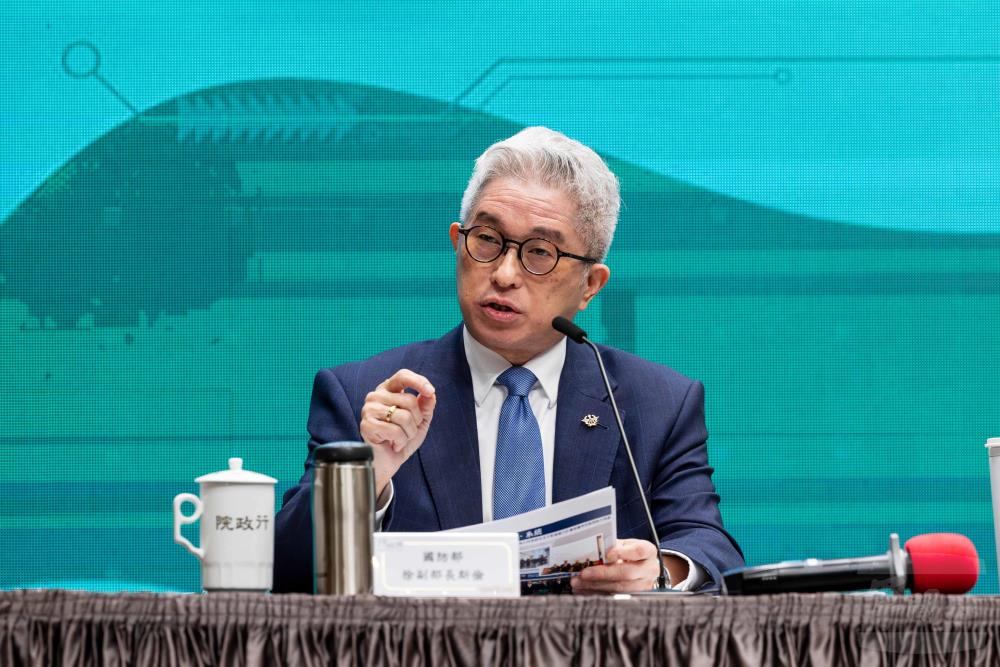 Vice Minister Hsu: Special Defense Act Features Comprehensive Planning – Various Capabilities Are Interdependent and Cannot Be Arbitrarily ReducedVice Minister for Policy Hsu Szu-Chien stated today that the “Special Act on Procurement for Strengthening Defense Resilience and Asymmetric Warfare Capabilities” was proposed in response to enemy threats and joint operations requirements. The overall planning covered capability construction in strike, intelligence surveillance reconnaissance, command and control, unmanned systems, and sustained combat capabilities. These various capabilities were interdependent and could not be arbitrarily reduced or postponed. He hoped that all political parties would jointly support national defense buildup and the enhancement of defense resilience. The Executive Yuan held a press conference after its meeting this morning, during which Vice Minister Hsu explained issues related to the special defense act. Vice Minister Hsu pointed out that this special budget adopted a one-time, large-scale investment approach. In addition to accelerating combat power acquisition, it could also provide long-term stable demand for domestic industries and drive the development of unmanned systems and the national defense industry. If the budget were changed to annual allocations, it would affect the military buildup timeline and the effectiveness of equipment integration. Regarding military procurement progress, Vice Minister Hsu stated that the relevant military procurement cases had all completed preliminary coordination with the U.S. side and obtained formal letters of supply assurance. The Ministry of National Defense would continue to maintain close communication and coordination with the U.S. side to ensure smooth advancement of all procurement cases. In addition, Vice Minister Hsu emphasized that promoting large-scale and long-term procurement of unmanned systems and related equipment through the special budget would not only help rapidly enhance combat power but also assist domestic manufacturers in investing in research and development and production capacity building, thereby strengthening defense self-reliance and supply chain resilience.2026/05/08
 -
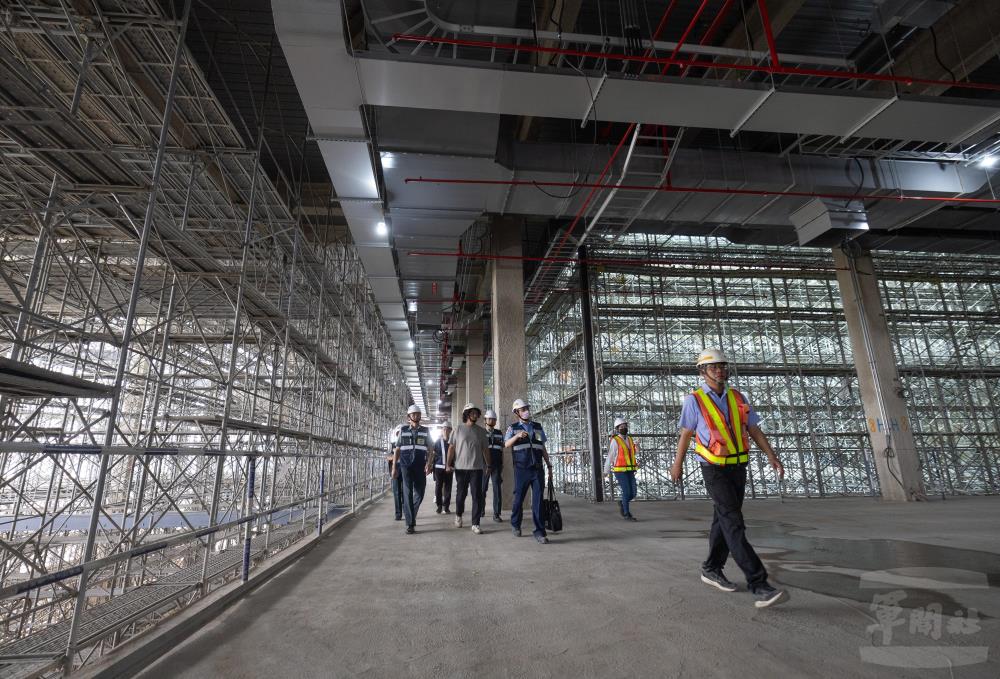 Legislators Inspect Military Museum, Expecting Adherence to Milestone Controls of the ProjectTo understand the progress of various construction at the National Military Museum, Legislator SHEN, PAO-YANG, convener of the Legislative Yuan's Foreign Affairs and National Defense Committee, led a delegation today to Dazhi to inspect the new construction work of the Museum. The goal is to ensure strict adherence to the project timeline and successfully complete the overall construction mission. This morning, Legislator SHEN, PAO-YANG, convener of the Foreign Affairs and National Defense Committee, led a delegation to the construction site of the National Military Museum, accompanied by the Admin. Deputy Minister of Ministry of National Defense (MND), Lieutenant General YANG, Counselor of MND, Lieutenant General SHIH, Director of the Administration Office, Lieutenant General SUN, and other officials. In addition to receiving a briefing on the construction progress, the delegation also viewed a panoramic video presentation of the museum to gain a better understanding of the facility's planning and offered their suggestions. During the inspection, Convener SHEN toured the relevant floors in person. With detailed explanations from specialists, he reviewed the construction and supervision work step by step to understand the overall progress of each task. He emphasized that if any obstacles or risks arise, communication with the contractors must be maintained to find solutions. At the same time, dedicated personnel should be assigned to oversee the project's progress to ensure that the construction of this new National Military Museum is completed on time and with high quality.2025/06/23
 -
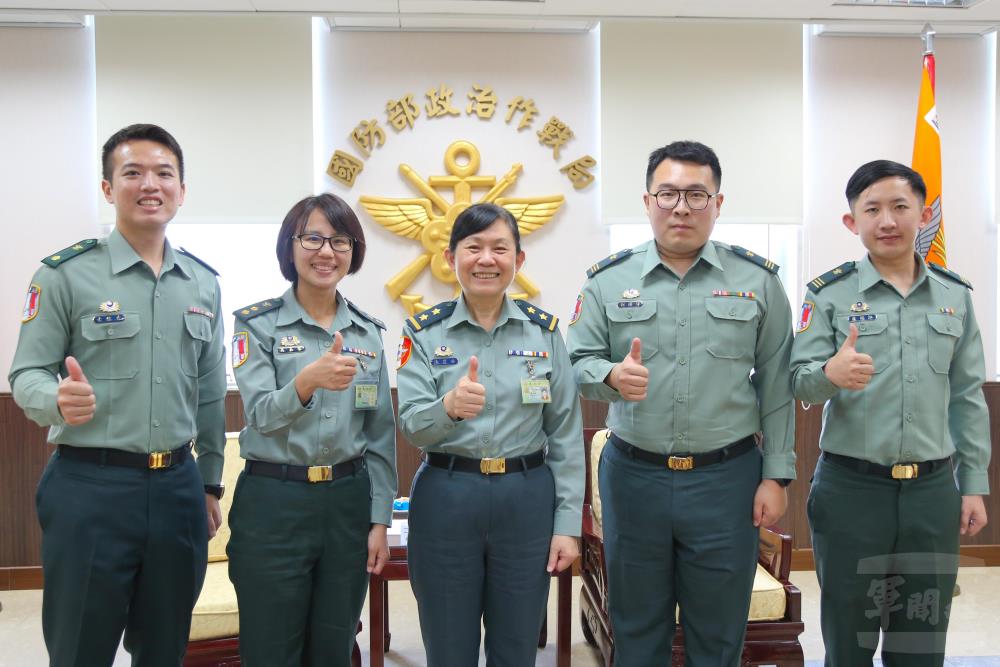 Director General Chen Meets Newly Certified Social Workers, Encourages Continued Enhancement of Psychological Counseling Capacity in the R.O.C. Armed ForcesLieutenant General Chen, Yu-Lin, Director General of the Political Warfare Bureau at the Ministry of National Defense (MND), met today with personnel who obtained their Social Worker Licenses in the first half of 2025. She praised their efforts and achievements in advancing professional skills and enhancing the psychological counseling capabilities within the R.O.C. Armed Forces, encouraged them to continue pursuing lifelong learning to further strengthen the mental health support capacity in military. In the morning, Director General Chen presented awards to recognize four service members who obtained their Social Worker Licenses in the first half of this year: Lieutenant Colonel Wu, Chia-Rung, Major Ku, Hsin-Chi, Captain Liu, Po-Tao, and Captain Lu, Kuan-Hung. She commended their dedication and hard work throughout the certification process, noting their profession and a strong passion for psychological counseling work. Director General Chen stated that, to effectively address the psychological counseling needs of military personnel, the MND launched the “Military Mental Health Care Program” in recent years. This initiative adopts the method of “self-booking without referral”, allowing service members to directly seek assistance from civilian mental health counseling providers without going through their unit or the military’s Mental Health Center for assessment or coordination. Under this program, everyone is entitled to six free counseling sessions per year. Since its launch in mid-February this year, over 1,200 service members have utilized the service, demonstrating its tangible benefits for the well-being of military personnel. Director General Chen encouraged the newly certified individuals to maintain their enthusiasm for learning after obtaining licenses. She urged them to continue gaining social experience and refining the psychological support capabilities of the R.O.C. Armed Forces. When taking on frontline roles in counseling work, they should provide timely feedback and sharing insights that could benefit the well-being of primary level personnel, which is vital for helping relevant departments develop effective, supportive policies and truly implement comprehensive care for service members. In addition, to encourage psychological counselors within the R.O.C. Armed Forces to enhance their professional knowledge and capabilities, the Fu Hsing Kang College, National Defense University, in collaboration with the Political Warfare Education and Training Center of the MND, has been jointly organizing the “Counseling Psychologist and Social Worker License Training Program” since 2018. This program aims to support military counseling personnel in obtaining certifications as licensed counseling psychologists and social workers—and has achieved remarkable results.2025/04/30
 -
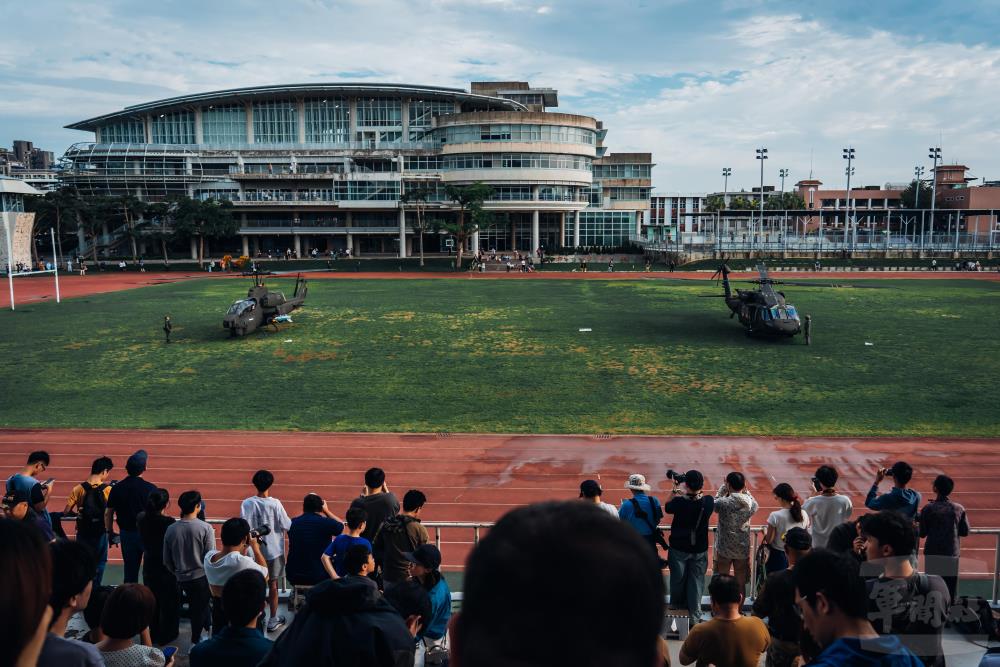 Helicopters Landing and Takeoff at Feng Chia University — R.O.C. Armed Forces Promote All-out Defense EducationThe Ministry of National Defense (MND) is holding a two-day all-out defense education campaign in collaboration with Feng Chia University today. This morning, the Army Aviation 602nd Brigade specially dispatched AH-1W SuperCobra and UH-60M Black Hawk helicopters to land at the sports field in the university, allowing the public to experience up close the powerful wind and sound of the helicopters. Through the display of military equipment, visitors of all ages were able to experience the national defense first-hand, understand it, thereupon foster support for nationwide defense. During the campaign, in addition to dynamic flight demonstrations of these two types of helicopters, various active military equipment was showcased, including the CM-32/33 Armored Vehicle, field broadcast vehicle, TOW Missile Carrier, and the field ambulance which is firstly open to public. These displays highlighted the military’s diverse mobility and rescue capabilities. At the same time, multiple interactive experience and recruitment booths were set up on-site, allowing visitors to wear combat gear, try on chemical protection suits, and participate in psychological warfare unit puzzle challenges and other mini-games. These activities provided attendees with memorable and novel experiences, helping to bridge the gap between the military and civilians. Major Chiu, the team leader responsible for the helicopter landing mission, stated that upon receiving the assignment, he immediately started the planning of all flight safety details and led his team to conduct site inspections and simulated test flights to ensure a flawless mission. This was the first time a helicopter landing was performed on the Feng Chia University campus. Major Chiu emphasized that under the premise of ensuring flight and public safety, the event also aimed to showcase the hard work and training achievements of the R.O.C. Armed Forces, with a hope that younger generation interested in serving the nation would consider joining the Armed Forces to contribute to the defense of their homeland. In addition, the "Taiwan International Model Show – Taichung Weei Cup and Science Fantasy" was held simultaneously at Feng Chia University, featuring exquisite models across 11 categories, including military vehicles, military aircraft, ships, and science fiction. The MND also established the "MND Special Prize for All-out Defense Education " to recognize participants whose creations highlight military equipment, helping to raise public awareness of the armed forces.2025/04/19
 -
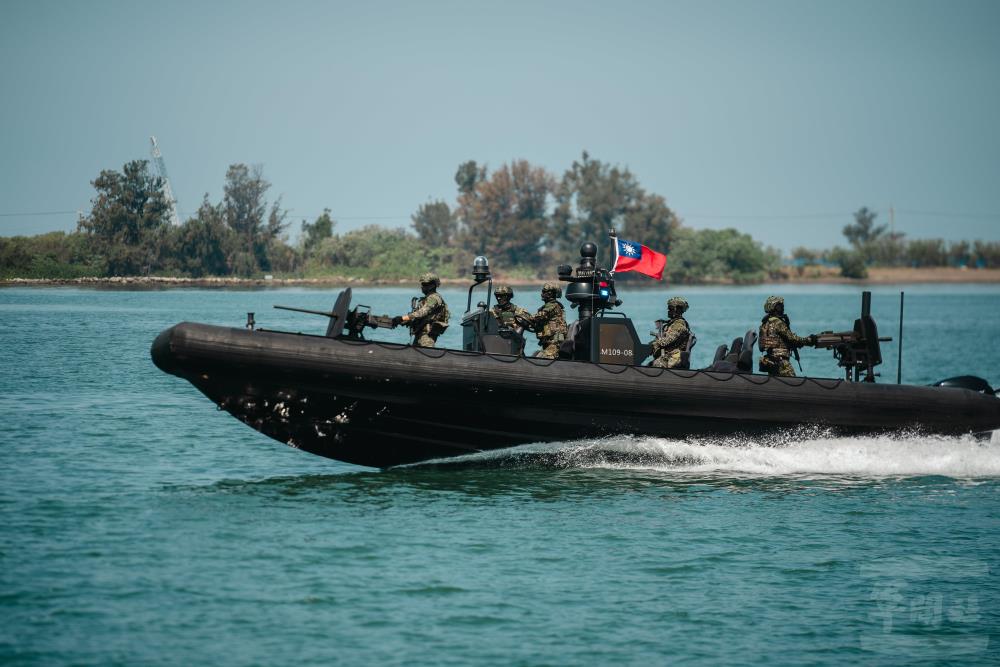 The R.O.C. Marine Corps is strengthening its security capabilities to ensure a smooth execution of combat missions.In response to enemy threats in recent years, the Marine Corps supported actively the Navy’s force transformation and mission adjustments. Security Battalions are established under the Air Defense & Base Guard Group, along with an Amphibious Reconnaissance and Patrol Unit, which are tasked respectively with conducting land-based security operations and carrying out maritime security missions using M109 assault boats, to ensure the smooth execution of both land and naval operations. The Security Battalion under the Air Defense & Base Guard Group of ROCMC was established at the end of last year as part of the force transformation initiative. Its mission is to provide security for land-based mobile missile crews and mobile radar crews, ensuring their mobility throughout the mission and the safety of their positions. In recent years, the Amphibious Reconnaissance and Patrol Unit has actively adapted its mission in response to enemy threats and the joint force planning directives of Ministry of National Defense (MND). With the Navy’s integration concept, the unit employs M109 assault boats to carry out maritime security missions, ensuring the successful execution of mine-laying operations and the integrity of designated minefields. Lieutenant Colonel Kuo, commander of the 1st Security Battalion under the Air Defense & Base Guard Group, explained that the battalion’s primary mission is to provide cover and protection for mobile missile and radar crews during their operations, along with route reconnaissance and position security, with most missions conducted using vehicles for mobile escort. Compared to traditional infantry, personnel must be more proficient in vehicle operation and driving, as well as possess basic troubleshooting skills to handle unexpected situations and carry out convoy tactics effectively. In addition, they must be familiar with the equipment used by the mobile crews under protection, so they can take over and complete the mission if there are casualties among escorted personnel. Lieutenant Colonel Kuo stated that in addition to basic combat skills, the unit regularly conducts scenario-based training to prepare personnel for responding to enemy threats. These responses are tested and validated during readiness patrols conducted by mobile crews, aiming to achieve a combat capability characterized by "rapid response and immediate deployment," thereby ensuring national security. The First Lieutenant Kang, a leader from the Amphibious Reconnaissance and Patrol Unit, stated that upon receiving a mine-laying security mission order, the unit will quickly assemble and deploy from port to conduct defensive mine-laying escort operations in a standby posture. Throughout the mission, they will provide full escort for mine-laying vessels between the designated minefield and the loading port. At the same time, they will seize opportunities to harass enemy obstacle-clearing ships and aerial threats, aiming to delay their actions, disrupt their attack tempo, and preserve the integrity of the minefield. The First Lieutenant Kang also noted that the M109 special operations assault boat possesses excellent maneuverability, allowing it to effectively carry out enemy suppression and counter-special forces operations. Its agility enables rapid and appropriate responses to various threat scenarios, ensuring the successful completion of missions assigned by higher command. Amid escalating enemy threats in recent years, the ROCMC continues to adapt its force structure in line with ongoing transformation efforts, adjusting missions and troop deployment accordingly. Through the Security Battalion under the Air Defense & Base Guard Group and the Amphibious Reconnaissance and Patrol Unit, the Marine Corps carries out both land and maritime security operations. These efforts ensure the safe and effective execution of mobile missile, radar crews, and mine-laying missions. By integrating rapid response and immediate deployment capabilities, the Marine Corps are ready to defend coastal waters and safeguard national security.2025/04/04