- Search
Search
Search " Defend" ,Match:27 results
-
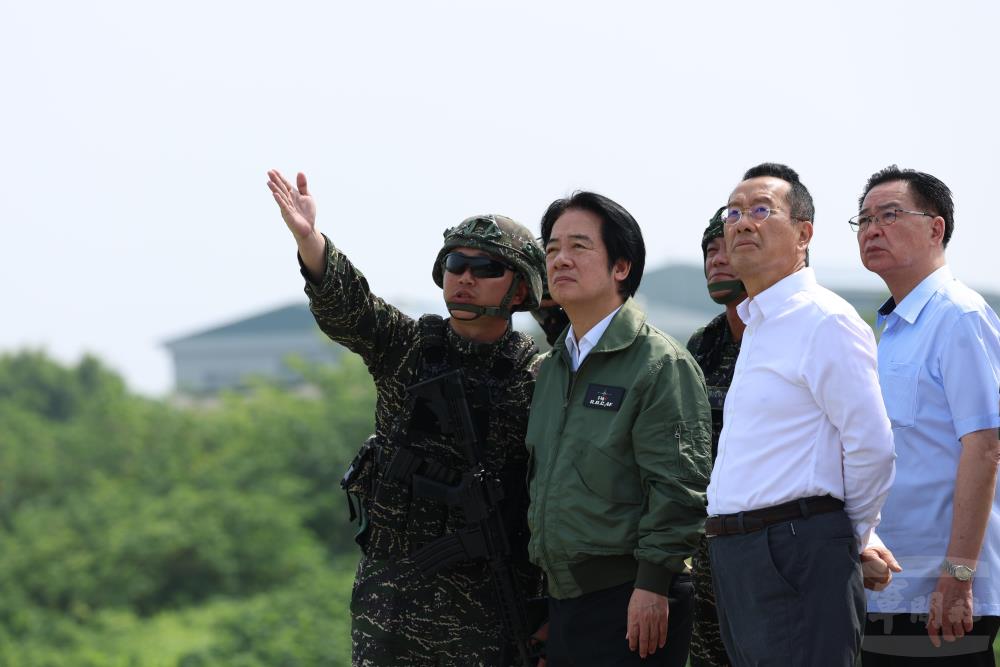 President Lai Inspects Littoral-strike Drill, Calls on Armed Forces and Coast Guard to Safeguard Taiwan’s Sovereignty with Credible Combat CapabilitiesPresident Lai Ching-te visited the Fourth Theater of Operations this morning to inspect littoral-strike and coastal-defense drills conducted as part of the field-training phase of the “Han Kuang 42 Exercise.” He encouraged Armed Forces and Coast Guard personnel to respond proactively and strengthen their coordination during the exercise so that they are prepared for every contingency. The President first arrived at Haijiao Camp to inspect an “emergency preparation for war” sortie drill. He boarded Kuang Hua VI-class Missile Boat No. 64, where, from the bridge, he received briefings on the exercise scenario and pre-departure preparations. He also addressed Navy and Coast Guard personnel over the vessel’s public-address system. President Lai then proceeded to the Chaishan combat-readiness road, where he boarded a command vehicle for an overview of the “littoral-strike” concept. He subsequently visited Taoziyuan Beach to inspect a “coastal-defense” drill and receive briefings on the equipment carried by special operations forces and the battlefield situation. Speaking over the vessel’s public-address system, President Lai said he was on the bridge of Missile Boat No. 64, whose crew had received orders to make an emergency sortie and conduct a littoral-strike mission. He explained that the Han Kuang Exercise uses “actual personnel, locations, timing, equipment, and operations” to test command coordination, immediate combat response, and homeland defense capabilities. President Lai said that in the face of external threats and challenges, the government continues working to strengthen Taiwan’s defense capabilities and provide the fullest possible support to Armed Forces and Coast Guard personnel. He encouraged them to respond proactively and strengthen operational coordination throughout the exercise so that they can address any situation and safeguard national sovereignty and public safety with credible combat capabilities. Also attending were National Security Council Secretary-General Joseph Wu; Minister of National Defense Wellington Koo Li-hsiung; Ocean Affairs Council Minister Kuan Bi-ling; National Security Council Advisor Liu Te-chin; Deputy Secretary-General Lii Wen; Chief of Navy Admiral Chiang Cheng-kuo; and Fourth Theater of Operations Commander Lieutenant General Liu Wei-hsin. The Navy Command also livestreamed the emergency combat-readiness sortie, littoral-strike, and coastal-defense drills today. Professional commentary introduced the exercise events, weapons and equipment, and tactical employment, giving the public a better understanding of the Navy’s combat-readiness preparations and defensive operations. The broadcast also promoted all-out defense awareness and demonstrated the Armed Forces’ firm resolve to defend Taiwan’s maritime frontiers and national sovereignty.2026/08/08
 -
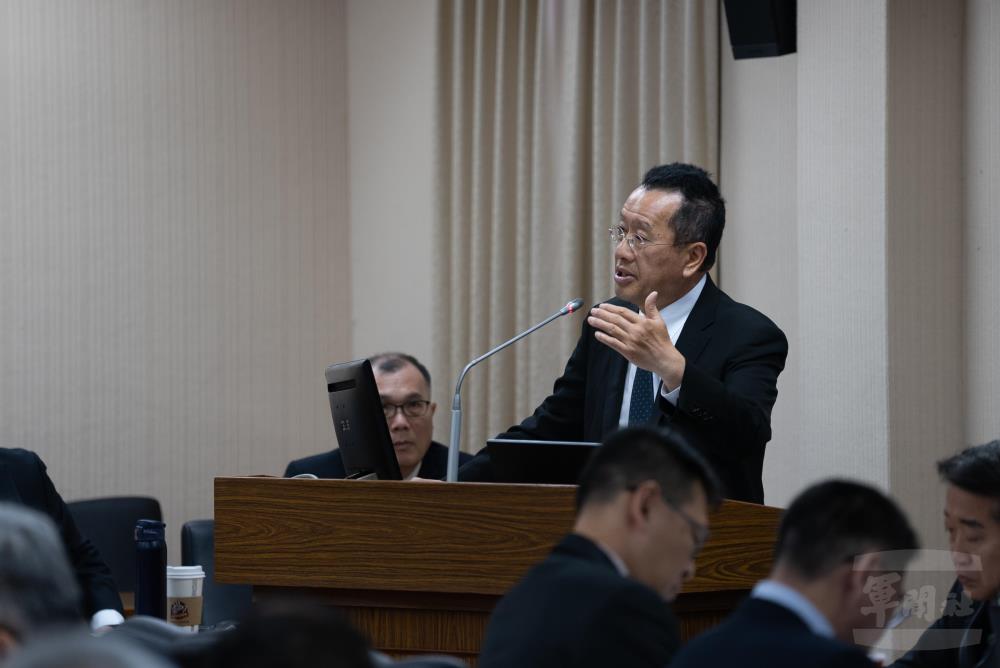 Minister Koo Reports to Legislature on Strengthening Morale and Psychological ResilienceMinister of National Defense Wellington Koo Li-hsiung appeared before the Legislative Yuan’s Foreign Affairs and National Defense Committee today to deliver a special report on how the Armed Forces are strengthening service members’ morale and psychological resilience in response to escalating enemy threats and gray-zone activities. Minister Koo began by noting that China continues to employ gray-zone harassment, cognitive warfare, disinformation, recruitment, and infiltration in an attempt to influence service members’ perceptions and undermine unit cohesion. Morale and psychological resilience have therefore become indispensable foundations of force development and combat readiness. Guided by the principle of “reflecting the threat environment and supporting preparation for war,” the Ministry will continue strengthening service members’ will to resist the enemy, awareness of enemy threats, and unit morale to ensure combat effectiveness. Political Warfare Bureau Director-General Lieutenant General Shih Shun-wen further explained that the Armed Forces currently build morale and psychological resilience through four principal areas: unit education, recruit education, reserve refresher training, and military school education. At the unit level, Chu-Kuang Day instruction, security and counterintelligence briefings, calculated risk-taking and battlefield stress-resilience courses, and mental health education are used to strengthen service members’ will to fight and reinforce their psychological defenses. For recruit education, a General National Defense Education Course has been added to initial military training. In 2024, the Ministry published the Beginning Your Military Service teaching materials, covering Armed Forces history, military ethics, Chinese cognitive warfare, human rights in the military, information security, and counterintelligence. Recruits receive 16 hours of instruction during initial training. A multimedia database has also been established on the General National Defense Education website for use by recruit training units. To help reservists understand current defense policies and enemy threats while strengthening their morale and patriotic commitment, the Ministry published the Mobilized and Combat-Ready teaching materials in 2024. Reservists receive five hours of instruction during refresher training, supported by educational videos from a multimedia database to improve the quality of the program. Military school education includes five political education courses totaling 12 creditswithin the common general curriculum. Subjects include the Constitution and Founding Principles of the Republic of China, the History and Development of the Republic of China, and Studies on Mainland China. These courses are intended to develop military officers’ understanding of democracy and constitutional government, strengthen cadets’ awareness of enemy threats and military ethics, and cultivate their ability to understand both themselves and their adversaries. Lieutenant General Shih emphasized that morale education and psychological resilience have become important strategic foundations for building sustained combat capabilities and whole-of-society defense resilience. The Ministry will continue refining its educational methods and content by strengthening Chu-Kuang Day instruction, General National Defense Education, security and counterintelligence education, battlefield stress training, and psychological resilience training. These efforts will be integrated into routine education, combat-readiness preparation, exercise and training evaluation, and threat awareness education to foster among service members a clear understanding of friend and foe, a strong sense of national identity, and a shared will to defend the country.2026/08/05
 -
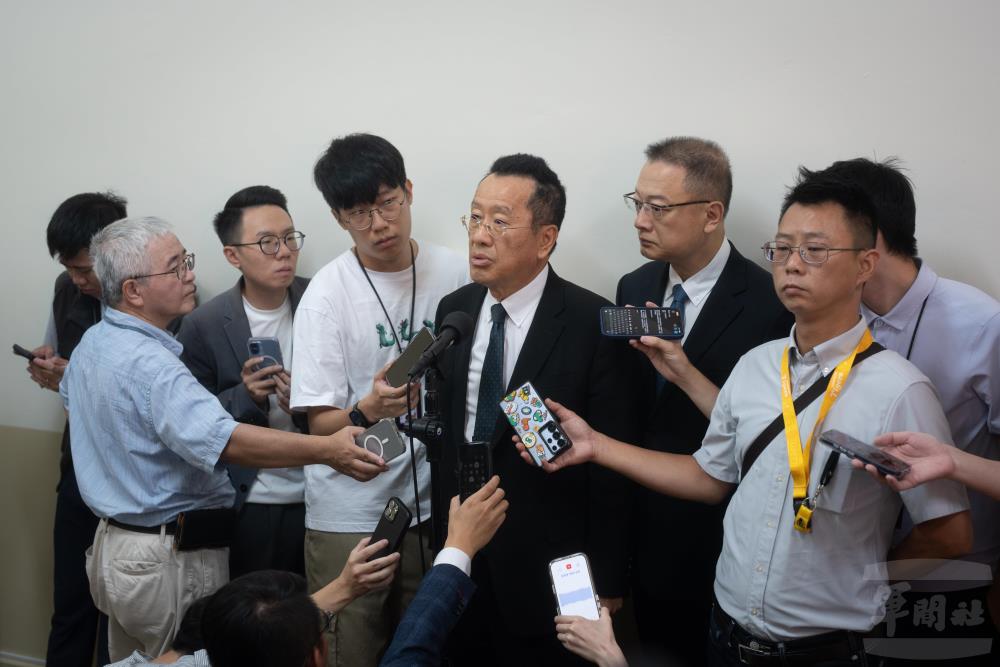 Minister Koo: Training Is the Foundation of Combat Power; Armed Forces Training Rigorously to Ensure Full ReadinessMinister of National Defense Wellington Koo Li-hsiung appeared before the Legislative Yuan’s Foreign Affairs and National Defense Committee this morning to deliver a special report and answer legislators’ questions. Speaking to the media beforehand, Minister Koo said training is the foundation of combat power. The Armed Forces will make comprehensive preparations and continue training rigorously and consistently to strengthen force development and combat readiness. He also expressed hope for greater public support. Asked about the focus of the field-training phase of the “Han Kuang 42 Exercise” and Taiwan-U.S. cooperation, Minister Koo described the field exercise as the culminating validation of the Han Kuang exercise series. Beginning with computer-assisted war games, namely command-post exercises, and progressing through the Rapid Response Exercise, the Joint Defense Exercise, and the Han Kuang field exercise, each stage employs realistic, scenario-driven but unscripted training. Continuous scenario injects require units to respond as events unfold, testing commanders’ judgment and the orders they issue. Regarding Taiwan-U.S. military exchanges, Minister Koo said the Ministry draws on the U.S. military’s experience in realistic training to enhance the Armed Forces’ operational capabilities. Cooperation with friendly partners also strengthens Taiwan’s overall force-development and combat-readiness efforts. Asked about the 2027 defense budget and new unmanned ground systems, Minister Koo replied that the Ministry formulates its budget in consideration of enemy threats, defensive operational requirements, and the government’s overall fiscal capacity. Defense spending will target 3% of GDP, with the Executive Yuan to make a coordinated announcement at a later date. Responding to reports that China was harassing Taiwan’s surrounding waters and airspace under the pretext of “joint combat-readiness patrols” as the Han Kuang Exercise began, Minister Koo said the Ministry has contingency plans in place for continued PLA activities around the Taiwan Strait during the exercise. Such activities will not interrupt the exercise, and all training events will proceed as planned. Asked about Japan’s recently released defense white paper, Minister Koo said the report describes the threat from China as “an unprecedentedly significant strategic challenge” to Japan and a matter of serious concern. Peace and stability in the Indo-Pacific are of vital importance. The Ministry will continue working with friendly partners to strengthen intelligence exchanges and collective deterrence. Taiwan will also increase its defense budget and fulfill its responsibility to defend the country.2026/08/05
 -
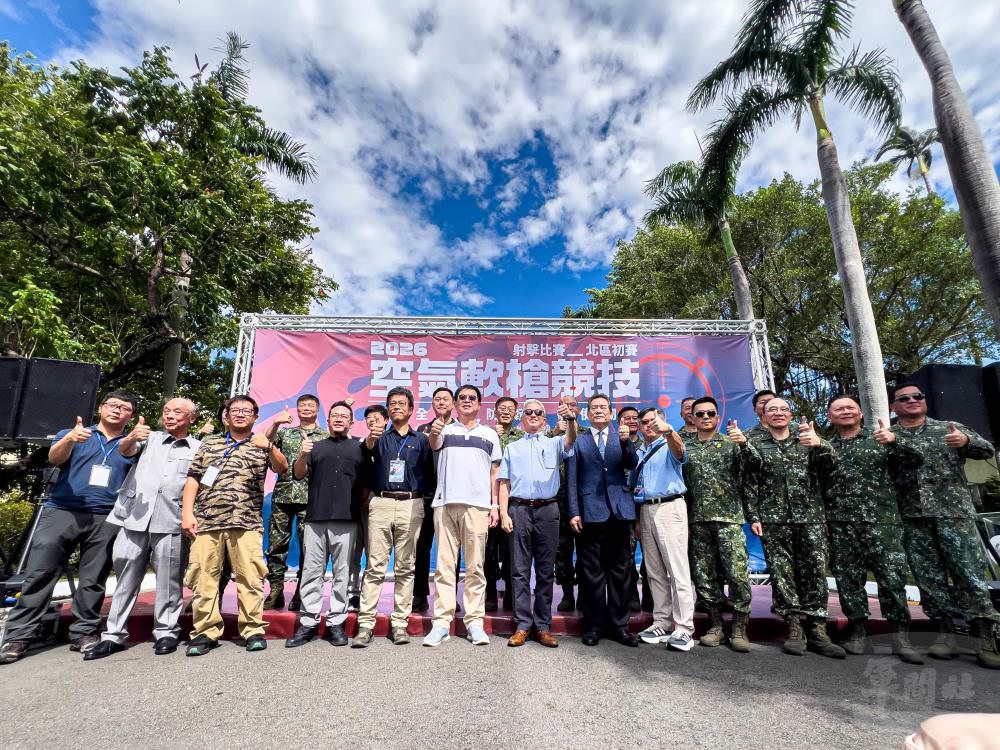 Vice Minister Hsu Presides Over Northern Preliminary Round of Airsoft Shooting Competition, Strengthening Whole-of-Society Defense ResilienceThe Ministry of National Defense’s “2026 National Airsoft Shooting Competition, Northern Preliminary Round” opened today at Fu Hsing Kang College. Presided over by Vice Minister of National Defense Hsu Szu-chien, the event featured competitive airsoft shooting, close-quarters battle (CQB), and simulated battlefield scenarios. Twenty teams comprising 107 reservists from cities and counties across northern Taiwan participated. Military equipment displays and drone demonstrations also attracted nearly 10,000 visitors. The event aimed to deepen all-out defense education and strengthen whole-of-society defense resilience. Vice Minister Hsu presided over the opening ceremony at the National Defense University’s Fu Hsing Kang College campus. Attendees included National Security Council Advisors Huang Chung-yen and Liu Te-chin; Deputy Secretary-General Lii Wen; National Cultural Association of Taiwan Secretary-General Lee Hou-ching; Chief of Army General Lu Kun-xiu; All-out Defense Mobilization Agency Director-General Lieutenant General Liao Chien-shing; Reserve Command Commander Lieutenant General Yu Wen-chen; National Defense University Vice President Lieutenant General Liu Pei-chih; Sixth Army Corps Commander Lieutenant General Lien Chih-wei; Political Warfare Bureau Director-General Lieutenant General Shih Shun-wen; and local village and neighborhood chiefs. In his opening remarks, Vice Minister Hsu first expressed his sincere appreciation to the National Security Council and the organizing units, while paying his highest respects to all participating teams. He said the competition had been made possible by everyone’s collective effort and participation. Hsu explained that the airsoft shooting competition series was initiated at the President’s direction. Under the guidance of the National Security Council and with assistance from the Ministry of the Interior, education authorities, the National Cultural Association of Taiwan, and other organizations, the MND organized the event in partnership with the National Defense Education Association and Formosa Defense Vision. Taiwan’s national security is underpinned not only by its semiconductor and AI industries, but also by the many civil society organizations and businesses that support the country. Reservists and civil defense teams likewise play a vital role in strengthening whole-of-society defense resilience, Vice Minister Hsu noted. Hsu emphasized that the competition was more than a sporting event. It also served as an important platform for strengthening whole-of-society defense resilience. Competitive shooting helps participants develop concentration, judgment, mental resilience, and the ability to respond under pressure, while most importantly fostering teamwork. He added that the value of the competition lay not merely in winning or losing, but in exchanging experience, learning from one another, and growing together. He encouraged participants to uphold the principles of “safety first, fair competition, and friendship through shooting,” follow the rules, respect the judges’ decisions, and demonstrate good sportsmanship. Regardless of the results, every participant who embraced the challenge and gave their all deserving recognition as a winner. Vice Minister Hsu and the attending guests then conducted the opening ceremony and fired the ceremonial first shots. He subsequently visited exhibits presented by the police, fire services, reservists, and the Armed Forces to learn more about their displays. He also thanked participating service members for their hard work and presented an additional food allowance to the units involved. Held in conjunction with the opening of Fu Hsing Kang College campus to the public, the event also featured military equipment displays, drone demonstrations, and interactive all-out defense education exhibits. Through these diverse displays and direct public engagement, the Ministry hopes to deepen all-out defense education, promote whole-of-society defense resilience, and put into practice the conviction to “preserve peace through strength and defend our homeland through action.”2026/07/25
 -
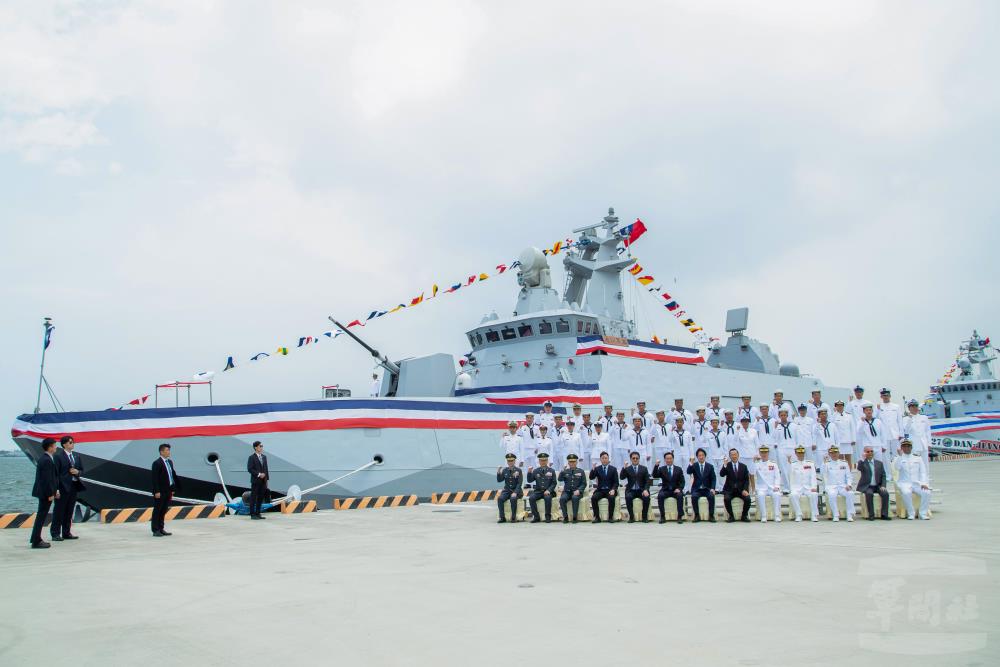 ROCS Dan Jiang Commissioned into Service; President Urges Navy to Safeguard Taiwan’s Waters and Demonstrate Resolve to Defend the NationPresident Lai Ching-te presided over the “commissioning ceremony for the ROCS Dan Jiang” in Kaohsiung this morning. He said the vessel’s commissioning not only marked further progress toward “indigenous naval shipbuilding,” but also demonstrated the Navy’s unwavering resolve to defend Taiwan’s waters and safeguard national security. The President emphasized that Taiwan would continue advancing defense self-reliance through indigenous naval shipbuilding, indigenous military aircraft production, and drone development. By building strength, Taiwan can create effective deterrence and secure peace. He also called on parties across the political spectrum to support defense development and continue strengthening national security and defense capabilities. President Lai presided over the ceremony accompanied by National Security Council Secretary-General Joseph Wu, Minister of National Defense Wellington Koo, National Security Council Advisor Liu Te-chin, National Security Council Deputy Secretary-General Lii Wen, Chief of Navy, Admiral Chiang Cheng-kuo, and other officials. Upon arriving at the venue, the President was accorded full military honors with a 21-gun salute. During the ceremony, President Lai formally issued the commissioning order for the ROCS Dan Jiang. He then presented the ship’s colors and official seal, received a model of the vessel, and reviewed the troops. In his remarks, President Lai said it was a great honor to preside over the commissioning ceremony. On behalf of the nation, he thanked Minister Koo, Admiral Chiang, all Navy personnel, the research and development team and the shipbuilding team, and every member of the industrial supply chain for overcoming numerous challenges. Their efforts had not only brought the ROCS Dan Jiang into service, but also advanced Taiwan’s goal of “indigenous naval shipbuilding.” The three warships moored before the ceremony illustrated the development of the Tuo Chiang-class corvette, the President said. Following the design validation of the prototype ROCS Tuo Chiang, the first batch of production vessels, beginning with the ROCS Ta Chiang, entered service successively. The ROCS Dan Jiang is now the lead vessel of the second production batch. All 12 vessels are expected to be delivered by the end of this year and will jointly defend Taiwan’s waters and safeguard national security. President Lai said the commissioning of the ROCS Dan Jiang held three important meanings. First, it demonstrated the realization of Taiwan’s “indigenous naval shipbuilding” goals. Taiwan can now independently develop, design, construct, and integrate naval systems according to the operational requirements in the Taiwan Strait. It can also perform maintenance and quality improvements, ensuring operational advantage under wartime conditions. Second, the commissioning represented the Navy’s firm determination to defend Taiwan’s waters and protect the nation. As China’s military threats and gray-zone harassment at sea continue to intensify, the commissioning and achievements of the Tuo Chiang-class vessels demonstrate to the public the unity and determination of Navy personnel to defend Taiwan’s waters and safeguard national security. Third, it demonstrated Taiwan’s national security policy of achieving peace through strength by maintaining effective deterrence. President Lai emphasized that peace is priceless and that there are no winners in war. Peace cannot be secured merely by signing an agreement, relying on an aggressor’s goodwill, or accepting an aggressor’s demands. Taiwan firmly believes in securing peace through strength. For decades, the Armed Forces have developed their capabilities and maintained combat readiness with this objective in mind. The President called on the public and legislators from all political parties to support this approach. To build the strength required for effective deterrence and peace, the Ministry of National Defense previously proposed an eight-year special budget totaling NT$1.25 trillion. Regrettably, the Legislative Yuan did not approve the proposal in full, cutting NT$470 billion intended for defense self-reliance, international cooperation, commissioned projects, drone development, and other programs. President Lai stressed that strengthening Taiwan’s defense capabilities, procuring military equipment from abroad, and pursuing international cooperation are all important. Defense self-reliance, however, is even more critical. Indigenous naval shipbuilding, indigenous military aircraft production, and the development of a drone industry that can generate combat capabilities all advance this objective. The President therefore called on the Legislative Yuan to support the special budget proposed by the Ministry of National Defense. He emphasized that the Ministry of National Defense is both the competent authority and the end user and that responsibility for the programs should not be assigned to another ministry. The funding should also be provided through a special budget, allowing defense development and combat readiness programs to proceed steadily over multiple years. He expressed hope that both the public and the Legislative Yuan would support the proposal. With the ROCS Dan Jiang now officially commissioned, President Lai encouraged everyone aboard, from the commanding officer to every crew member, to maintain rigorous combat readiness training in peacetime. When called upon, they must be ready to employ the vessel’s combat capabilities, defend Taiwan’s waters, safeguard national security, and protect the lives and property of the people. The Armed Forces have a proud tradition, he said, and every service member should make full use of their abilities in carrying it forward. President Lai noted that this year marks the 30th anniversary of Taiwan’s first direct presidential election. In 1996, the Armed Forces stood on the front line to safeguard national security, enabling citizens to enter polling stations without fear and cast their ballots in Taiwan’s first presidential election. That election cemented Taiwan’s democratic identity and showed the international community that the people of Taiwan are the masters of their country, that their destiny rests in their own hands, and that no one else has the right to control it. This year also marks the 39th year since martial law was lifted. Taiwan once endured one of the longest periods of martial law in modern history, lasting 38 years. During that time, people were denied freedom and human rights, and some suffered persecution. With the support of the public and through the efforts of the democracy movement, martial law was ultimately lifted by the power of the people. President Lai said this was the first year in which Taiwan’s period of democratization had lasted longer than its period under martial law, giving the occasion profound significance. He therefore took the commissioning of the ROCS Dan Jiang as an opportunity to remind those present that all services of the Armed Forces and every service member have stood on the front line whenever the nation needed them, safeguarding national security and defending democracy. At this critical moment, he called on the Army, Navy, and Air Force to remain united, uphold their proud tradition of force development and combat readiness, and continue standing on the front line. Their service enables the people of Taiwan to enjoy democracy, freedom, and human rights while allowing the economy to continue flourishing. In closing, President Lai once again thanked all personnel on behalf of the people of Taiwan and encouraged everyone to continue working together. After the ceremony, President Lai posed for photographs with service members and presented an additional meal allowance in recognition of their hard work. He then boarded the ROCS Dan Jiang for an inspection. From the foredeck, he observed a maneuver demonstration by the ROCS Xu Jiang and Kuang Hua VI-class missile boats and waved to their crews.2026/07/24
 -
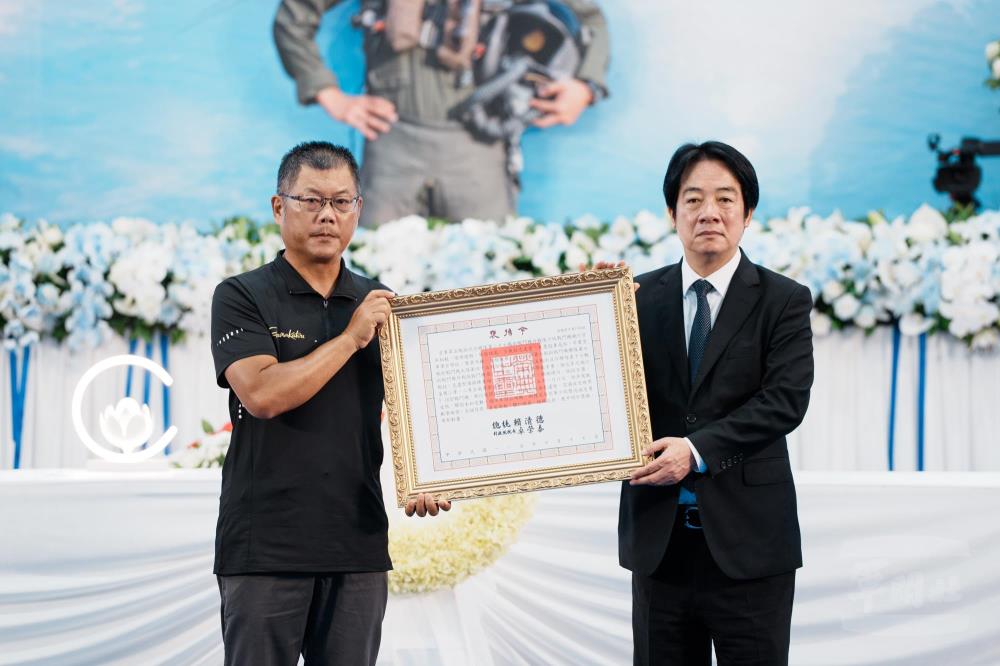 President Lai Personally Presents Posthumous Presidential Citation Honoring Fallen Pilot’s Loyalty and ValorPresident Lai Ching-te traveled to Hualien this morning to present a posthumous presidential citation to Major Hsin Po-yi, a fighter pilot with the 27th Tactical Fighter Group of the Air Force’s 5th Tactical Composite Wing. The citation honored Major Hsin as an exemplar of loyalty and valor for his devotion to duty and defense of the nation. His father, Hsin Chin-yu, accepted the citation on his behalf. In his remarks, President Lai said that he gathered with everyone that day with a profound sense of sorrow to remember Major Hsin Po-yi, a courageous airman who gave his life defending the nation and its people, and to present a posthumous presidential citation honoring his contributions to both. President Lai recalled that in the prime of his youth, Hsin underwent rigorous training at Chung Cheng Armed Forces Preparatory School and the Republic of China Air Force Academy. After graduation, he chose the highly demanding vocation of military aviation, turning his loyalty to the nation and love of the skies into action. Ultimately, he gave his life in fulfillment of the military spirit of loyalty and valor. The President further emphasized that Hsin had performed his duties with devotion and distinction, successfully completing every mission entrusted to him by his superiors. He was not only an exemplary fighter pilot, but also a resolute defender of Taiwan’s airspace and peace across the Taiwan Strait. President Lai thanked Hsin for dedicating himself to military service and serving his country, and extended his deepest condolences to the family. He also noted that Hsin’s wife is an important member of the Armed Forces. Everyone was deeply saddened by Hsin’s loss, and he instructed the Ministry of National Defense to provide his family with the fullest possible support. President Lai said that Hsin was a source of pride to both his family and the nation. The loyalty and valor he displayed in defending the country would remain forever in the hearts of the people, and Taiwan would always take pride in his service. In closing, President Lai addressed Hsin directly: “Your mission is complete. Rest assured that we will take up the watch and protect the country and family you loved so dearly. Thank you. You are relieved of duty.” National Security Council Secretary-General Joseph Wu, Minister of National Defense Wellington Koo Li-hsiung, Chief of the General Staff Admiral Mei Chia-shu, and Chief of Air Force General Cheng Jung-feng also attended the ceremony.2026/07/19
 -
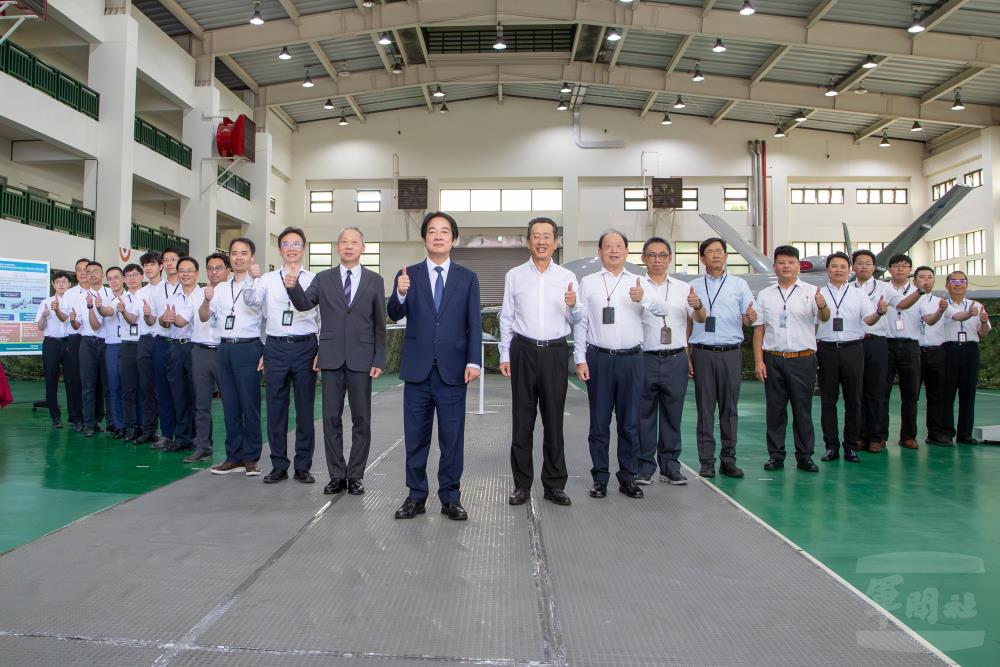 President Lai Inspects NCSIST Drone Development and Calls on Legislature to Support Special Defense BudgetPresident Lai Ching-te today visited the Aeronautical Systems Research Division of the National Chung-Shan Institute of Science and Technology (NCSIST). He said that China has intensified its political and military intimidation of Taiwan, united-front infiltration within the country, and transnational repression in recent years. Taiwan must answer the international call for collective defense and burden-sharing. Describing drones as a representative weapon of asymmetric warfare, President Lai called on the Legislative Yuan to support the special defense budget and the development of a national drone offensive and defensive system. This would allow the relevant programs to be rapidly put in place, safeguarding national security and maintaining peace and stability in the Indo-Pacific. Accompanied by National Security Council Secretary-General Joseph Wu, Minister of National Defense Wellington Koo Li-hsiung, NCSIST President Li Shih-chiang, and Aeronautical Systems Research Division General Director Chiou Chu-hsiang, President Lai inspected the progress of NCSIST’s drone development program this morning. He also received briefings on its anti-radiation unmanned attack system and various types of NCSIST-developed drones. In his remarks, President Lai reiterated that China has increasingly subjected Taiwan to political and military intimidation, united-front infiltration, and transnational repression. To demonstrate Taiwan’s resolve to defend the nation, preserve stability across the Taiwan Strait, and maintain peace in the Indo-Pacific, Taiwan must respond to the international call for collective defense and burden-sharing. President Lai said that the Ministry of National Defense had previously proposed an eight-year special budget totaling NT$1.25 trillion for legislative review. However, the Legislative Yuan approved only NT$780 billion, cutting NT$470 billion. The approved funding was insufficient even to cover arms procurement from the United States. The NT$470 billion cut from the proposal had been intended for international cooperation, commissioned projects, indigenous research and development, and the advancement of the defense industry. Most importantly, the entire budget for drone-related programs was removed. President Lai noted that the Russia-Ukraine war, the Israel-Hamas conflict, and the ongoing hostilities between the United States and Iran had demonstrated the critical importance of drones on the battlefield. Drones could be considered the quintessential weapon of asymmetric warfare. The Executive Yuan had therefore not abandoned the initiative. President Lai thanked Minister Koo and his colleagues for proposing another special act on drones, with total funding of NT$210 billion. A further NT$200 billion to NT$300 billion would be allocated through a supplementary budget and next year’s budget to restore the NT$470 billion previously removed by the legislature. Regrettably, the opposition parties had still not supported drone development. Moreover, some drone legislation proposed by opposition parties would place the Ministry of Economic Affairs, rather than the Ministry of National Defense, in charge. Citing Minister Koo’s remarks during legislative questioning, President Lai said, “The money for rice cannot be confused with the money for soy sauce.” He explained that the proposed funding was intended to procure the military drones required by the Ministry of National Defense. If the drone industry development legislation proposed by legislators were administered by the Ministry of Economic Affairs, its funding could be used only for commercial and civilian applications and would not meet Taiwan’s force development requirements. President Lai emphasized that the Ministry of National Defense and the Ministry of Economic Affairs have different mandates and responsibilities. The Ministry of Economic Affairs is responsible for supporting industry by building the supply chain and helping manufacturers produce the drones required by the Ministry of National Defense. Furthermore, the Executive Yuan has already provided the Ministry of Economic Affairs with NT$44.2 billion under a six-year program to establish this supply chain. There is therefore no need for the Legislative Yuan to provide the Ministry with additional funding. The President expressed hope that the Legislative Yuan would support the nation and enable everyone in the Ministry of National Defense, from the Minister and military leaders to every individual service member, to continue fulfilling their duties. President Lai said that he was deeply impressed by NCSIST’s research and development achievements. Taiwan’s drone technology is already keeping pace with international developments, with the National Security Council, Ministry of National Defense, Ocean Affairs Council, Ministry of the Interior, and other relevant Executive Yuan agencies all contributing to the effort. Through international exchanges, the Ministry of National Defense has also developed a comprehensive blueprint for drone operations. NCSIST, the Industrial Technology Research Institute, the Institute for Information Industry, and research institutions at universities are all in position, as is the Taiwan Excellence Drone International Business Opportunities Alliance (TEDIBOA). “In other words, everything is ready except the final impetus,” President Lai said. If the Legislative Yuan supports the Ministry of National Defense, the Executive Yuan, and the nation in building an integrated drone attack and defense system, the President said he was confident in assuring the public that the government would safeguard national security and preserve peace and stability in the Indo-Pacific. President Lai acknowledged that competition and confrontation among political parties are inevitable. However, the national interest and the lives and property of the people must never be used as bargaining chips in political conflict. He said it was deeply disheartening to repeatedly see Minister Koo and his colleagues having to visit plenary sessions, legislative committees, and individual legislators’ offices to explain the proposals. The time and energy spent on these efforts could instead allow the Minister, commanders at every level, and service members to focus on training and maintaining combat effectiveness. President Lai emphasized that he had come to NCSIST specifically to explain the matter to the public and seek support for the government’s determination to defend national security and protect peace and stability in the Indo-Pacific. The government is confident that once the Legislative Yuan approves the special defense budget, all the relevant programs can be rapidly put in place. President Lai stressed that the funding should be provided through a special budget rather than annual budgets, as force development and defense preparedness require stable, long-term government funding. Taiwan has also historically used special budgets to fund major defense development and preparedness programs. He called on the public to express its support and thereby encourage the opposition parties to do the same. He also urged parties across the political spectrum to jointly support national security and industrial development, demonstrating to the international community Taiwan’s resolve to defend itself.2026/07/17
 -
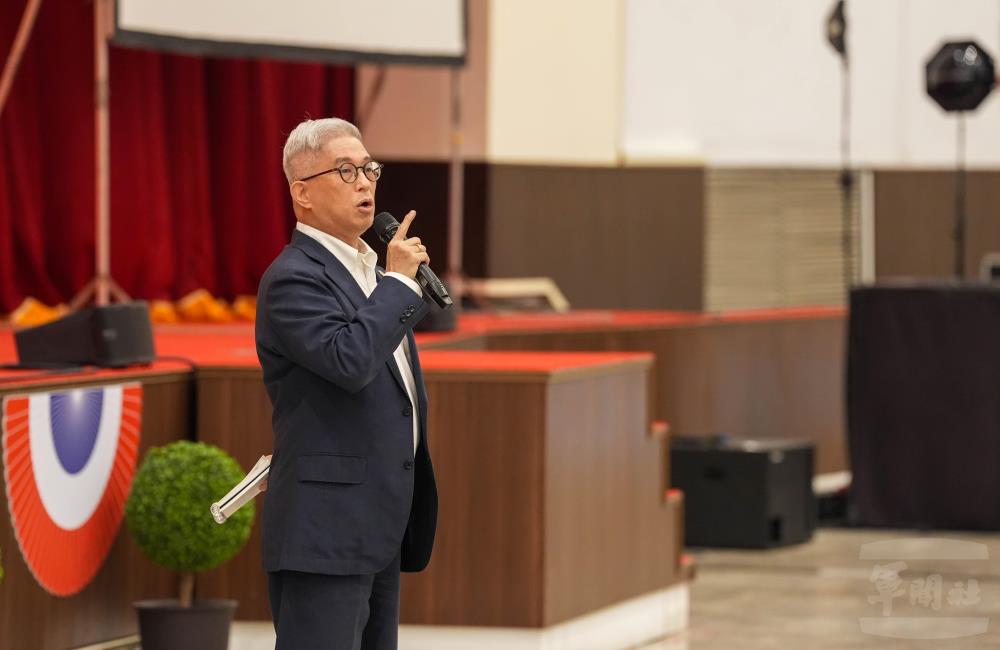 Vice Minister Hsu Encourages Newly Commissioned Officers to Uphold Their Patriotic Convictions and Defend National SecurityVice Minister of National Defense Hsu Szu-chien visited the National Defense University’s Fu Hsing Kang College campus today to preside over the completion ceremony for the 2026 Anti-Communist and Patriotic Education Program for the Armed Forces’ eight military academies and institutions. Addressing the newly commissioned second lieutenants, he outlined five key dimensions confronting the Armed Forces: what they are defending, the hostile forces they face, the current strategic environment, the nature of modern warfare, and their core objectives. He encouraged the officers to remain steadfast in their patriotic convictions, deepen their understanding of the adversary, and shoulder the shared responsibility of defending the nation and protecting its people. Vice Minister Hsu urged the officers to develop a sound understanding of their country, fully appreciate Taiwan’s democratic and free values, and recognize the responsibility shared by all citizens to safeguard the nation. He emphasized that national defense is not only about maintaining national security, but also carries the vital mission of protecting Taiwan’s democratic system and free way of life. Vice Minister Hsu observed that regional conditions are changing rapidly and gray-zone threats are continuing to grow. All service members must therefore keep abreast of developments in international strategy, deepen their understanding of the adversary, and assess regional security conditions objectively and rationally. They must also heighten their awareness of potential crises and strengthen their response capabilities. Only by fostering a sound understanding of national defense can Taiwan effectively enhance its overall defense resilience. Turning to the evolving nature of modern warfare, Vice Minister Hsu cited the Russia-Ukraine war, the United States’ military operation against Venezuela, and the war with Iran as recent examples. Capabilities involving unmanned systems, artificial intelligence, intelligence integration, autonomous systems, and asymmetric warfare have become major factors shaping the battlefield. In addition to continually enhancing education and training, future defense development will harness technological advances and innovative thinking to strengthen command and control and improve the Armed Forces’ overall response capabilities, thereby increasing the effectiveness of defense operations. During the event, Vice Minister Hsu also held a discussion with the newly commissioned officers. The officers took the opportunity to raise numerous questions and exchange views with him on the issues outlined above. He addressed each question in turn and explained the current circumstances surrounding it, making for a lively and engaging discussion. In closing, Vice Minister Hsu offered the officers eight slogans: “strengthen the military through technology, defeat the enemy through innovation, deter aggression, prevent war, build strength, secure peace, safeguard democracy, and defend the nation.” He encouraged the newly commissioned officers, as future leaders of the Armed Forces, to continually develop their professional knowledge and skills and incorporate the principles of patriotic education into their daily duties and leadership. By strengthening unity within their units and working together to safeguard democracy, freedom, and national security, they can preserve peace and stability through strength and fulfill their responsibility to defend the nation and protect its people.2026/07/05
 -
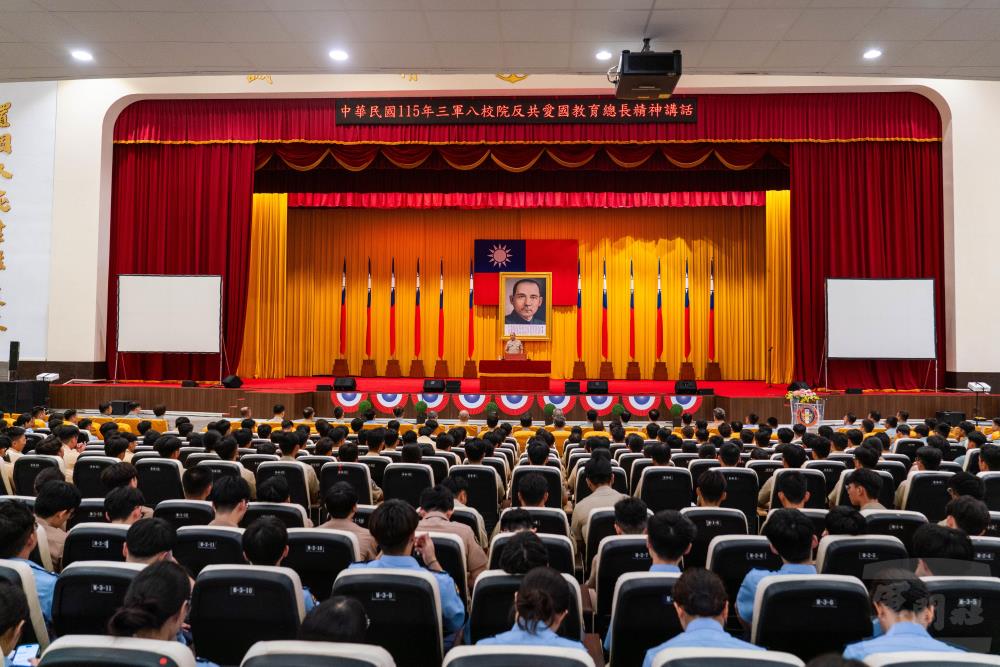 Chief of the General Staff Admiral Mei Chia-shu Addresses Anti-Communist and Patriotic Education Program, Urges Graduates to Face Challenges with Unwavering ResolveChief of the General Staff Admiral Mei Chia-shu delivered an address today at the National Defense University’s Fu Hsing Kang College campus as part of the 2026 Anti-Communist and Patriotic Education Program for graduates from the Armed Forces’ eight military academies and institutions. He commended the graduates for the perseverance and dedication that had brought them this far and encouraged them to value the responsibilities and honor they were about to assume. He also urged them to continually develop their professional expertise and leadership abilities and face the challenges of military service with unwavering resolve. Admiral Mei said that although each graduate may have chosen military education for different reasons, what truly mattered was their perseverance in completing the journey. Wearing rank insignia represents not only a responsibility entrusted by the nation, but also a profound honor. Those who wear the uniform must remain fully conscious of their mission to defend the nation and protect their homeland. It is because generations of service members have remained steadfast at their posts that the nation is more secure and the public has greater confidence in the Armed Forces. Turning to the qualities required of future military leaders, Admiral Mei said that leadership is not merely about issuing demands, but also about trusting and encouraging subordinates and guiding the entire team toward shared growth. He emphasized that competence is developed gradually through consistent effort. Only through daily learning and experience can officers progressively build the professional expertise and leadership abilities needed to fulfill their responsibilities as military leaders. With the modern battlefield environment evolving rapidly, Admiral Mei encouraged the graduates to continue learning, embrace challenges, and refuse to be discouraged by setbacks. He said that cooperation across military services and occupational specialties would be an essential capability in the future. Only by continually strengthening their abilities and developing the courage to overcome adversity could the graduates remain steady in a rapidly changing environment, while never losing sight of their original aspiration to serve in the military and defend the nation.2026/07/01
 -
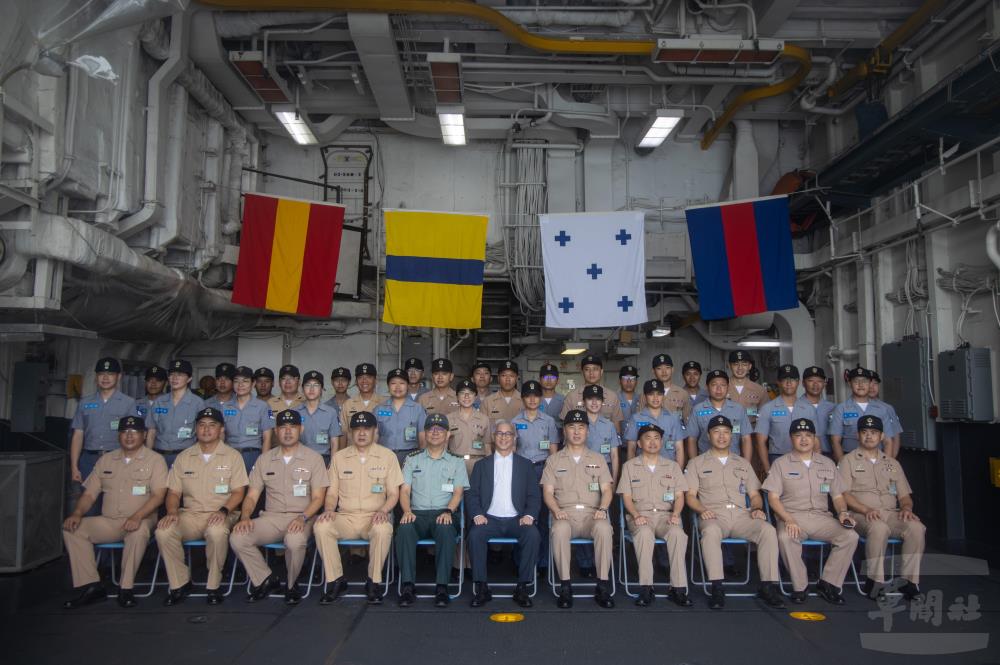 Vice Minister Hsu Visits Yilan Garrison, Commends Service Members for Their Dedication and Extends Dragon Boat Festival WishesVice Minister for Policy Hsu Szu-chien visited the Yilan area today. He successively visited Army and Navy units, learned about their combat readiness training status, and expressed high appreciation and commendation for the officers’ and enlisted personnel’s dedication in steadfastly holding their posts to defend the homeland. Accompanied by Admiral Chiang, Chief of Navy, Navy Headquarters, Lieutenant General Chen, Chief of Staff, Army Headquarters, and Lieutenant General Lien, Commander of the 6th Army Corps, among others, Vice Minister Hsu visited units including the 168th Fleet and the Lanyang Regional Command. He received unit briefings, gained a detailed understanding of combat readiness preparations, expressed concern for the officers’ and enlisted personnel’s living conditions and leave arrangements, and, on behalf of Minister Wellington Koo Li-hsiung, presented bonuses to commend them for their hard work in fulfilling daily missions and maintaining their posts. Vice Minister Hsu stated that on the eve of the Dragon Boat Festival, he made a special visit to the units to convey Minister Koo’s care and encouragement. He reminded commanders at all levels to fulfill their responsibility in taking care of their brothers and sisters, and extended early wishes for a happy and peaceful Dragon Boat Festival. Vice Minister Hsu mentioned that last week all officers and enlisted personnel had diligently participated in the Tianma Exercise and delivered outstanding performance. All shooting tasks hit their targets. This not only validated the results of their solid training but also demonstrated the units’ overall combat capabilities. He expressed appreciation for their efforts and dedication. Vice Minister Hsu emphasized that ROC Armed Forces officers and enlisted personnel shouldered the heavy responsibility of defending the homeland. He encouraged all personnel to persistently refine their core training tasks, implement various combat readiness preparations, maintain high vigilance and response capabilities, ensure that units remain in the highest state of combat readiness, and jointly safeguard national security.2026/06/09