- Search
Search
Search " Vice Minister for Policy" ,Match:8 results
-
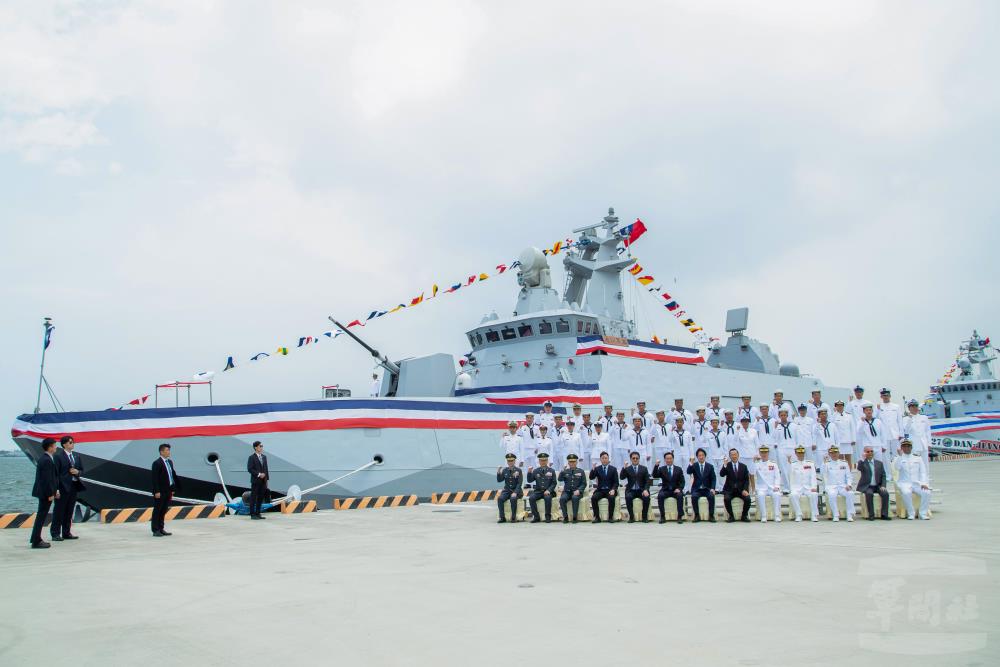 ROCS Dan Jiang Commissioned into Service; President Urges Navy to Safeguard Taiwan’s Waters and Demonstrate Resolve to Defend the NationPresident Lai Ching-te presided over the “commissioning ceremony for the ROCS Dan Jiang” in Kaohsiung this morning. He said the vessel’s commissioning not only marked further progress toward “indigenous naval shipbuilding,” but also demonstrated the Navy’s unwavering resolve to defend Taiwan’s waters and safeguard national security. The President emphasized that Taiwan would continue advancing defense self-reliance through indigenous naval shipbuilding, indigenous military aircraft production, and drone development. By building strength, Taiwan can create effective deterrence and secure peace. He also called on parties across the political spectrum to support defense development and continue strengthening national security and defense capabilities. President Lai presided over the ceremony accompanied by National Security Council Secretary-General Joseph Wu, Minister of National Defense Wellington Koo, National Security Council Advisor Liu Te-chin, National Security Council Deputy Secretary-General Lii Wen, Chief of Navy, Admiral Chiang Cheng-kuo, and other officials. Upon arriving at the venue, the President was accorded full military honors with a 21-gun salute. During the ceremony, President Lai formally issued the commissioning order for the ROCS Dan Jiang. He then presented the ship’s colors and official seal, received a model of the vessel, and reviewed the troops. In his remarks, President Lai said it was a great honor to preside over the commissioning ceremony. On behalf of the nation, he thanked Minister Koo, Admiral Chiang, all Navy personnel, the research and development team and the shipbuilding team, and every member of the industrial supply chain for overcoming numerous challenges. Their efforts had not only brought the ROCS Dan Jiang into service, but also advanced Taiwan’s goal of “indigenous naval shipbuilding.” The three warships moored before the ceremony illustrated the development of the Tuo Chiang-class corvette, the President said. Following the design validation of the prototype ROCS Tuo Chiang, the first batch of production vessels, beginning with the ROCS Ta Chiang, entered service successively. The ROCS Dan Jiang is now the lead vessel of the second production batch. All 12 vessels are expected to be delivered by the end of this year and will jointly defend Taiwan’s waters and safeguard national security. President Lai said the commissioning of the ROCS Dan Jiang held three important meanings. First, it demonstrated the realization of Taiwan’s “indigenous naval shipbuilding” goals. Taiwan can now independently develop, design, construct, and integrate naval systems according to the operational requirements in the Taiwan Strait. It can also perform maintenance and quality improvements, ensuring operational advantage under wartime conditions. Second, the commissioning represented the Navy’s firm determination to defend Taiwan’s waters and protect the nation. As China’s military threats and gray-zone harassment at sea continue to intensify, the commissioning and achievements of the Tuo Chiang-class vessels demonstrate to the public the unity and determination of Navy personnel to defend Taiwan’s waters and safeguard national security. Third, it demonstrated Taiwan’s national security policy of achieving peace through strength by maintaining effective deterrence. President Lai emphasized that peace is priceless and that there are no winners in war. Peace cannot be secured merely by signing an agreement, relying on an aggressor’s goodwill, or accepting an aggressor’s demands. Taiwan firmly believes in securing peace through strength. For decades, the Armed Forces have developed their capabilities and maintained combat readiness with this objective in mind. The President called on the public and legislators from all political parties to support this approach. To build the strength required for effective deterrence and peace, the Ministry of National Defense previously proposed an eight-year special budget totaling NT$1.25 trillion. Regrettably, the Legislative Yuan did not approve the proposal in full, cutting NT$470 billion intended for defense self-reliance, international cooperation, commissioned projects, drone development, and other programs. President Lai stressed that strengthening Taiwan’s defense capabilities, procuring military equipment from abroad, and pursuing international cooperation are all important. Defense self-reliance, however, is even more critical. Indigenous naval shipbuilding, indigenous military aircraft production, and the development of a drone industry that can generate combat capabilities all advance this objective. The President therefore called on the Legislative Yuan to support the special budget proposed by the Ministry of National Defense. He emphasized that the Ministry of National Defense is both the competent authority and the end user and that responsibility for the programs should not be assigned to another ministry. The funding should also be provided through a special budget, allowing defense development and combat readiness programs to proceed steadily over multiple years. He expressed hope that both the public and the Legislative Yuan would support the proposal. With the ROCS Dan Jiang now officially commissioned, President Lai encouraged everyone aboard, from the commanding officer to every crew member, to maintain rigorous combat readiness training in peacetime. When called upon, they must be ready to employ the vessel’s combat capabilities, defend Taiwan’s waters, safeguard national security, and protect the lives and property of the people. The Armed Forces have a proud tradition, he said, and every service member should make full use of their abilities in carrying it forward. President Lai noted that this year marks the 30th anniversary of Taiwan’s first direct presidential election. In 1996, the Armed Forces stood on the front line to safeguard national security, enabling citizens to enter polling stations without fear and cast their ballots in Taiwan’s first presidential election. That election cemented Taiwan’s democratic identity and showed the international community that the people of Taiwan are the masters of their country, that their destiny rests in their own hands, and that no one else has the right to control it. This year also marks the 39th year since martial law was lifted. Taiwan once endured one of the longest periods of martial law in modern history, lasting 38 years. During that time, people were denied freedom and human rights, and some suffered persecution. With the support of the public and through the efforts of the democracy movement, martial law was ultimately lifted by the power of the people. President Lai said this was the first year in which Taiwan’s period of democratization had lasted longer than its period under martial law, giving the occasion profound significance. He therefore took the commissioning of the ROCS Dan Jiang as an opportunity to remind those present that all services of the Armed Forces and every service member have stood on the front line whenever the nation needed them, safeguarding national security and defending democracy. At this critical moment, he called on the Army, Navy, and Air Force to remain united, uphold their proud tradition of force development and combat readiness, and continue standing on the front line. Their service enables the people of Taiwan to enjoy democracy, freedom, and human rights while allowing the economy to continue flourishing. In closing, President Lai once again thanked all personnel on behalf of the people of Taiwan and encouraged everyone to continue working together. After the ceremony, President Lai posed for photographs with service members and presented an additional meal allowance in recognition of their hard work. He then boarded the ROCS Dan Jiang for an inspection. From the foredeck, he observed a maneuver demonstration by the ROCS Xu Jiang and Kuang Hua VI-class missile boats and waved to their crews.2026/07/24
 -
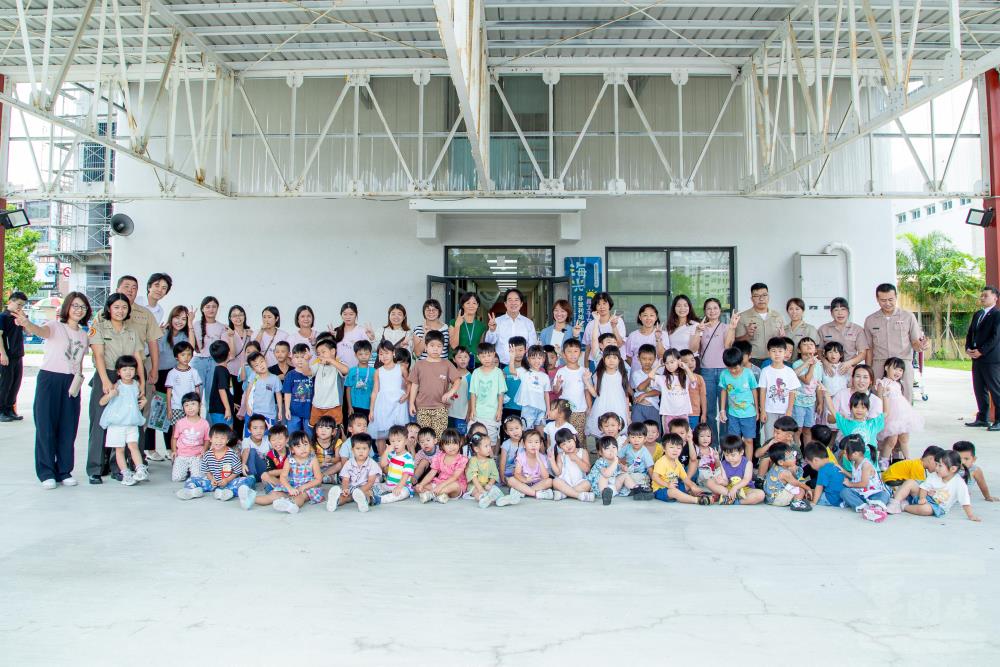 President Lai Visits Haiguang Preschool, Outlines Childcare Policies to Help Young People “Marry with Confidence, Have Children Willingly, and Enjoy Raising Them”President Lai Ching-te visited the Haiguang Nonprofit Preschool for Employees’ Children of the Navy Command, Ministry of National Defense in Kaohsiung this morning. He outlined the government’s childcare policies and subsidies, expressing hope that these measures would ease the financial burden on families, promote equal access to education, and help young people “marry with confidence, have children willingly, and enjoy raising them,” thereby raising Taiwan’s birth rate. President Lai was accompanied by Minister of National Defense Wellington Koo, Minister of Education Cheng Ying-yao, and Chief of Navy Admiral Chiang Cheng-kuo. Upon arrival, the President first interacted with the children and told them the story of a raccoon from the picture book Bravery Soup, encouraging them to develop the courage to face challenges. The atmosphere was warm and cheerful. The President then joined the children’s parents for a discussion on childcare and education. President Lai said the government continues to introduce policies encouraging young people to “marry with confidence, have children willingly, and enjoy raising them.” Under the “National Child Care for Ages 0-6” policy introduced during former President Tsai Ing-wen’s administration, families caring for children at home receive monthly childcare allowances of NT$5,000 for the first child, NT$6,000 for the second, and NT$7,000 for the third. For children under the age of two enrolled in publicly supported childcare, the government provides monthly subsidies of NT$7,000 for the first child, NT$8,000 for the second, and NT$9,000 for the third. Families using quasi-public childcare services receive NT$13,000 per month for the first child, NT$14,000 for the second, and NT$15,000 for the third. For children between the ages of two and six, parents of a first child enrolled in a public preschool pay only NT$1,000 per month. At nonprofit preschools, parents pay NT$2,000 per month for the first child and NT$1,000 for the second, while the third child attends free of charge. At quasi-public preschools, parents pay NT$3,000 per month for the first child, NT$2,000 for the second, and NT$1,000 for the third. The government covers all remaining costs. Approximately NT$120 billion is allocated each year to continually reduce the financial burden on parents and create a more family-friendly childcare environment. President Lai added that since taking office, he has introduced tuition-free education at all senior high schools and vocational high schools, as well as tuition and fee subsidies for students attending private colleges and universities. Each private college or university student receives an annual subsidy of NT$35,000, while students from economically disadvantaged families receive an additional NT$15,000 to NT$20,000 per year. The central government recently introduced the “Growth Allowance for Children Ages 0–18.” From birth through age six, the central government provides NT$5,000 per child each month for parents to use. Between the ages of six and 18, parents may use half of the monthly allowance, while the government deposits the remaining NT$2,500 into a dedicated account. Over 12 years, NT$360,000 will be deposited into the account, with interest guaranteed at no less than the rate offered on a two-year time deposit. The funds can later be used for tuition, vocational training, or even as start-up capital for a business. Reflecting on his own childhood, President Lai recalled seeing classmates leave school early to work in factories after their families encountered unforeseen difficulties. This experience strengthened his determination to “educational equality.” As Taiwan’s economy advances, the government has a responsibility to ensure that every child who wishes to study can do so, regardless of the family into which they were born. Education allows people to acquire professional knowledge, improve their lives, and contribute to a stronger society and nation. Through comprehensive policies, the government hopes both to ease the burden on families and promote educational equality, ensuring that every child has access to education. Turning to improvements in childcare and employment conditions, President Lai said that in addition to allocating funds to support families, the government is encouraging central and local government agencies and state-owned enterprises to establish childcare centers and preschools. Private businesses are also being encouraged to establish quasi-public preschools, with government subsidies available to support them. This will give parents access to childcare near their homes or workplaces, enabling them to work with greater peace of mind. The government will continue systematically advancing educational equality and improving the childcare environment, with the aim of raising Taiwan’s birth rate. At the conclusion of the visit, President Lai posed for photographs with the children, parents, and preschool staff. He then presented the preschool with 《Confidence in Science》storybook collection and distributed small gifts to the children.2026/07/24
 -
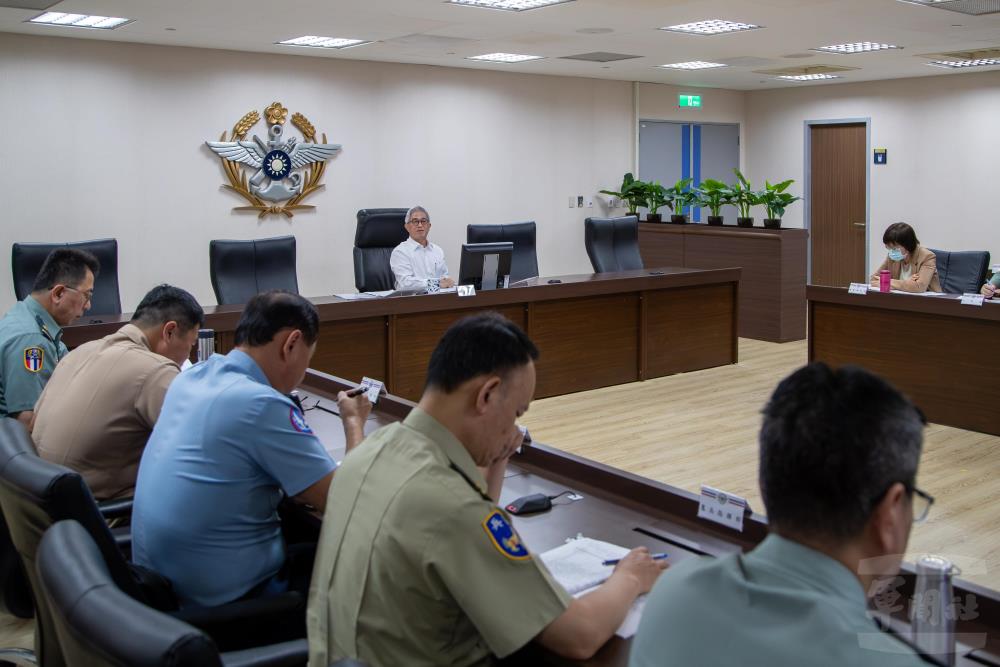 Vice Minister Hsu Encourages Use of AI to Enhance Learning Outcomes at Bilingual Policy Steering Group MeetingVice Minister of National Defense Hsu Szu-chien chaired the 16th meeting of the Ministry of National Defense Bilingual Policy Steering Group today. He encouraged all units to continue refining their bilingual policy initiatives and make effective use of artificial intelligence to improve bilingual learning outcomes and the overall English proficiency of the Armed Forces. Held this morning at the Ministry’s Bo’ai Camp, the meeting reviewed progress in implementing the Ministry’s bilingual policy. Representatives of the military services also reported on their use of AI in bilingual learning, the fielding of newly acquired military equipment, and overseas training programs. Taichung Armed Forces General Hospital and the Republic of China Air Force Academy shared their experiences, providing useful examples for other units implementing bilingual initiatives. Regarding the application of AI, Vice Minister Hsu said that promoting bilingual learning involves more than merely introducing AI tools. It is even more important to evaluate their actual effectiveness. He recommended inviting experts to assess the advantages and disadvantages of different AI tools for bilingual learning. The findings could guide future improvements and enhance the overall quality and effectiveness of learning. Vice Minister Hsu emphasized that exchanges between the Armed Forces and allied and partner countries involve extensive military terminology and other specialized terms. When AI is used to learn or translate military terminology, accuracy must be paramount. Errors in recognition or translation must not be allowed to create communication gaps. Machine learning and validation mechanisms should therefore be used to continually improve system recognition capabilities and specialized terminology databases, ensuring that bilingual applications meet operational needs. Vice Minister Hsu said this year’s bilingual policy would focus on three priorities. First, the Armed Forces will integrate English instruction into specialized on-base training, use the National Development Council’s bilingual learning platform, and engage qualified instructors to strengthen service members’ English proficiency. Second, in line with data governance policy, the Ministry will establish an AI-assisted bilingual learning environment. The Office of the Deputy Chief of the General Staff for Personnel and the Office of the Deputy Chief of the General Staff for Training will oversee military academies and units in promoting self-directed learning. Third, the Ministry will continue working with the National Development Council on an interagency initiative to foster a bilingual-friendly environment and secure relevant resources, comprehensively enhancing bilingual learning outcomes across the Armed Forces. Vice Minister Hsu commended Taichung Armed Forces General Hospital and the Air Force Academy for sharing their experience in implementing bilingual initiatives. He encouraged all units to make effective use of the National Development Council’s bilingual learning platform, refine machine-learning mechanisms, and improve the consistency and effectiveness of their systems to generate greater synergy across the initiative. He also instructed the relevant units to continue reviewing matters requiring further deliberation and to refine the implementation of the Ministry’s bilingual policies.2026/07/01
 -
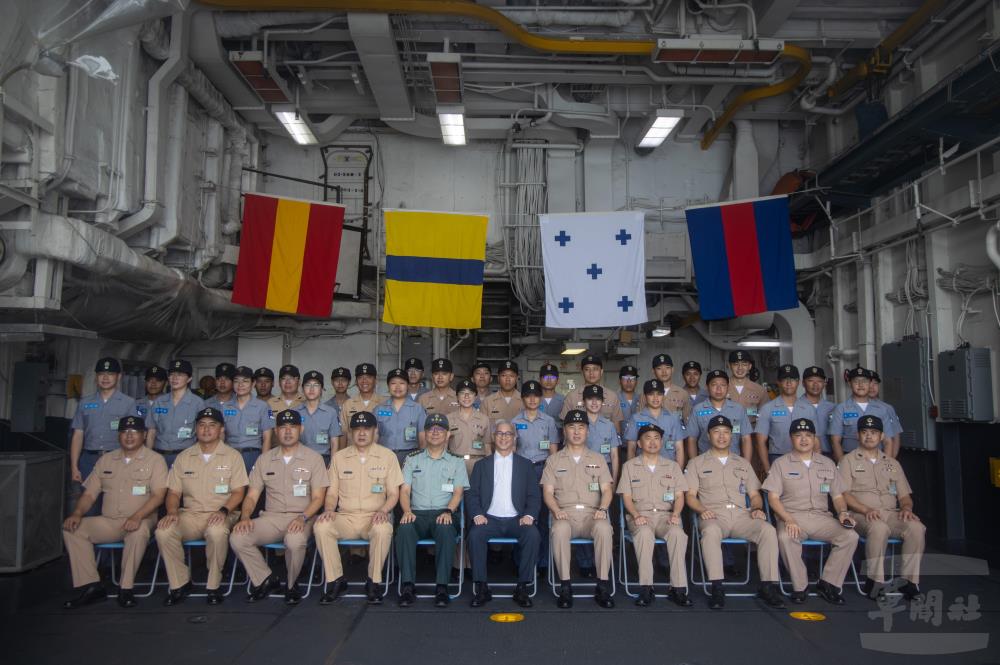 Vice Minister Hsu Visits Yilan Garrison, Commends Service Members for Their Dedication and Extends Dragon Boat Festival WishesVice Minister for Policy Hsu Szu-chien visited the Yilan area today. He successively visited Army and Navy units, learned about their combat readiness training status, and expressed high appreciation and commendation for the officers’ and enlisted personnel’s dedication in steadfastly holding their posts to defend the homeland. Accompanied by Admiral Chiang, Chief of Navy, Navy Headquarters, Lieutenant General Chen, Chief of Staff, Army Headquarters, and Lieutenant General Lien, Commander of the 6th Army Corps, among others, Vice Minister Hsu visited units including the 168th Fleet and the Lanyang Regional Command. He received unit briefings, gained a detailed understanding of combat readiness preparations, expressed concern for the officers’ and enlisted personnel’s living conditions and leave arrangements, and, on behalf of Minister Wellington Koo Li-hsiung, presented bonuses to commend them for their hard work in fulfilling daily missions and maintaining their posts. Vice Minister Hsu stated that on the eve of the Dragon Boat Festival, he made a special visit to the units to convey Minister Koo’s care and encouragement. He reminded commanders at all levels to fulfill their responsibility in taking care of their brothers and sisters, and extended early wishes for a happy and peaceful Dragon Boat Festival. Vice Minister Hsu mentioned that last week all officers and enlisted personnel had diligently participated in the Tianma Exercise and delivered outstanding performance. All shooting tasks hit their targets. This not only validated the results of their solid training but also demonstrated the units’ overall combat capabilities. He expressed appreciation for their efforts and dedication. Vice Minister Hsu emphasized that ROC Armed Forces officers and enlisted personnel shouldered the heavy responsibility of defending the homeland. He encouraged all personnel to persistently refine their core training tasks, implement various combat readiness preparations, maintain high vigilance and response capabilities, ensure that units remain in the highest state of combat readiness, and jointly safeguard national security.2026/06/09
 -
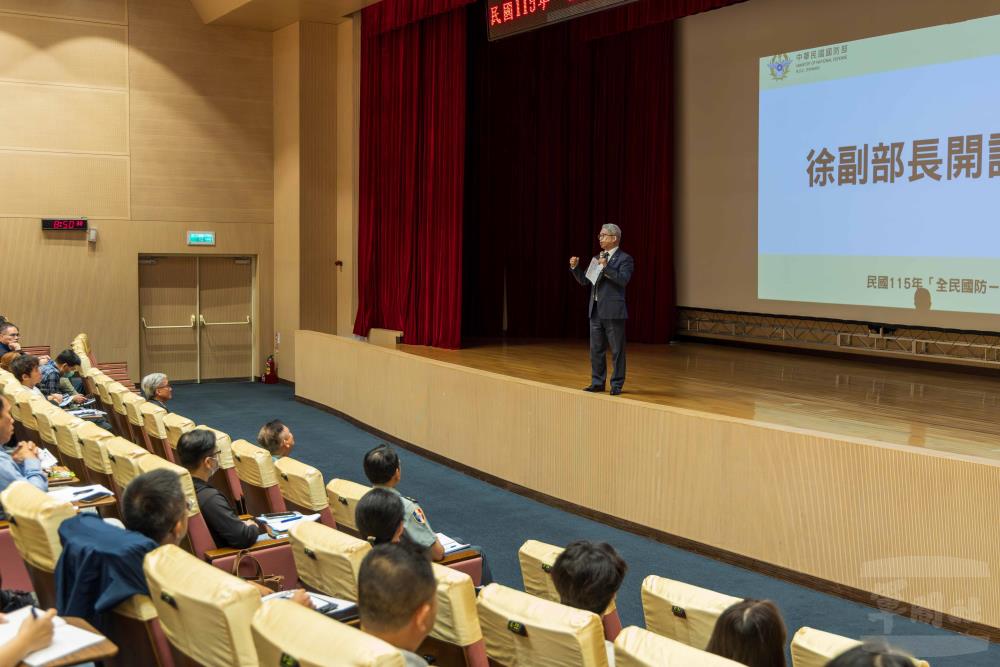 Vice Minister Hsu Presides over All-Out Defense Education Seed Instructor Training WorkshopVice Minister of National Defense Hsu Szu-chien presided today over the Republic of China 2026 “All-Out Defense Education – Social Education” Seed Instructor Training Workshop. On behalf of Minister Wellington Koo Li-hsiung, he welcomed participants from various sectors and encouraged them to strengthen teaching capabilities through professional study, expand the foundation for promoting all-out defense education, build consensus among the public, and enhance Whole-of-Society Defense Resilience. The workshop was held this morning at the Bo’ai Camp. All-out defense affairs personnel recommended by various county and city governments, along with scholars from civil society, participated in the training. The curriculum covered topics such as “National Defense Policy,” “International Situation,” “Media Literacy,” and “All-Out Defense.” Experts and scholars including Director Su Tzu-yun and Researcher Lee Che-chuan from the Institute for National Defense and Security Research were invited to deliver special lectures and analyses. In addition, the Department of Strategic Planning explained the “Special Act on Defense Procurement,” enabling participants to understand its importance to overall national defense. Vice Minister Hsu stated that, facing the future task of promoting all-out defense education, seed instructors had to clearly convey national defense concepts to the public, explaining “why we fought and for whom we fought” — that was, to safeguard the homeland, protect their way of life, and ensure the safety of the 23 million people in Taiwan, Penghu, Kinmen, and Matsu, while clearly recognizing the current security challenges. Vice Minister Hsu pointed out that the war in Ukraine had shown that national defense did not rely solely on military combat power; the key had lain in the will of the entire population to defend the country. Only through the joint participation of the whole society could overall defense strength be formed. He also emphasized that war depended not only on weapons and equipment but also required strong will and resilience to effectively respond to various challenges. Vice Minister Hsu further explained that the forms of modern warfare had evolved rapidly, and unmanned systems had become a key element in operations. Taiwan had possessed advantages in the relevant industry supply chain, particularly holding a critical position in the “non-red supply chain,” and should continue to strengthen development capabilities. At the same time, as Taiwan had been located at the core of the First Island Chain, it had needed to enhance overall defense capabilities in response to changes in the regional situation. Regarding the special defense budget, Vice Minister Hsu pointed out that the relevant planning had been carefully formulated based on overall operational requirements and had covered areas such as strike firepower, intelligence, surveillance and reconnaissance systems, command and control operations, and sustained combat capabilities. He emphasized that all military buildup elements had to be constructed holistically and work in coordination to effectively enhance national defense combat power. Vice Minister Hsu stressed that the allocation of the special budget had been based on overall national defense development needs and coordinated with domestic industry capabilities. Through stable planning and long-term investment, it had strengthened defense self-reliance and supply chain resilience, ensuring the continuous advancement of military buildup and readiness.2026/05/13
 -
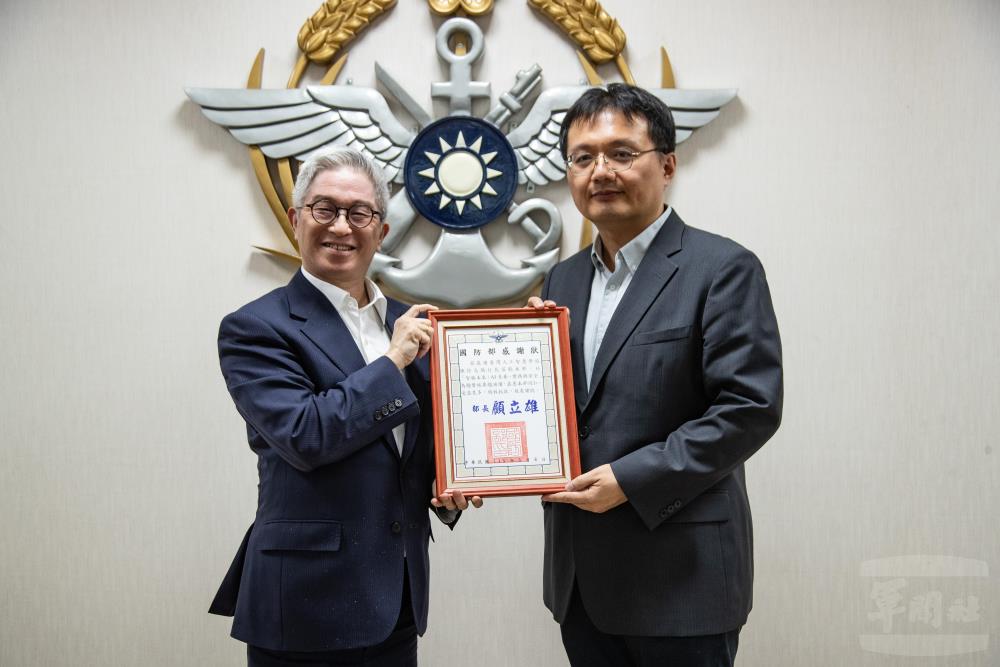 Ministry of National Defense Holds AI Development Concept Seminar – Accelerates Digital Transformation to Build a Modernized MilitaryThe Ministry of National Defense held the “Artificial Intelligence Governance Committee Special Lecture and ROC Armed Forces AI Development Concept Seminar” yesterday (April 8) at the Bo’ai Camp. Vice Minister for Policy Hsu Szu-chien presided over the event and invited National Security Council Advisor Li Yu-chieh to provide guidance. Participants included members of the Ministry’s Artificial Intelligence Governance Committee (unit heads), commands of the three services, the National Defense University, and the National Chung-Shan Institute of Science and Technology. The goal was to draw on practical experience from industry and academia to enhance the AI literacy of the ROC Armed Forces and lay a foundation for promoting AI development in national defense. In his remarks, Vice Minister Hsu stated that lectures only provided inspiration, while implementation was the key. He encouraged commanders at all levels to shift from passive to active approaches and actively apply diverse AI technologies. The Ministry of National Defense fully supported each unit in advancing their projects, hoping that through AI technology, administrative operational efficiency could be effectively improved and new momentum could be injected into the modernization of the ROC Armed Forces. The special lecture invited Dr. Chen Ling-Jyh, Director of the Department of Information Technology Services, Academia Sinica and Chief Executive Officer of the Taiwan AI Academy, to speak on the topic “Winning the Future: AI Literacy, Practice, and Security.” He explained the evolution of AI development from “perception” to “physical embodiment” and shared Academia Sinica’s practical experience, including how they built a “Large Language Model (LLM)” under strict cybersecurity controls, and how they developed speech recognition transcription systems, question-and-answer robots, and document verification tools to effectively resolve pain points in public administration and simplify operational processes. Regarding military applications, Dr. Chen specifically proposed the “Nine Reminders for Promoting Defense AI,” which covered core concepts such as infrastructure resilience and human-machine collaboration. He also explained the risks and challenges of introducing AI, reminding all units to establish mechanisms for verifying the authenticity of information and to strictly prevent the leakage of sensitive data. At the same time, he emphasized that introducing AI technology was an urgent and important task. Only by accelerating the implementation and application of the technology could the digital transformation of the ROC Armed Forces be effectively strengthened. The Ministry of National Defense stated that the AI Project Office’s organization of this special lecture and comprehensive seminar helped integrate common needs across units and initiated the process of advancing the ROC Armed Forces toward digital development.2026/05/09
 -
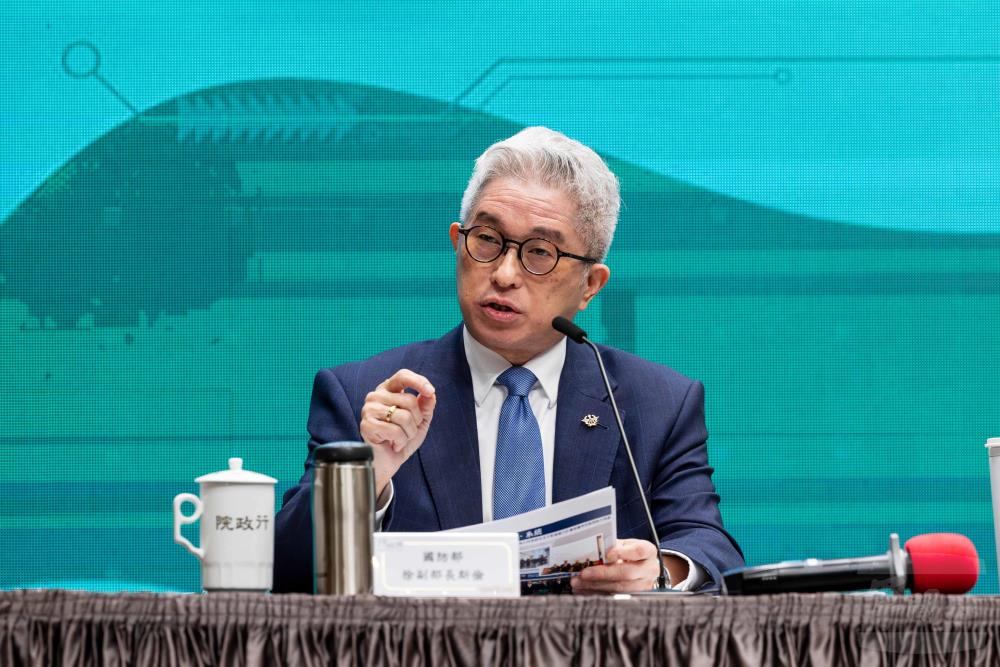 Vice Minister Hsu: Special Defense Act Features Comprehensive Planning – Various Capabilities Are Interdependent and Cannot Be Arbitrarily ReducedVice Minister for Policy Hsu Szu-Chien stated today that the “Special Act on Procurement for Strengthening Defense Resilience and Asymmetric Warfare Capabilities” was proposed in response to enemy threats and joint operations requirements. The overall planning covered capability construction in strike, intelligence surveillance reconnaissance, command and control, unmanned systems, and sustained combat capabilities. These various capabilities were interdependent and could not be arbitrarily reduced or postponed. He hoped that all political parties would jointly support national defense buildup and the enhancement of defense resilience. The Executive Yuan held a press conference after its meeting this morning, during which Vice Minister Hsu explained issues related to the special defense act. Vice Minister Hsu pointed out that this special budget adopted a one-time, large-scale investment approach. In addition to accelerating combat power acquisition, it could also provide long-term stable demand for domestic industries and drive the development of unmanned systems and the national defense industry. If the budget were changed to annual allocations, it would affect the military buildup timeline and the effectiveness of equipment integration. Regarding military procurement progress, Vice Minister Hsu stated that the relevant military procurement cases had all completed preliminary coordination with the U.S. side and obtained formal letters of supply assurance. The Ministry of National Defense would continue to maintain close communication and coordination with the U.S. side to ensure smooth advancement of all procurement cases. In addition, Vice Minister Hsu emphasized that promoting large-scale and long-term procurement of unmanned systems and related equipment through the special budget would not only help rapidly enhance combat power but also assist domestic manufacturers in investing in research and development and production capacity building, thereby strengthening defense self-reliance and supply chain resilience.2026/05/08
 -
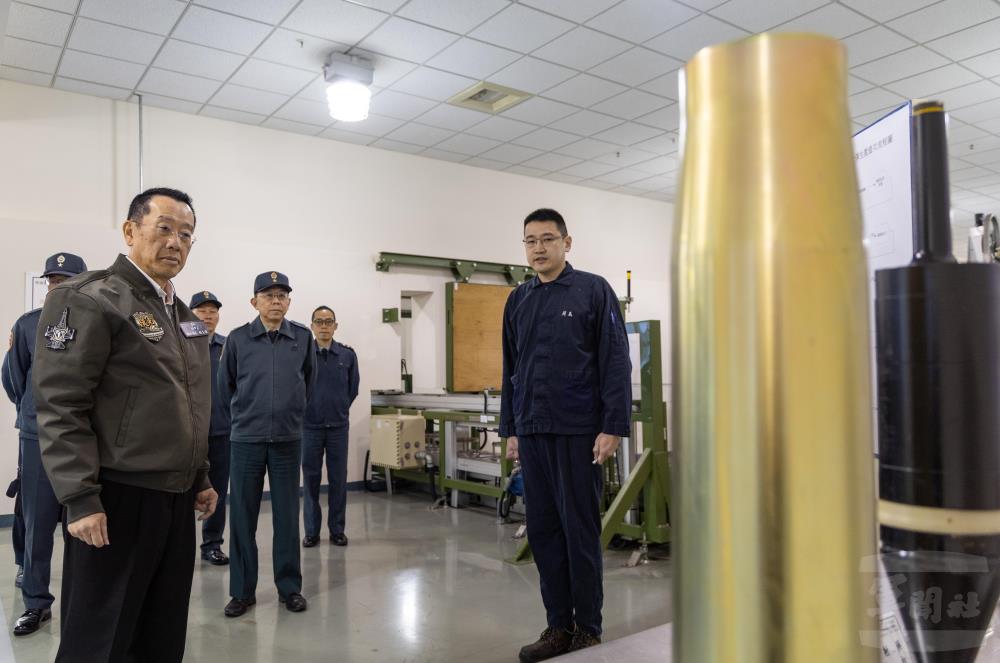 Ministry of National Defense: Minister Wellington Koo Li-hsiung Extends Lunar New Year Greetings on Inspecting Stationed Troops in Northern TaiwanWith the Lunar New Year approaching, Minister of National Defense Wellington Koo Li-hsiung visited northern armaments units this morning to extend his early New Year greetings to the personnel, affirming their efforts and contributions to diligently producing armaments for safeguarding national security during the past year. Minister Koo first visited the Armaments Bureau’s 202nd Arsenal and the Technical Data, Test & Evaluation Center, receiving briefings and understanding on-site operations of production line. At the same time, on behalf of the Commander-in-Chief of the Armed Forces President Lai Ching-te, he encouraged and comforted the personnel, thanking them for steadfastly standing at their posts so that the public could enjoy a peaceful Lunar New Year. Minister Koo stated that the Armaments Bureau’s 202nd Arsenal shouldered the critical responsibility of researching, developing, and producing multiple types of ammunition which involved high-risk tasks. The unit had to prioritize safety and security protection, strictly pyrotechnics operating rules, improve operating processes, continuously introduce new protective equipment, establish a safe workplace environment, strengthen personnel education and training, and enhance disaster response capabilities to ensure mission to be carried out free of incidents. Minister Koo pointed out that currently defense self-reliance was key to defense policy, with armaments playing a pivotal role. He encouraged everyone to continue improving research, development, production, and testing efficiency to provide stable support to meet the demands of combat readiness. Minister Koo also extended his early Lunar New Year greetings to all personnel, thanking them for their long-term hard work at the posts, and wishing all service members and their families abundant fortune and peace in the Year of the Horse.2026/02/02