- Search
Search
Search "Wellington Koo Li-hsiung" ,Match:32 results
-
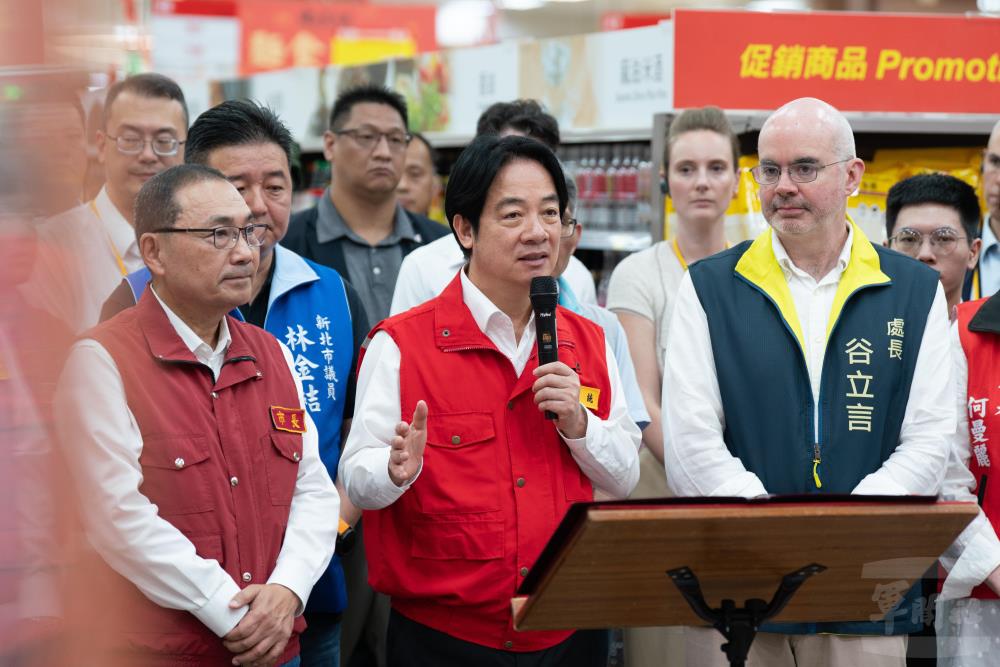 President Lai Inspects New Taipei Urban Resilience Exercise, Calls for Central-Local Cooperation to Strengthen ResiliencePresident Lai Ching-te today inspected the New Taipei City 2026 Urban Resilience (All-out Defense Mobilization) Exercise. Exercise events included operations at the Joint Emergency Operations Center (JEOC), medical load reduction and underground relocation at Shuang Ho Hospital, and the distribution and sale of essential supplies. The President expressed hope that cooperation between the central and local governments and collaboration between the public and private sectors would continue strengthening societal resilience, enabling the government to remain operational and minimizing disruption to people’s lives during emergencies. In his remarks, President Lai noted that Taiwan experiences typhoons every year and may also be struck by earthquakes every few years. In addition to building up the Armed Forces, preparing for war, and safeguarding national security, the Armed Forces has long participated in disaster relief and helped maintain social stability. The Armed Forces regard disaster response as an integral part of force development and combat readiness. Local governments also conduct annual societal resilience exercises in preparation for typhoons, earthquakes, and other disasters. These exercises were formerly known as Wan An and Min An Exercises. President Lai said that after taking office, he established the “Whole-of-Society Defense Resilience Committee” under the Presidential Office to advance societal resilience. He also combined the Wan An and Min An Exercises conducted by local governments into the Urban Resilience Exercise. This year, the exercise was extended from one day to two and conducted in coordination with the Armed Forces’ annual Han Kuang Exercise. Under a common scenario, the Armed Forces conduct military exercises as the first line of defense while local governments carry out whole-of-society defense resilience exercises. The objective is for the Armed Forces to safeguard national security while local governments and civil society organizations work together to maintain social stability, minimizing the impact on society in the event of either natural disasters or geopolitical conflicts. The President said he had specifically chosen to inspect the whole-of-society defense resilience exercise in New Taipei City this year. His first stop was the Joint Emergency Operations Center, followed by an inspection of emergency medical preparedness and then a distribution point for essential supplies. He thanked Mayor Hou Yu-ih and the city government team for their thorough preparations, noting that cooperation between the central and local governments had proven highly effective. President Lai noted that the distribution system he inspected earlier included both government-operated distribution points and participating private retailers, creating a dual-track arrangement. A smart information system has also been established, and exercises continue to address a variety of potential scenarios. He described these achievements as highly commendable. The President said that through collective efforts, central-local cooperation, and public-private collaboration, Taiwan can continue strengthening its societal resilience. When an emergency occurs, greater resilience will enable the government to maintain its operations while reducing the impact on people’s daily lives. President Lai also referred to the air defense exercise conducted today from 2:30 to 3:00 p.m. In cities where the exercise was conducted, mobile communications were affected and data speeds were reduced during the exercise, while travel and movement were also somewhat disrupted. He asked the public for its understanding and support, emphasizing that the exercise was necessary. “Every exercise makes us more resilient. Greater resilience brings greater stability when an emergency occurs and reduces the impact on our lives,” the President said. President Lai thanked the National Security Council and the ministries and agencies of the Executive Yuan for their efforts. He also noted that representatives of foreign missions in Taiwan had participated in the exercise and offered their observations, demonstrating the international community’s strong interest in Taiwan’s security and peace and stability across the Taiwan Strait. “The virtuous are never alone; they always have neighbors,” the President said. In the face of shifting regional geopolitics, Taiwan is not confronting these challenges alone, but alongside an international community that shares its concerns. Nevertheless, Taiwan must not neglect its own preparations or simply rely on others. Citing Mayor Hou’s remarks, President Lai said, “We need not fear a century without incident, but we must fear even one day without preparation.” By embracing this principle and preparing thoroughly, Taiwan will be ready for any eventuality. The more comprehensive its preparations, the better positioned it will be to prevent crises from occurring. Also attending the exercise were New Taipei City Mayor Hou Yu-ih , who also served as Commander of the New Taipei City Joint Emergency Operations Center; National Security Council Secretary-General Joseph Wu; National Security Council Advisor Liu Te-chin; Deputy Secretary-General Lin Fei-fan; Minister without Portfolio Chi Lien-cheng; Minister of the Interior Liu Shyh-fang; Minister of Foreign Affairs Lin Chia-lung; Minister of National Defense Wellington Koo Li-hsiung; Minister of Health and Welfare Shih Chung-liang; Vice Minister of Economic Affairs Lai Chien-hsin; Deputy Minister of the Interior Ma Shih-yuan; All-out Defense Mobilization Agency Director-General Lieutenant General Liao Chien-hsing; American Institute in Taiwan Director Raymond Greene; Canadian Trade Office in Taipei Executive Director Marie-Louise Hannan; Israel Economic and Cultural Office in Taipei Representative Israel Strulov; and representatives of other foreign missions in Taiwan.2026/08/13
 -
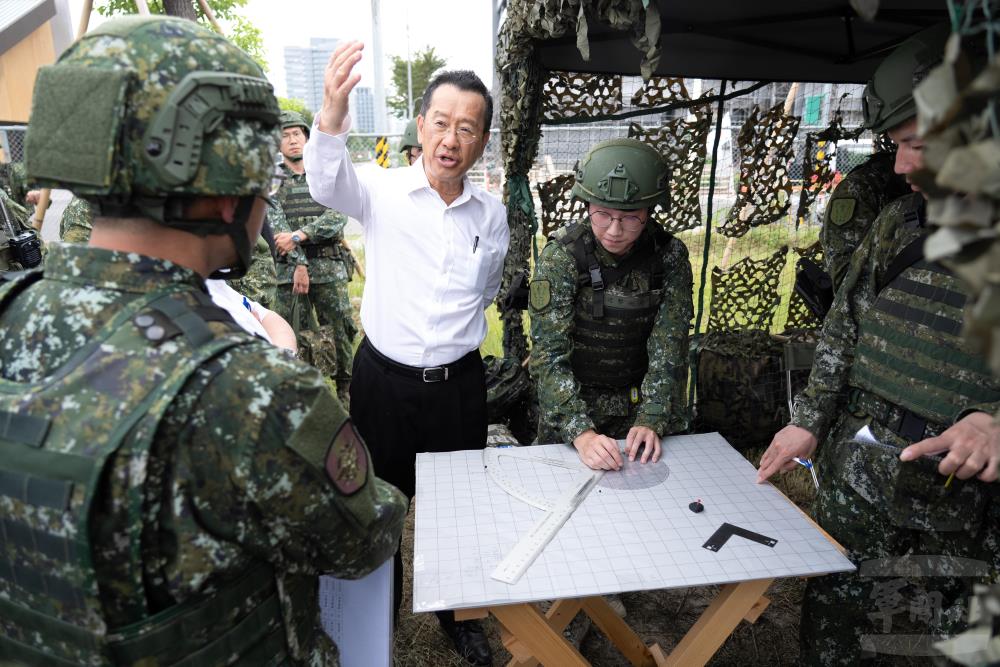 Minister Koo Inspects Training Units in Taipei, Calls for Active-Reserve Integration to Enhance Overall Combat CapabilitiesMinister of National Defense Wellington Koo Li-hsiung visited the Greater Taipei area today to inspect units participating in the live exercise phase of Han Kuang 42 Exercise. He observed reserve-force mobilization and combat power regeneration, the defense of clustered strongpoints, and joint counter-airborne and counter-air-assault drills. He commended the efforts of thetheater of operationsto integrate active and reserve forces effectively and enhance overall defense capabilities. Accompanied by Vice Minister of National Defense Hsu Szu-chien and other officials, Minister Koo began his inspection by receiving a mission briefing from the Taipei Brigade. He reviewed the brigade’s progress in regenerating combat power following full mobilization, as well as its overall plans for reserve forces to conduct mutually supporting and coordinated defensive operations. During the inspection, personnel from the mortar battalion demonstrated 120 mm mortar firing procedures, showcasing their training achievements and ability to provide fire support following mobilization. Minister Koo also spoke with mobilized reservists about their professional expertise and what they had gained from refresher training, and invited them to offer suggestions drawn from that experience. Minister Koo said reserve cadres should understand the professional backgrounds and experience of mobilized reservists and assign them suitable duties according to the principle of “matching personnel to appropriate roles.” This would allow reservists to apply their expertise in the right positions and rapidly translate their expertise into combat power. He added that, in accordance with the overall operational concept, active and reserve forces must be effectively integrated, with forces and firepower appropriately deployed to maximize overall operational effectiveness. Minister Koo later inspected a field drill conducted by personnel from the 229th Military Police Battalion, the 66th Marine Brigade, and the Taipei Brigade to counter airborne and air assault operations. He reviewed their overall command-and coordination capabilities and their ability to employ forces effectively. Minister Koo recognized the dedication and hard work of active-duty personnel and mobilized reservists in combat-readiness training. He encouraged them to continue their efforts and work together to transform their exercise and training experience into solid combat capabilities for safeguarding national security.2026/08/12
 -
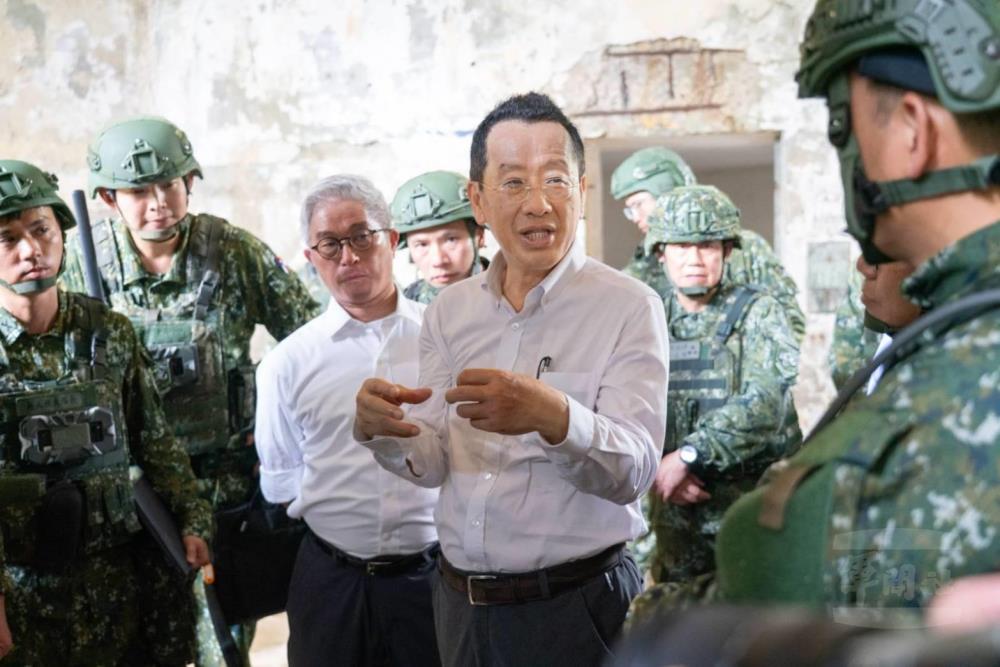 Minister Koo Inspects Exercise Units, Reviews Tactical Drone Operations and Battlefield AdditiveManufacturingMinister of National Defense Wellington Koo Li-hsiung visited units participating in the field-training phase of the “Han Kuang 42 Exercise” in Taoyuan today. He reviewed the tactical employment of drones for battlefield surveillance and reconnaissance, intelligence transmission, and strikes, as well as the use of 3D-printing technology for “battlefield additive manufacturing ” of drone components. He also thanked participating service members for their tireless efforts. Accompanied by Vice Minister of National Defense Hsu Szu-chien, Vice Chief of the General Staff (Executive) General Huang Chih-wei, and other officials, Minister Koo first received battlefield briefings from the operational sector command and drone units. He then observed personnel operating various types of drones to conduct battlefield surveillance, reconnaissance, and strikes. He also discussed plans for wartime defense in depth, successive resistance operations, and wartime transportation control with senior officers. Minister Koo later visited a drone unit’s tactical position, where he inspected its 3D-printing equipment and reviewed its processes and capacity for “battlefield additive manufacturing ”. Minister Koo said drone operations require the integrated planning of surveillance, reconnaissance, intelligence transmission, command and control, and strike capabilities according to the operational environment and mission requirements. These capabilities must be closely aligned with operational concepts, while different types of weapons and equipment should be employed flexibly to enhance battlefield awareness, real-time response, and precision-strike capabilities, thereby maximizing overall operational effectiveness. Relevant units should develop capabilities for battlefield additive manufacturing , rapid repair, and resupply. Technologies such as 3D printing can support a distributed, rapid, and sustainable maintenance and replenishment mechanism. These capabilities should also be repeatedly validated through exercises to strengthen operational resilience and sustainability . Later, Minister Koo visited an Air Force unit to review its operational capabilities, force deployment, protective force disposition, and defensive area of responsibility. He provided guidance on the employment of combat power and firepower, the maintenance of command-and-control links, and protection of defensive positions. These efforts are intended to strengthen units’ mobile deployment, backup capabilities , and sustained operational capabilities in response to enemy threats and changing battlefield conditions, ensuring the effective execution of all operational missions.2026/08/11
 -
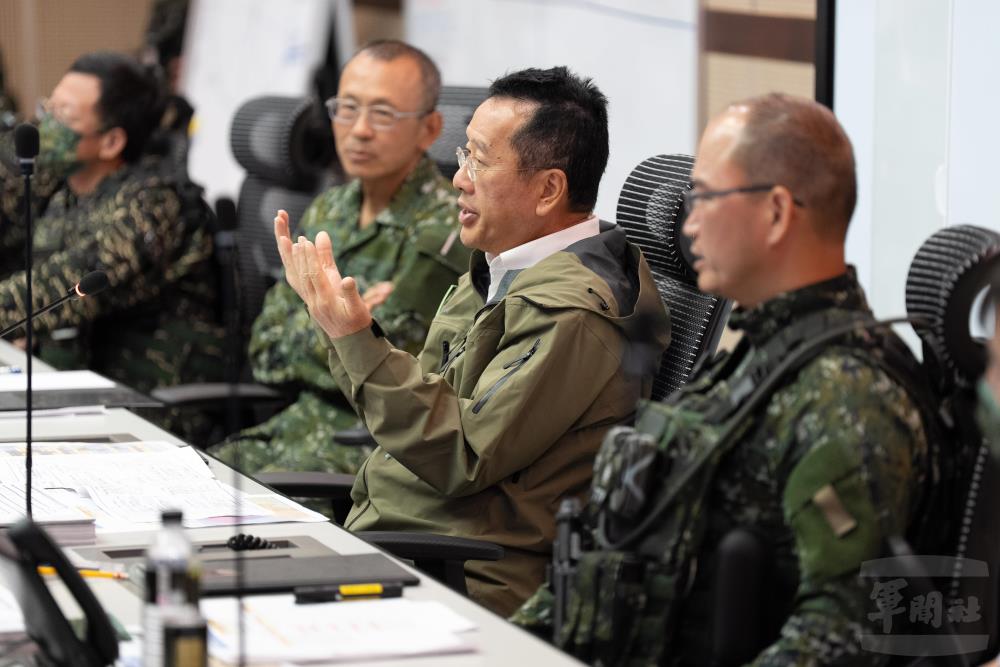 Minister Koo: Integrating Diverse Strike Capabilities to Enhance Overall Operational EffectivenessThe field-training phase of the “Han Kuang 42 Exercise” entered the “Joint Counter-Landing, Littoral Strike, and Beach Combat” stage today. Minister of National Defense Wellington Koo Li-hsiung inspected the Third Theater of Operations’ Joint Firepower Coordination Center, where he reviewed the overall planning for destroying enemy forces in key areas and the results of joint fires employment. He also thanked participating service members for their hard work. Upon arriving at the Joint Firepower Coordination Center, Minister Koo first received a mission briefing on the theater’s overall planning for joint fires and the composition of its kill chain. With senior officers, he also discussed intelligence transmission, systems integration, and the establishment of a common operational picture for joint operations across the services. Minister Koo said that, in response to rapid technological advances and evolving forms of warfare, the Armed Forces continue to integrate diverse strike capabilities. Through comprehensive intelligence transmission links, they are establishing a fully integrated common operational picture while advancing toward more automated and efficient strike operations to enhance overall operational effectiveness. During the inspection, Minister Koo commended participating service members for their wholehearted commitment to the exercise. He emphasized that training is the foundation of combat power and that rigorous training provides the most reliable protection on the battlefield. Minister Koo encouraged all personnel to continue training under “rigorous, demanding, and realistic conditions,” refine their approach to joint operations, and strengthen their ability to respond to rapidly evolving combat situations in order to safeguard national security.2026/08/09
 -
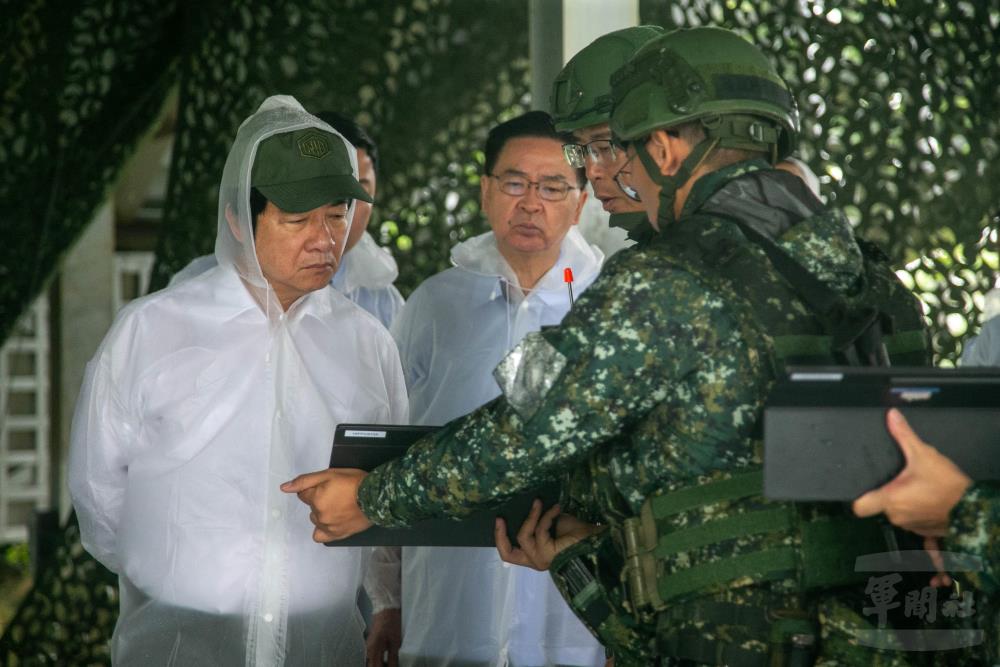 President Lai Inspects Key-Area Fire-Destruction Drill during Han Kuang Exercise, Thanks Service Members for Their DedicationPresident Lai Ching-te visited the Taoyuan area this morning to inspect a key-area fire-destruction field drill conducted as part of the field-training phase of the “Han Kuang 42 Exercise.” He observed the defensive sector’s field training activities and thanked participating service members for their hard work. President Lai first received a battlefield briefing at an observation platform, where he reviewed the Taoyuan Central Operational Sector’s overall employment of firepower and its plan for conducting key-area fire destruction. He then proceeded to an air defense position to inspect an air defense unit under the 21st Artillery Command. The President also presented meal supplement funds in recognition of the service members’ dedication. Also attending were National Security Council Secretary-General Joseph Wu; Minister of National Defense Wellington Koo Li-hsiung; National Security Council Advisor Liu Te-chin; Chief of Army General Lu Kun-hsiu; and Third Theater of Operations Commander Lieutenant General Lien Chih-wei.2026/08/09
 -
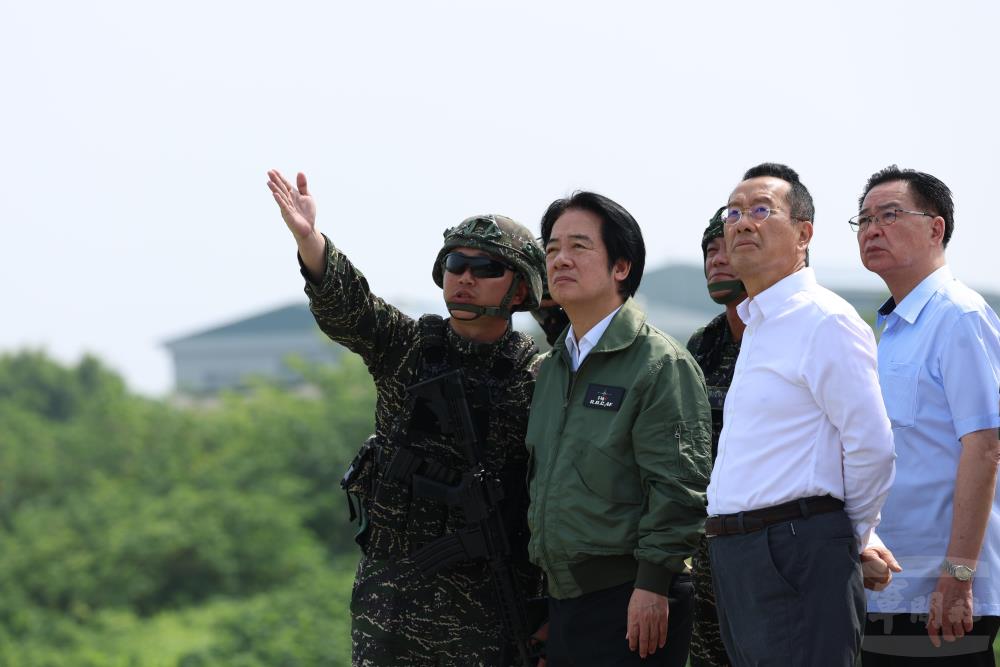 President Lai Inspects Littoral-strike Drill, Calls on Armed Forces and Coast Guard to Safeguard Taiwan’s Sovereignty with Credible Combat CapabilitiesPresident Lai Ching-te visited the Fourth Theater of Operations this morning to inspect littoral-strike and coastal-defense drills conducted as part of the field-training phase of the “Han Kuang 42 Exercise.” He encouraged Armed Forces and Coast Guard personnel to respond proactively and strengthen their coordination during the exercise so that they are prepared for every contingency. The President first arrived at Haijiao Camp to inspect an “emergency preparation for war” sortie drill. He boarded Kuang Hua VI-class Missile Boat No. 64, where, from the bridge, he received briefings on the exercise scenario and pre-departure preparations. He also addressed Navy and Coast Guard personnel over the vessel’s public-address system. President Lai then proceeded to the Chaishan combat-readiness road, where he boarded a command vehicle for an overview of the “littoral-strike” concept. He subsequently visited Taoziyuan Beach to inspect a “coastal-defense” drill and receive briefings on the equipment carried by special operations forces and the battlefield situation. Speaking over the vessel’s public-address system, President Lai said he was on the bridge of Missile Boat No. 64, whose crew had received orders to make an emergency sortie and conduct a littoral-strike mission. He explained that the Han Kuang Exercise uses “actual personnel, locations, timing, equipment, and operations” to test command coordination, immediate combat response, and homeland defense capabilities. President Lai said that in the face of external threats and challenges, the government continues working to strengthen Taiwan’s defense capabilities and provide the fullest possible support to Armed Forces and Coast Guard personnel. He encouraged them to respond proactively and strengthen operational coordination throughout the exercise so that they can address any situation and safeguard national sovereignty and public safety with credible combat capabilities. Also attending were National Security Council Secretary-General Joseph Wu; Minister of National Defense Wellington Koo Li-hsiung; Ocean Affairs Council Minister Kuan Bi-ling; National Security Council Advisor Liu Te-chin; Deputy Secretary-General Lii Wen; Chief of Navy Admiral Chiang Cheng-kuo; and Fourth Theater of Operations Commander Lieutenant General Liu Wei-hsin. The Navy Command also livestreamed the emergency combat-readiness sortie, littoral-strike, and coastal-defense drills today. Professional commentary introduced the exercise events, weapons and equipment, and tactical employment, giving the public a better understanding of the Navy’s combat-readiness preparations and defensive operations. The broadcast also promoted all-out defense awareness and demonstrated the Armed Forces’ firm resolve to defend Taiwan’s maritime frontiers and national sovereignty.2026/08/08
 -
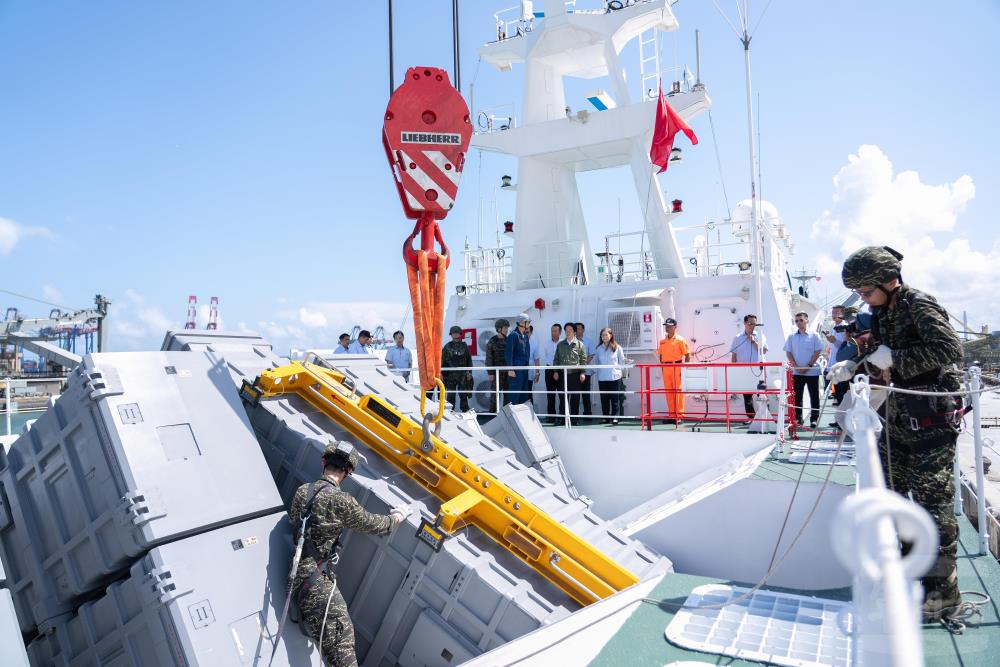 President Lai Inspects Han Kuang Exercise, Reviews Combat Power Protection and Preservation DrillsPresident Lai Ching-te visited the Bali area of New Taipei City this morning to inspect the field-training phase of the “Han Kuang 42 Exercise.” He observed troops in the Bali defense sector conducting combat power protection, force preservation, and battlefield response operations, and thanked participating service members for their hard work. President Lai first boarded the Coast Guard vessel Bali (CG606), where he received briefings on wartime outfitting equipment and a coastal strike scenario. He then inspected the missile mounting space to learn about its configuration and the loading of combat-ready missiles. After disembarking, the President proceeded to the mine-loading area at the pier for a briefing on mine-loading operations. He then visited the south pier, where the 53rd Engineer Group briefed him on obstacle emplacement at the Port of Taipei and measures to deny resources to the enemy. President Lai then observed the troops conducting the drills. Also attending were Minister of National Defense Wellington Koo Li-hsiung, National Security Council Advisor Liu Te-chin, Chief of Army General Lu Kun-hsiu, Chief of Navy Admiral Chiang Cheng-kuo, and Third Theater of Operations Commander Lieutenant General Lien Chih-wei.2026/08/06
 -
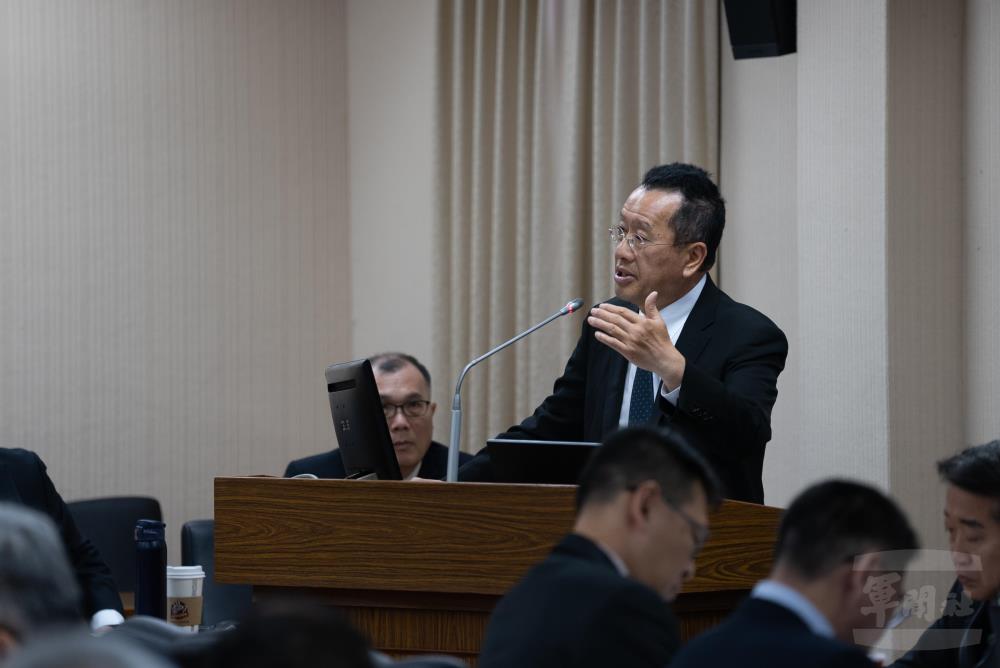 Minister Koo Reports to Legislature on Strengthening Morale and Psychological ResilienceMinister of National Defense Wellington Koo Li-hsiung appeared before the Legislative Yuan’s Foreign Affairs and National Defense Committee today to deliver a special report on how the Armed Forces are strengthening service members’ morale and psychological resilience in response to escalating enemy threats and gray-zone activities. Minister Koo began by noting that China continues to employ gray-zone harassment, cognitive warfare, disinformation, recruitment, and infiltration in an attempt to influence service members’ perceptions and undermine unit cohesion. Morale and psychological resilience have therefore become indispensable foundations of force development and combat readiness. Guided by the principle of “reflecting the threat environment and supporting preparation for war,” the Ministry will continue strengthening service members’ will to resist the enemy, awareness of enemy threats, and unit morale to ensure combat effectiveness. Political Warfare Bureau Director-General Lieutenant General Shih Shun-wen further explained that the Armed Forces currently build morale and psychological resilience through four principal areas: unit education, recruit education, reserve refresher training, and military school education. At the unit level, Chu-Kuang Day instruction, security and counterintelligence briefings, calculated risk-taking and battlefield stress-resilience courses, and mental health education are used to strengthen service members’ will to fight and reinforce their psychological defenses. For recruit education, a General National Defense Education Course has been added to initial military training. In 2024, the Ministry published the Beginning Your Military Service teaching materials, covering Armed Forces history, military ethics, Chinese cognitive warfare, human rights in the military, information security, and counterintelligence. Recruits receive 16 hours of instruction during initial training. A multimedia database has also been established on the General National Defense Education website for use by recruit training units. To help reservists understand current defense policies and enemy threats while strengthening their morale and patriotic commitment, the Ministry published the Mobilized and Combat-Ready teaching materials in 2024. Reservists receive five hours of instruction during refresher training, supported by educational videos from a multimedia database to improve the quality of the program. Military school education includes five political education courses totaling 12 creditswithin the common general curriculum. Subjects include the Constitution and Founding Principles of the Republic of China, the History and Development of the Republic of China, and Studies on Mainland China. These courses are intended to develop military officers’ understanding of democracy and constitutional government, strengthen cadets’ awareness of enemy threats and military ethics, and cultivate their ability to understand both themselves and their adversaries. Lieutenant General Shih emphasized that morale education and psychological resilience have become important strategic foundations for building sustained combat capabilities and whole-of-society defense resilience. The Ministry will continue refining its educational methods and content by strengthening Chu-Kuang Day instruction, General National Defense Education, security and counterintelligence education, battlefield stress training, and psychological resilience training. These efforts will be integrated into routine education, combat-readiness preparation, exercise and training evaluation, and threat awareness education to foster among service members a clear understanding of friend and foe, a strong sense of national identity, and a shared will to defend the country.2026/08/05
 -
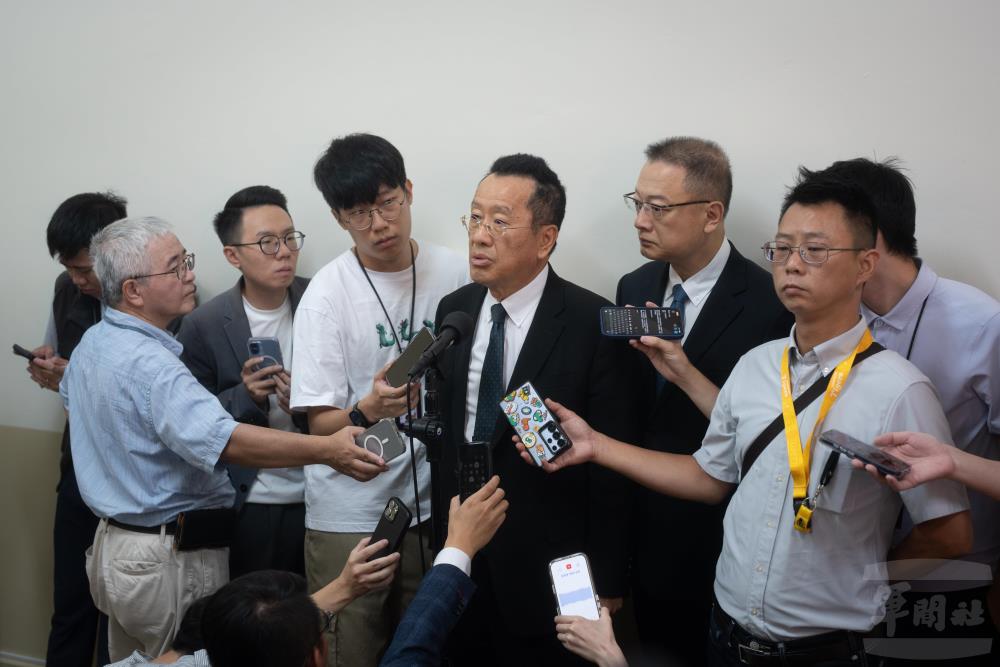 Minister Koo: Training Is the Foundation of Combat Power; Armed Forces Training Rigorously to Ensure Full ReadinessMinister of National Defense Wellington Koo Li-hsiung appeared before the Legislative Yuan’s Foreign Affairs and National Defense Committee this morning to deliver a special report and answer legislators’ questions. Speaking to the media beforehand, Minister Koo said training is the foundation of combat power. The Armed Forces will make comprehensive preparations and continue training rigorously and consistently to strengthen force development and combat readiness. He also expressed hope for greater public support. Asked about the focus of the field-training phase of the “Han Kuang 42 Exercise” and Taiwan-U.S. cooperation, Minister Koo described the field exercise as the culminating validation of the Han Kuang exercise series. Beginning with computer-assisted war games, namely command-post exercises, and progressing through the Rapid Response Exercise, the Joint Defense Exercise, and the Han Kuang field exercise, each stage employs realistic, scenario-driven but unscripted training. Continuous scenario injects require units to respond as events unfold, testing commanders’ judgment and the orders they issue. Regarding Taiwan-U.S. military exchanges, Minister Koo said the Ministry draws on the U.S. military’s experience in realistic training to enhance the Armed Forces’ operational capabilities. Cooperation with friendly partners also strengthens Taiwan’s overall force-development and combat-readiness efforts. Asked about the 2027 defense budget and new unmanned ground systems, Minister Koo replied that the Ministry formulates its budget in consideration of enemy threats, defensive operational requirements, and the government’s overall fiscal capacity. Defense spending will target 3% of GDP, with the Executive Yuan to make a coordinated announcement at a later date. Responding to reports that China was harassing Taiwan’s surrounding waters and airspace under the pretext of “joint combat-readiness patrols” as the Han Kuang Exercise began, Minister Koo said the Ministry has contingency plans in place for continued PLA activities around the Taiwan Strait during the exercise. Such activities will not interrupt the exercise, and all training events will proceed as planned. Asked about Japan’s recently released defense white paper, Minister Koo said the report describes the threat from China as “an unprecedentedly significant strategic challenge” to Japan and a matter of serious concern. Peace and stability in the Indo-Pacific are of vital importance. The Ministry will continue working with friendly partners to strengthen intelligence exchanges and collective deterrence. Taiwan will also increase its defense budget and fulfill its responsibility to defend the country.2026/08/05
 -
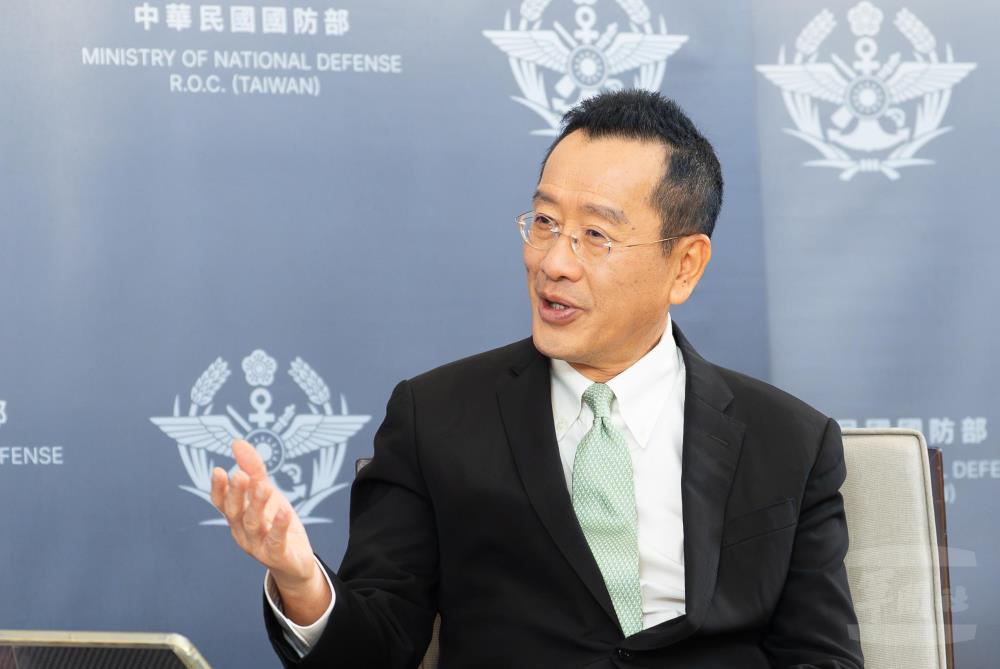 Minister Koo: Deepening Security Cooperation and Defense Self-Reliance to Build Taiwan’s Layered Defense CapabilitiesMinister of National Defense Wellington Koo Li-hsiung said in a recent media interview that, in the face of China’s escalating military threats, Taiwan will strengthen its self-defense capabilities while deepening security cooperation with like-minded countries to create collective deterrence. The Ministry of National Defense is also advancing programs for the domestic production of unmanned systems, counter-drone capabilities, and the “Taiwan Dome,” using layered defense and intelligence fusion to enhance Taiwan’s overall defense capabilities. Minister Koo recently sat down for interviews with the Central News Agency and other media outlets, accompanied by Vice Chief of the General Staff (Executive) General Huang Chih-wei, Director-General of the Department of Strategic Planning Lieutenant General Huang Wen-chi, and Deputy Chief of the General Staff for Operations and Planning Lieutenant General Hou Chia-lun. During the interviews, he responded to questions on regional security, security cooperation, defense self-reliance, and unmanned systems. Addressing security in the Indo-Pacific, Minister Koo said countries should increase defense spending, strengthen their self-defense capabilities, expand training, and bolster their military capabilities. Together, these efforts can create collective deterrence against any attempt to unilaterally alter peace and stability across the Taiwan Strait through force or coercion, requiring China to consider the potential responses of both Taiwan’s Armed Forces and other countries in the region before taking such action. Minister Koo noted that the waters east of Taiwan are also vital sea lines of communication for Japan and South Korea. Should the regional security environment undergo a major change, Taiwan would not be the only country required to confront and address the consequences. Regarding Japan’s concept of a “survival-threatening situation,” Minister Koo said Japan is itself facing pressure from Chinese gray-zone activities and joint Chinese-Russian patrols. If Japan determines that circumstances have reached the threshold of a survival-threatening situation, whether it exercises its right of self-defense is a decision for the Japanese government to make based on its own assessment. Turning to Taiwan-U.S. security cooperation, Minister Koo stressed that cooperation extends far beyond the arms sales visible to the public and encompasses a broad range of areas. Personnel seen participating in exchanges during exercises and training activities represent only a small part of the overall relationship. The Armed Forces will continue drawing lessons from the operational experience of friendly partners and adapting them to Taiwan’s defense requirements, the threats it faces, and PLA tactics and methods. These lessons will inform adjustments to Taiwan’s own tactics, techniques, exercises, and training to enhance its defensive capabilities. On defense self-reliance, Minister Koo said Taiwan possesses highly flexible manufacturing capabilities. Going forward, Taiwan will integrate expertise from various countries in defense industries and emerging technologies while excluding supply chains that pose security concerns, including Chinese flight-control systems and communications modules. To this end, the Ministry has proposed a NT$210 billion special budget for unmanned systems, focusing on coastal surveillance and reconnaissance drones, coastal attack drones, and small one-way attack unmanned surface vessels. Through sustained, large-scale demand from the Armed Forces, the Ministry hopes to encourage domestic manufacturers to invest and establish a comprehensive production chain at scale that is free from China-linked supply chains. On counter-drone capabilities, Minister Koo noted that a wide range of soft-kill and hard-kill options are available, including electronic jamming, lasers, high-power microwave systems, automated gun turrets, and various interceptors. The Armed Forces will deploy appropriate countermeasures based on unit echelon, threat type, and cost-effectiveness. Technologies that have reached sufficient maturity will be advanced through formal acquisition programs or small-batch procurement, while the National Chung-Shan Institute of Science and Technology (NCSIST) will continue related research and development. Counter-drone capabilities must also be integrated into the broader air-defense and fire-coordination architecture so that the most efficient countermeasure can be assigned according to the nature of each threat. Asked about progress on the “Strong Bow” missile and the “Taiwan Dome,” Minister Koo said the Strong Bow missile has completed testing and evaluation and will be included in the relevant budget. The Taiwan Dome, meanwhile, is intended to establish a layered defense encompassing capabilities against ballistic missiles, combat aircraft, long-range fires, and unmanned systems. The Armed Forces will integrate U.S.-made and domestically developed systems, enhance the capabilities of various sensors, and fuse the intelligence and data they provide. The most appropriate effector can then be assigned according to the nature of the threat, improving the efficiency of fires across the overall air-defense architecture. Asked about weapons and equipment acquisition, Minister Koo said future procurement will emphasize mobility, survivability, and operational flexibility, while also reducing the identifiability of military assets and employing a diverse range of platforms to perform missions. Director-General of the Department of Strategic Planning Lieutenant General Huang Wen-chi added that the Armed Forces have moved away from the former mindset of simply “buying what is available.” Systems and platforms are now evaluated according to their suitability for the defense of Taiwan and Penghu, with dual-use, military, and civilian platforms all considered in force-development planning. Regarding legislative review of the special budget for unmanned systems, Minister Koo said the Ministry of National Defense continues to hope that the Executive Yuan’s NT$210 billion proposal will be approved and will maintain dialogue with the Legislative Yuan. If the Executive Yuan’s version does not pass, the relevant programs would have to return to the annual budget process. However, he cautioned against placing all categories of unmanned systems, including aerial, surface, ground, and underwater platforms, along with testing facilities and industrial development expenditures, under a single NT$40 billion annual ceiling, as doing so could constrain future capability development and force-development flexibility. Minister Koo added that, beyond the unmanned systems and Strong Bow missile programs already discussed, the Ministry is continuing to advance programs involving Rui Yuan UAVs, counter-drone systems, ammunition production, and Tactical Assault Kit (TAK) capabilities. A supplementary budget is also being prepared. The Ministry will continue proposing the defense funding required under its joint operations plans, capability-development priorities, and actual operational requirements to strengthen Taiwan’s indigenous defense industry and overall defense capabilities.2026/08/03