- Home
- MNA News
MNA News
-
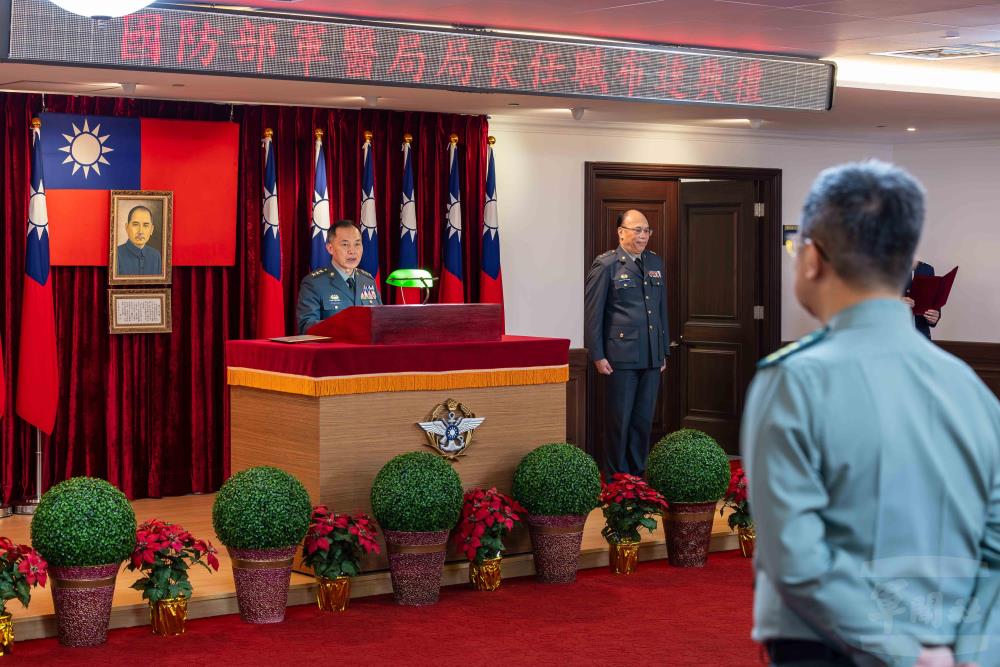 Vice Minister Chung Presides over Medical Affairs Bureau Director-General Assumption of Office Ceremony, Encourages Strengthening of Medical ResilienceVice Minister for Armaments Chung Shu-ming presided over the assumption of office ceremony for the Director-General of the Medical Affairs Bureau today. He encouraged the Medical Affairs Bureau, under the leadership of its new Director-General, Lieutenant General Chen Yuan-hao, to continue advancing four key priorities: strengthening medical resilience, enhancing healthcare quality, sustaining research and innovation, and expanding international exchanges. Through these efforts, he expressed hope that the Bureau would further improve the quality of military healthcare services and medical support operations. The assumption of office ceremony for the Director-General of the Medical Affairs Bureau was held this morning at Bo’ai Camp. During the ceremony, Vice Minister Chung first read the appointment order, after which Lieutenant General Chen took the oath of office and formally assumed his new position. Vice Minister Chung stated that Director-General Chen graduated from the National Defense Medical Center, Class of 1994, and earned a Doctor of Medical Science degree. Throughout his career, he served in several key positions, including Director of the Health Protection Division of the Medical Affairs Bureau, Superintendent of the Songshan Branch of Tri-Service General Hospital, President of the National Defense Medical Center, and Superintendent of Tri-Service General Hospital. Having previously served as Deputy Director-General of the Medical Affairs Bureau, Director Chen was promoted to Director-General and concurrently advanced to the rank of Lieutenant General. Vice Minister Chung noted that Director-General Chen’s extensive professional expertise and leadership experience would enable him to build upon the Bureau’s solid foundation and continue enhancing the quality of military healthcare services and medical professionalism. Vice Minister Chung pointed out that President Lai Ching-te recently presided over the inauguration ceremony of the Emergency and Critical Care Building at the Taoyuan Armed Forces General Hospital and affirmed the Ministry of National Defense’s commitment to safeguarding the health of service members and their dependents. He also noted that the transformation of the National Defense Medical Center into National Defense Medical University demonstrated the military medical system’s significant achievements in talent cultivation, medical education, and military medicine development. Vice Minister Chung emphasized that healthcare and medical support services constituted an essential component of the Armed Forces’ overall logistics system. From disaster response exercises and environmental sanitation maintenance within military units to battlefield triage, casualty treatment, and field medical support operations, all relied on the close cooperation of military medical personnel and medical units. He further noted that medical professionals serving in military hospitals and units at all levels provided daily healthcare and wellness support to service members, making important contributions to sustaining morale and maintaining combat readiness. Finally, Vice Minister Chung encouraged military medical personnel to continue upholding the spirit of serving service members and safeguarding the medical rights and interests of their dependents. He urged them to continuously improve the quality of healthcare services, keep pace with future developments in military medicine, integrate military operational requirements with civilian medical resources, and strengthen military medical technologies and capabilities. Through these efforts, he said, the military medical community would continue providing strong support for the Armed Forces’ combat readiness missions and achieve even greater success in the future.2026/06/01
 -
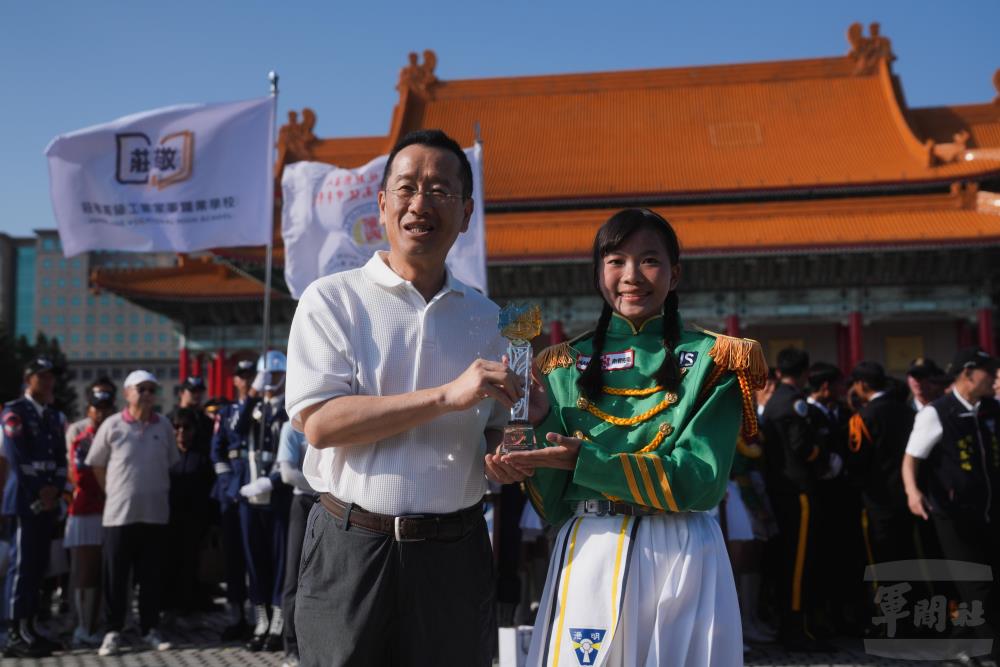 Kang Ming Senior High School Wins Championship at National Senior High School Honor Guard FinalsThe Ministry of National Defense’s National Senior High School Honor Guard Finals was held this afternoon at the plaza of the National Theater and Concert Hall in Taipei. The nine schools that advanced to the finals performed rifle-drill routines under the blazing sun with steady marching and precise, synchronized rifle movements, each presenting a distinctive style. The students demonstrated fearless confidence and youthful spirit throughout the competition. In the end, Kang Ming Senior High School from Tainan City emerged as the champion. Minister of National Defense Wellington Koo Li-hsiung presented the championship trophy and posed for a group photo with the winning team. After arriving at the venue, Minister Koo first interacted with representatives from 21 military clubs and exhibition booths. The Ministry of National Defense Art Performance Group, along with the Tri-Service Honor Guard and Ministry of National Defense Symphony Orchestra, then delivered impressive warm-up performances. During the competition, each school’s honor guard team took the stage in sequence. Accompanied by a variety of musical selections, the teams demonstrated the results of their training through formation changes and advanced rifle-handling maneuvers. Undaunted by the high temperatures, the participating students completed their performances with steady movements and exceptional discipline, displaying both a strong sense of honor and youthful vitality, and earned enthusiastic applause from the audience. “Junior schoolmates, don’t be afraid—your senior schoolmates are here!” Before the competing teams entered the venue, spirited cheers rang out from supporters representing each school, encouraging the teams and demonstrating strong school unity and cohesion while reflecting the honor guard tradition of pride and camaraderie. Spectators throughout the venue raised cameras and mobile phones to capture memorable moments as students pushed themselves to excel in pursuit of honor and achievement. At the conclusion of the competition, Kang Ming Senior High School claimed the championship title, while Pingtung Girls’ Senior High School and Shin Shing High School earned second and third place, respectively. Minister Koo presented commemorative posters and trophies to the participating schools and also awarded a specially designed Ministry of National Defense banner to the champion team. He then posed for a group photo with all participants and brought the event to a successful conclusion.2026/05/30
 -
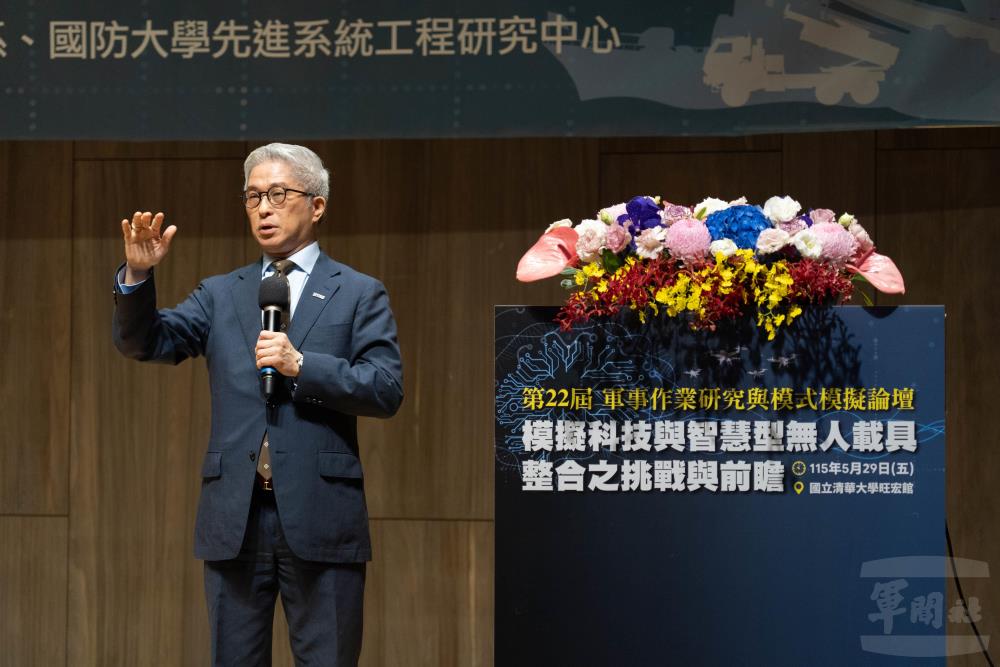 MND and National Tsing Hua University Hold Forum to Advance Defense Capabilities Through TechnologyThe 22nd Military Operations Research and Modeling and Simulation Forum was held today at National Tsing Hua University. Vice Minister of National Defense Hsu Szu-chien and National Tsing Hua University President W. John Kao jointly attended the opening ceremony. Experts and scholars from various sectors were invited to exchange views on key defense technology issues, including artificial intelligence (AI), modeling and simulation, autonomous systems, and unmanned systems, with the aim of enhancing the nation’s overall scientific research capabilities. Vice Minister Hsu stated that rapid changes in the international security environment and advances in technology had transformed the nature of modern warfare. He noted that unmanned systems and AI technologies had become critical components of future defense capabilities. Emphasizing that “technology is the future of the Republic of China, and Taiwan’s technological development has always remained at the forefront of innovation,” he expressed hope that Taiwan’s technology sector would continue contributing to the development of the national defense industry and strengthening the nation’s defense capabilities. Vice Minister Hsu further pointed out that one of the key challenges facing defense technology development involved not only unmanned systems themselves but also the integration of various weapons platforms and systems. This included the effective integration of domestically developed and foreign-procured equipment. He noted that substantial technological support was required to enable rapid target identification, threat assessment, and weapons allocation, thereby enhancing overall defense operational effectiveness. President W. John Kao stated that military technology had long served not only as a driving force behind national defense development but also as the source of many innovations that had transformed modern life. Technologies such as the Internet and the Global Positioning System (GPS) had originated from military research and development efforts, demonstrating that the defense sector had also been a significant catalyst for technological innovation. President Kao noted that National Tsing Hua University had long been committed to promoting technological innovation and technology transfer. Earlier this year, the university established the nation’s first university-led “Tsing Hua University Science Park” to further integrate campus research capabilities and accelerate the transition of research outcomes from laboratories to society and industry. He also announced that the university would soon launch the NT$1 billion “Tsing Hua Future Fund,” which would provide resources to help researchers, students, and industry partners overcome the so-called “valley of death” in the innovation process and further strengthen Taiwan’s technological competitiveness. During the keynote session, Professor Shang-Hong Lai of the Department of Computer Science at National Tsing Hua University delivered a presentation titled “Applications of Artificial Intelligence in National Defense,” in which he explored the use of AI technologies in defense-related scenarios. In addition, Dr. Shih-Pin Kou, Senior Advisor at the National Defense University, presented “How Autonomous Edge Uses Decentralized Command to Direct Autonomous Unmanned Operations,” sharing recent developments in autonomous operations and distributed command systems. Furthermore, exhibition booths established by universities, manufacturers, and enterprises from Taiwan and abroad were displayed around the forum venue, showcasing a wide range of defense-related technologies and capabilities. Exhibits included modeling and simulation systems, intelligent training solutions, AI-assisted decision-making technologies, unmanned aerial vehicles, unmanned ground vehicles, unmanned underwater vehicles, counter-drone systems, digital battlefield services, and autonomous command-and-control solutions. These exhibits highlighted the latest achievements in the development of intelligent defense technologies.2026/05/29
 -
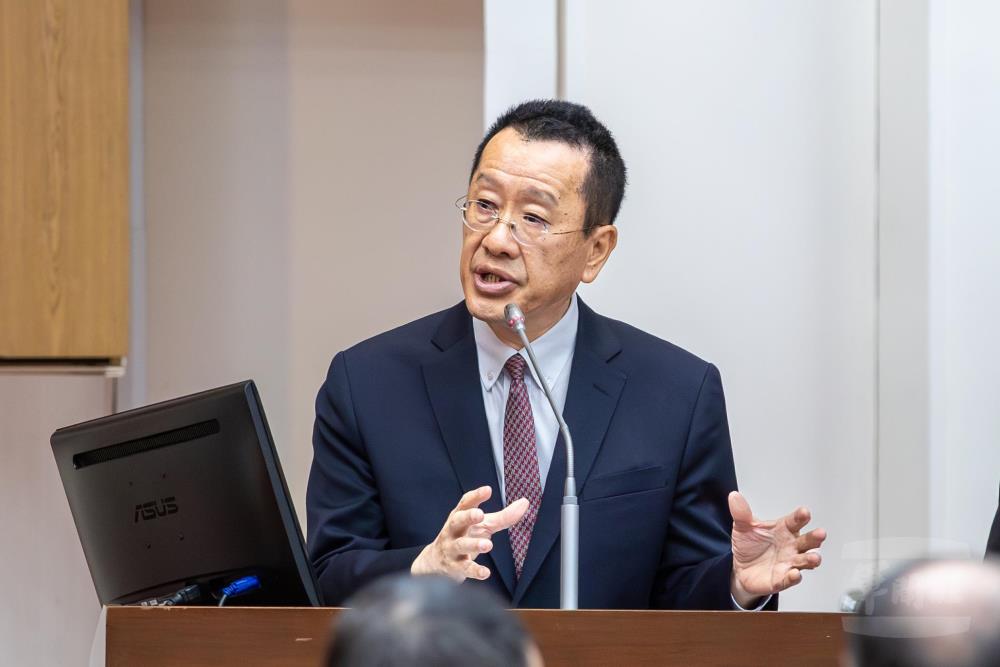 Minister Koo Presents Report on M109A7 and Other Equipment–Urges Legislative Yuan to Support Budget AllocationMinister of National Defense Wellington Koo Li-hsiung attended a joint session of the Legislative Yuan’s Finance Committee and Foreign Affairs and National Defense Committee today to present a report on the draft “Special Act on Procurement for Safeguarding National Security and Strengthening Asymmetric Warfare Capabilities.” During the briefing, Minister Koo stated that the Ministry of National Defense plans to procure several major weapons systems under the special act, including the M109A7 self-propelled howitzer, the HIMARS multiple launch rocket system, anti-armor loitering munition systems, TOW 2B anti-tank missiles, and Javelin anti-tank missile systems. All systems already received Letters of Offer and Acceptance (LOA) from the United States. He urged the Legislative Yuan to approve the related budget allocations to ensure Taiwan’s armed forces possess the capabilities necessary to safeguard national security. Minister Koo noted that the first tranche of procurement items under Article 5, Paragraph 1, Items 1 through 5 of the special act totals NT$294.99 billion. For fiscal year 2026, NT$8.812 billion has been allocated for weapons procurement, logistics support, engineering infrastructure, and associated program management expenses. Among the major procurement programs, the M109A7 self-propelled howitzer program was scheduled for implementation from 2026 to 2032 with a total budget exceeding NT$80.6 billion. The HIMARS procurement program totalled more than NT$159.7 billion, while the anti-armor loitering munition systems exceeded NT$33 billion. Additional funding would support replenishment of TOW 2B anti-tank missile inventories, TOW 2B launch systems, and Javelin missile systems. Minister Koo explained that the PRC continued to expand its blue-water operational capabilities while fielding next-generation fighter aircraft, integrated ISR strike drones, naval platforms, and precision-guided missile systems. Under these evolving threat conditions, the originally planned procurement quantities were no longer sufficient to meet Taiwan’s operational requirements for counter-landing and coastal defense operations, making additional acquisitions necessary. Regarding the M109A7, Minister Koo stated that the system integrated GPS-based positioning, automated fire control, digital command-and-control capabilities, and precision fires exceeding ranges of 30 kilometers. These capabilities would enable the armed forces to strike enemy command nodes, logistics facilities, and communications centers with greater accuracy and responsiveness. Addressing joint operational effectiveness, Minister Koo noted that during integrated air and missile defense operations, HIMARS systems could conduct long-range precision strikes against enemy missile launch platforms at ranges of up to 300 kilometers. Integrated with existing Patriot, Sky Bow, and short-range air defense systems, as well as AI-enabled decision-support systems, these capabilities would contribute to a more effective layered air and missile defense network. During joint counter-landing operations, HIMARS and M109A7 systems could coordinate with coastal anti-ship missile units to rapidly engage high-value enemy targets from littoral areas to landing beaches using precision fires. Minister Koo further stated that acquisition of systems such as the Albatross II tactical maritime surveillance UAV, vertical takeoff and landing unmanned aerial systems, and coastal surveillance UAVs would significantly improve maritime domain awareness and targeting capability. These systems could support precision-guided missiles,unmanned surface vessels, and coastal strike drones in rapidly detecting and engaging hostile naval forces, thereby enhancing early warning and rapid-response strike capabilities within Taiwan’s asymmetric defense framework. Minister Koo further explained that during joint homeland defense operations, the ROC Armed Forces would deploy large numbers of surveillance UAVs to track enemy maneuver elements while integrating AI-enabled decision-support systems, the Team Awareness Kit (TAK), and the Taiwan Tactical Network (TTN) to establish a common operational picture and accelerate the sensor-to-shooter kill chain. Using precision fires, anti-armor missile systems, attack drones, and mobile interdiction operations in coordinated operations, Taiwan’s armed forces would seek to impose layered attrition against invading forces. Portable counter-UAS systems would also be deployed throughout the battlespace to defend against the PRC’s small- and medium-class drone threats. Minister Koo further stated that the HIMARS multiple launch rocket system and the M109A7 self-propelled howitzer would provide precision fire support at the operational level. Meanwhile, Javelin and TOW 2B anti-tank missiles, as well as anti-armor loitering munition systems, would enable precise engagement of enemy tanks and armored vehicles. Should Taiwan acquire a larger number of surveillance and attack UAVs, AI-enabled decision-support systems, the Team Awareness Kit (TAK), the Taiwan Tactical Network (TTN), and portable counter-UAS systems, these capabilities would significantly enhance rapid detect-and-strike operations and sustain long-term attrition against enemy forces, while also improving force protection for deployed units. Minister Koo emphasized that the procurement of the five major weapons systems, including the M109A7, would significantly enhance Taiwan’s overall joint operational capabilities. However, to fully establish the three critical pillars of a layered air defense network (the Taiwan Dome), asymmetric defense capabilities, and sustained long-term attrition against enemy forces, Taiwan also had to continue developing command-and-control systems, all-domain ISR capabilities, unmanned and counter-UAS systems, medium-range ballistic missile defense systems, and expanded domestic ammunition and equipment production capacity to enhance defense resilience.Only through the integrated development of these capabilities, Minister Koo stated, could Taiwan further strengthen its asymmetric warfare posture and defense resilience to safeguard national security.2026/05/25
 -
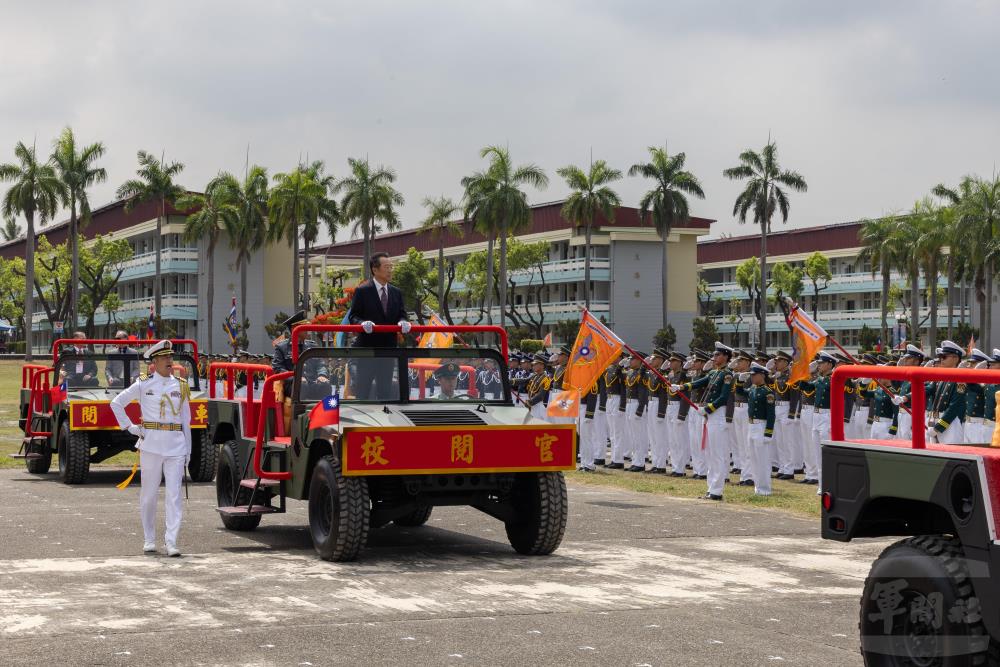 Minister Wellington Koo Li-hsiung Presides over Chung Cheng Armed Forces Preparatory School 50th Anniversary Celebration – Encourages Students to Cultivate Character, Study Diligently, and Develop Global PerspectivesChung Cheng Armed Forces Preparatory School held its “50th Anniversary Celebration” today. Minister of National Defense Wellington Koo Li-hsiung presided over the event. Minister Koo encouraged all students to cultivate character, study diligently, build strong physiques, and develop an international perspective. He also expressed appreciation and gratitude to outstanding alumni from previous generations, as well as to the teachers and staff who had dedicated themselves to the school’s development. During the celebration assembly, graduates from the three services’ military academies who had studied at Chung Cheng Armed Forces Preparatory School were specially invited to return to their alma mater to participate in the military parade. They reviewed the troops together with current students, demonstrating the spirit of passing on the torch. Subsequently, the alumni drum and bugle corps and the Chung Cheng Armed Forces Preparatory School color guard and marching band delivered splendid performances, creating a lively atmosphere. In conjunction with the anniversary, the school also held a ribbon-cutting ceremony to open the school history museum, presenting the school’s founding history and serving as an important platform for deepening school history education and strengthening alumni bonds. Minister Koo specially commended 12 outstanding alumni and the junior high and senior high school students selected as “Chung Cheng Youth,” praising their outstanding achievements in different fields and academic performance. These not only inspired the students at the school but also served as role models for everyone to emulate. Minister Koo stated that Chung Cheng Armed Forces Preparatory School was not only an institution for imparting knowledge but also an important cradle for shaping character, cultivating discipline, and fostering team spirit. He proposed three points for students to strive toward — “cultivate character and study diligently,” “build strong physiques,” and “develop a global perspective” — encouraging them to cultivate a sense of responsibility and independent thinking, forge strong physiques and resilient willpower, while paying attention to international affairs, developing foreign language abilities, and broadening their macro vision to become modern military talents with an international perspective. “The key to Chung Cheng Armed Forces Preparatory School moving into the next 50 years lies with all of you.” Minister Koo emphasized that the Ministry of National Defense would continue to improve educational quality, optimize the learning environment, and deepen military professionalism and technological literacy, making the school an important cradle for nurturing future generals and core officers of the ROC Armed Forces. At the same time, he encouraged everyone to work together so that the military could continue to progress and jointly build a more elite and modernized ROC Armed Forces.2026/05/16
 -
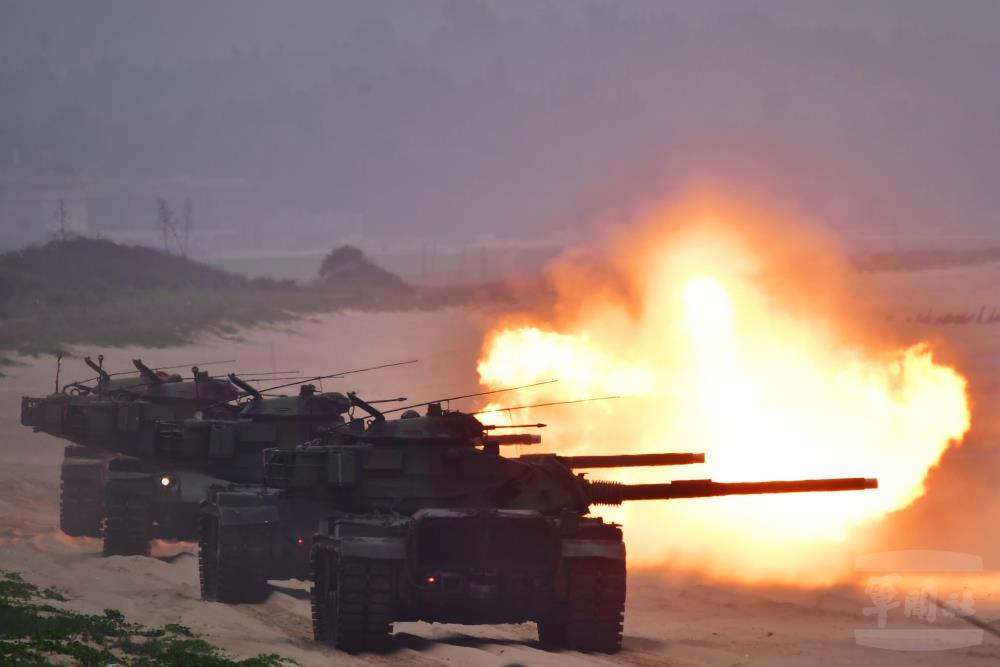 Kinmen Defense Command Conducts Taiwu Exercise – Live-Fire Shooting Demonstrates Solid Combat PowerThe Army’s Kinmen Defense Command conducted the second-quarter “Taiwu Exercise” today. Officers and enlisted personnel completed tasks such as entering positions and combat in the main position zone in accordance with orders. The Kinmen Garrison Battalion deployed M60A3 tanks, CM21 armored vehicles, and Javelin missiles, in coordination with the Kinmen Defense Command’s mixed artillery battalion’s 8-inch howitzers, 155mm cannons, and other organic weapons to conduct live-fire shooting. They also used the “Team Awareness Kit (TAK)” to strengthen command and control resilience, and employed “unmanned aerial vehicles” for target reconnaissance and battlefield control, thereby enhancing joint arms combat effectiveness. To validate the unit’s ability to respond to multiple threats, the Kinmen Garrison Battalion’s tank battalion, mechanized infantry battalion, and anti-armor company, in coordination with the long-range strike firepower of the mixed artillery battalion, simultaneously conducted the quarterly “Taiwu Exercise” live-fire training from different locations. Through the method of “real troops, real locations, and real ammunition,” they executed key area fire destruction and limited target attack tasks, thereby improving the officers and enlisted personnel’s ability to respond and defeat the enemy. This exercise also invited local leaders, gentry, and police representatives from Kinmen County to witness the results of the military’s rigorous training. After the command post issued the situation, 8-inch howitzers, 155mm cannons, and 120mm mortars in the positions first conducted “key area fire destruction.” This was followed by the main position zone combat phase. Officers and enlisted personnel conducted “Javelin missile” live-fire shooting for the first time in this exercise area, simulating strikes against enemy forces advancing from the sea and covering the maneuver of armored vehicles. Finally, M60A3 tanks and CM21 armored vehicles carried out limited target attacks to block and annihilate enemy forces attempting beach landings. In this Taiwu Exercise, the Kinmen Defense Command, based on composite scenarios, dispatched armored vehicles for maneuver and used Javelin missiles to precisely lock onto sea targets, combining with the intense firepower of artillery units to successfully complete the mission, demonstrating the officers and enlisted personnel’s determination to defend the homeland and not yield an inch of ground.2026/05/13
 -
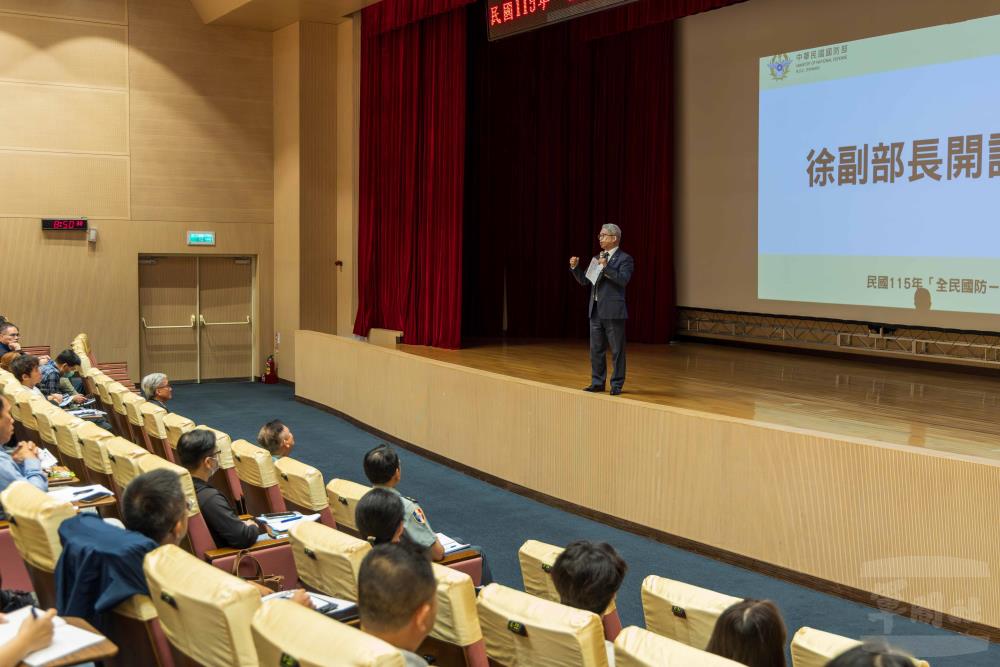 Vice Minister Hsu Presides over All-Out Defense Education Seed Instructor Training WorkshopVice Minister of National Defense Hsu Szu-chien presided today over the Republic of China 2026 “All-Out Defense Education – Social Education” Seed Instructor Training Workshop. On behalf of Minister Wellington Koo Li-hsiung, he welcomed participants from various sectors and encouraged them to strengthen teaching capabilities through professional study, expand the foundation for promoting all-out defense education, build consensus among the public, and enhance Whole-of-Society Defense Resilience. The workshop was held this morning at the Bo’ai Camp. All-out defense affairs personnel recommended by various county and city governments, along with scholars from civil society, participated in the training. The curriculum covered topics such as “National Defense Policy,” “International Situation,” “Media Literacy,” and “All-Out Defense.” Experts and scholars including Director Su Tzu-yun and Researcher Lee Che-chuan from the Institute for National Defense and Security Research were invited to deliver special lectures and analyses. In addition, the Department of Strategic Planning explained the “Special Act on Defense Procurement,” enabling participants to understand its importance to overall national defense. Vice Minister Hsu stated that, facing the future task of promoting all-out defense education, seed instructors had to clearly convey national defense concepts to the public, explaining “why we fought and for whom we fought” — that was, to safeguard the homeland, protect their way of life, and ensure the safety of the 23 million people in Taiwan, Penghu, Kinmen, and Matsu, while clearly recognizing the current security challenges. Vice Minister Hsu pointed out that the war in Ukraine had shown that national defense did not rely solely on military combat power; the key had lain in the will of the entire population to defend the country. Only through the joint participation of the whole society could overall defense strength be formed. He also emphasized that war depended not only on weapons and equipment but also required strong will and resilience to effectively respond to various challenges. Vice Minister Hsu further explained that the forms of modern warfare had evolved rapidly, and unmanned systems had become a key element in operations. Taiwan had possessed advantages in the relevant industry supply chain, particularly holding a critical position in the “non-red supply chain,” and should continue to strengthen development capabilities. At the same time, as Taiwan had been located at the core of the First Island Chain, it had needed to enhance overall defense capabilities in response to changes in the regional situation. Regarding the special defense budget, Vice Minister Hsu pointed out that the relevant planning had been carefully formulated based on overall operational requirements and had covered areas such as strike firepower, intelligence, surveillance and reconnaissance systems, command and control operations, and sustained combat capabilities. He emphasized that all military buildup elements had to be constructed holistically and work in coordination to effectively enhance national defense combat power. Vice Minister Hsu stressed that the allocation of the special budget had been based on overall national defense development needs and coordinated with domestic industry capabilities. Through stable planning and long-term investment, it had strengthened defense self-reliance and supply chain resilience, ensuring the continuous advancement of military buildup and readiness.2026/05/13
 -
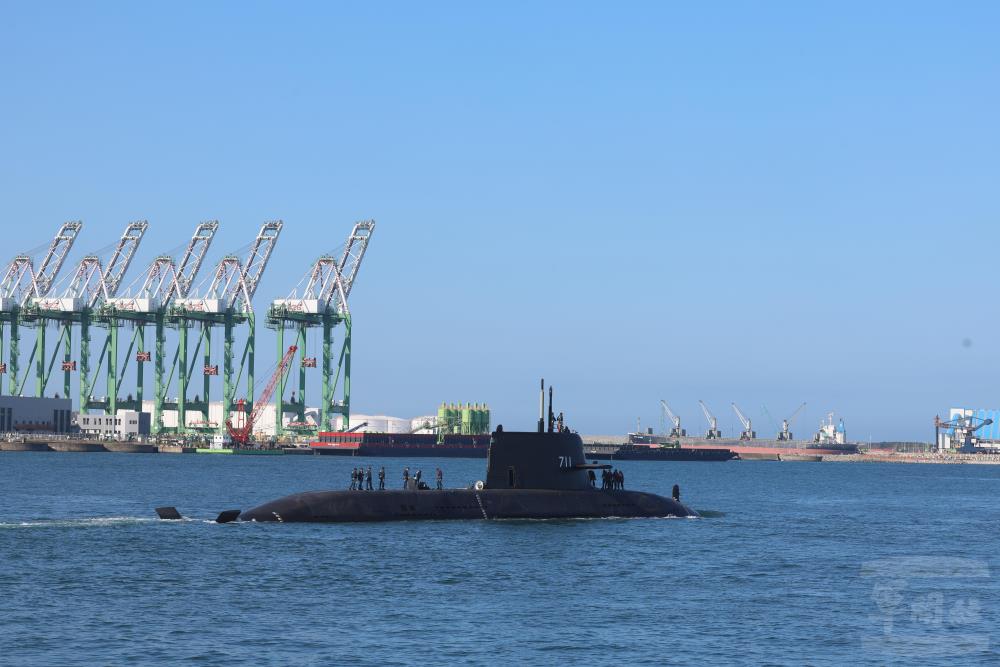 Hai Kun Submarine Completes Torpedo Exercise Firing Validates Underwater Combat System EffectivenessThe prototype indigenous submarine Hai Kun (SS-711), built by CSBC Corporation, Taiwan, completed a torpedo exercise firing during sea trials yesterday (April 6). The test successfully validated the combat system’s capabilities in detection, calculation, launching, and torpedo guidance, demonstrating the results of indigenous submarine construction and system integration. The CSBC Corporation stated that it would continue to work with the Navy, under the premises of “safety” and “quality,” to execute various equipment calibration and docking preparation tasks, thoroughly carry out testing and verification at each stage, and prepare for subsequent sea trials.2026/05/13
 -
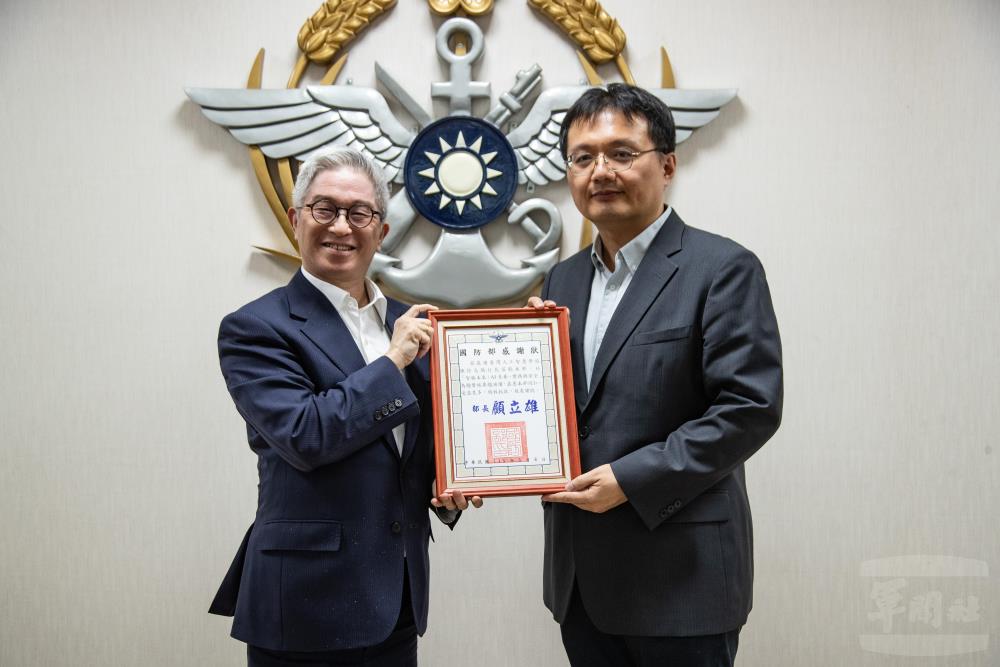 Ministry of National Defense Holds AI Development Concept Seminar – Accelerates Digital Transformation to Build a Modernized MilitaryThe Ministry of National Defense held the “Artificial Intelligence Governance Committee Special Lecture and ROC Armed Forces AI Development Concept Seminar” yesterday (April 8) at the Bo’ai Camp. Vice Minister for Policy Hsu Szu-chien presided over the event and invited National Security Council Advisor Li Yu-chieh to provide guidance. Participants included members of the Ministry’s Artificial Intelligence Governance Committee (unit heads), commands of the three services, the National Defense University, and the National Chung-Shan Institute of Science and Technology. The goal was to draw on practical experience from industry and academia to enhance the AI literacy of the ROC Armed Forces and lay a foundation for promoting AI development in national defense. In his remarks, Vice Minister Hsu stated that lectures only provided inspiration, while implementation was the key. He encouraged commanders at all levels to shift from passive to active approaches and actively apply diverse AI technologies. The Ministry of National Defense fully supported each unit in advancing their projects, hoping that through AI technology, administrative operational efficiency could be effectively improved and new momentum could be injected into the modernization of the ROC Armed Forces. The special lecture invited Dr. Chen Ling-Jyh, Director of the Department of Information Technology Services, Academia Sinica and Chief Executive Officer of the Taiwan AI Academy, to speak on the topic “Winning the Future: AI Literacy, Practice, and Security.” He explained the evolution of AI development from “perception” to “physical embodiment” and shared Academia Sinica’s practical experience, including how they built a “Large Language Model (LLM)” under strict cybersecurity controls, and how they developed speech recognition transcription systems, question-and-answer robots, and document verification tools to effectively resolve pain points in public administration and simplify operational processes. Regarding military applications, Dr. Chen specifically proposed the “Nine Reminders for Promoting Defense AI,” which covered core concepts such as infrastructure resilience and human-machine collaboration. He also explained the risks and challenges of introducing AI, reminding all units to establish mechanisms for verifying the authenticity of information and to strictly prevent the leakage of sensitive data. At the same time, he emphasized that introducing AI technology was an urgent and important task. Only by accelerating the implementation and application of the technology could the digital transformation of the ROC Armed Forces be effectively strengthened. The Ministry of National Defense stated that the AI Project Office’s organization of this special lecture and comprehensive seminar helped integrate common needs across units and initiated the process of advancing the ROC Armed Forces toward digital development.2026/05/09
 -
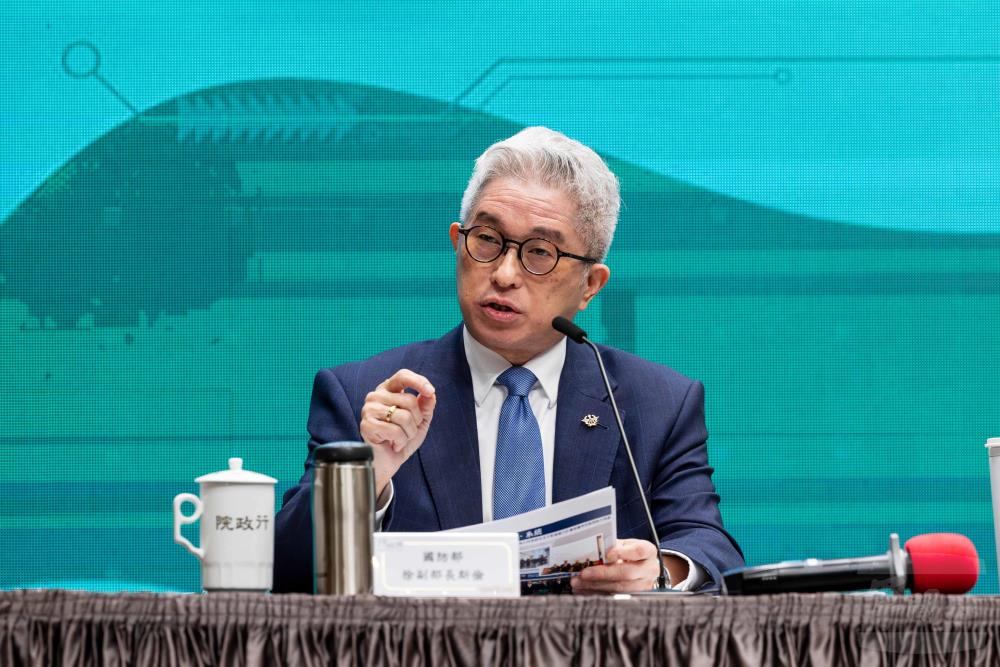 Vice Minister Hsu: Special Defense Act Features Comprehensive Planning – Various Capabilities Are Interdependent and Cannot Be Arbitrarily ReducedVice Minister for Policy Hsu Szu-Chien stated today that the “Special Act on Procurement for Strengthening Defense Resilience and Asymmetric Warfare Capabilities” was proposed in response to enemy threats and joint operations requirements. The overall planning covered capability construction in strike, intelligence surveillance reconnaissance, command and control, unmanned systems, and sustained combat capabilities. These various capabilities were interdependent and could not be arbitrarily reduced or postponed. He hoped that all political parties would jointly support national defense buildup and the enhancement of defense resilience. The Executive Yuan held a press conference after its meeting this morning, during which Vice Minister Hsu explained issues related to the special defense act. Vice Minister Hsu pointed out that this special budget adopted a one-time, large-scale investment approach. In addition to accelerating combat power acquisition, it could also provide long-term stable demand for domestic industries and drive the development of unmanned systems and the national defense industry. If the budget were changed to annual allocations, it would affect the military buildup timeline and the effectiveness of equipment integration. Regarding military procurement progress, Vice Minister Hsu stated that the relevant military procurement cases had all completed preliminary coordination with the U.S. side and obtained formal letters of supply assurance. The Ministry of National Defense would continue to maintain close communication and coordination with the U.S. side to ensure smooth advancement of all procurement cases. In addition, Vice Minister Hsu emphasized that promoting large-scale and long-term procurement of unmanned systems and related equipment through the special budget would not only help rapidly enhance combat power but also assist domestic manufacturers in investing in research and development and production capacity building, thereby strengthening defense self-reliance and supply chain resilience.2026/05/08