- Search
Search
Search " Medical Affairs Bureau" ,Match:6 results
-
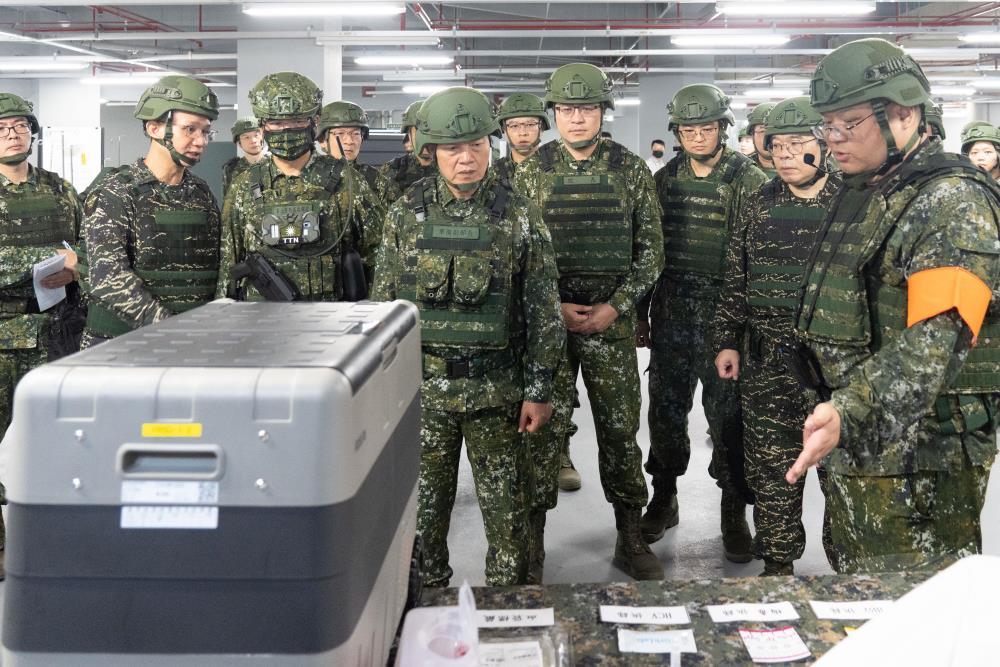 Vice Minister Chung Inspects Mass-Casualty Response Exercise, Validating Wartime Medical ResilienceAs the field training phase ofHan Kuang 42 Exercise continued, Vice Minister of National Defense General Chung Shu-ming visited the Taoyuan Armed Forces General Hospital today to inspect a “mass-casualty response exercise.” He was accompanied by Third Theater of Operations Commander Lieutenant General Lien Chih-wei, Director of the Army Logistics Command’s Medical Affairs Division Major General Wu Yu-chuan, Acting Deputy Director-General of the Medical Affairs Bureau Colonel Chen, and other officials. Conducted as part of the exercise phase focusing on defense in depth and protracted operations, the scenario simulated the 584th Brigade suffering a large number of casualties during an engagement with enemy forces. After receiving Role 1 and Role 2 medical care and being processed through a casualty evacuation control point, the casualties were evacuated in sequence to the Taoyuan Armed Forces General Hospital. Upon receiving notification, the hospital immediately activated its emergency response mechanisms and converted its underground space into an alternate medical treatment facility. During the inspection, Vice Minister Chung reviewed the establishment and operation of the underground medical facility, inter-unit communications mechanisms, procedures for requesting road access for casualty evacuation, use of the “Field Smart Medical Information System,” backup power, and the self-sustaining blood product supply capability. Vice Minister Chung also reviewed wartime blood product resupply and transportation mechanisms. He reminded relevant units to plan carefully for potential wartime contingencies to ensure that blood products can reach points of care promptly and meet the treatment needs arising from mass-casualty incidents. Vice Minister Chung also provided guidance on the overall planning of uninterruptible power supplies, emergency generators, and the electricity required for medical equipment. These measures are intended to ensure that critical medical facilities and treatment operations can continue functioning if the external power supply is disrupted. In addition, Vice Minister Chung commended the use of the “Field Smart Medical Information System.” He expressed hope that the system would provide real-time information on casualty movements, patient intake at medical stations, and the medical needs of military units, thereby improving information integration and the efficiency of resource allocation. He also instructed the theater commander to coordinate closely with the medical and logistics systems, assess wartime medical requirements, and establish a comprehensive support mechanism.2026/08/13
 -
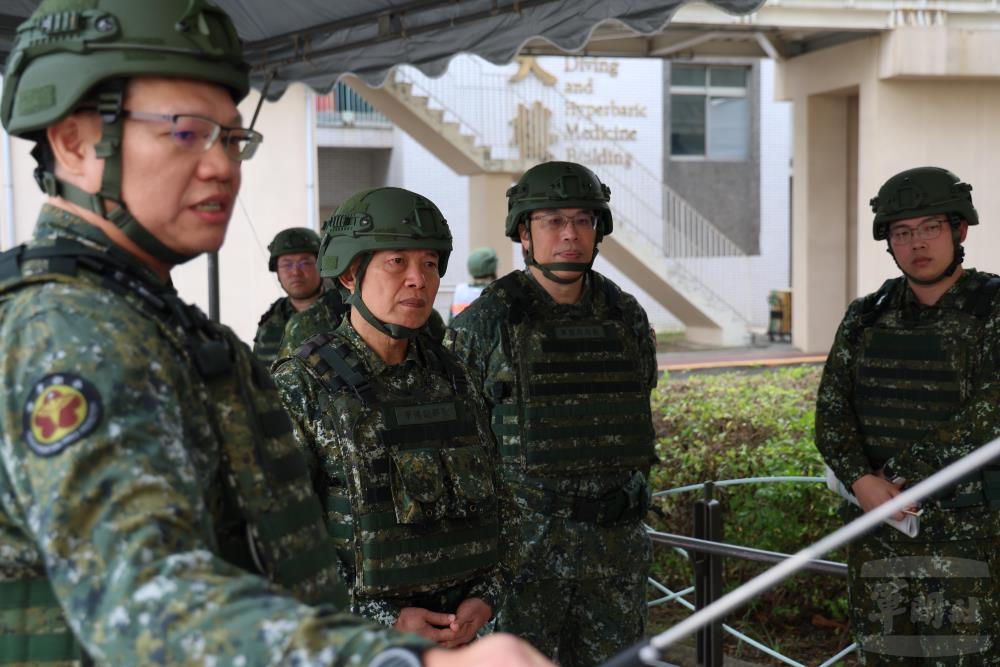 Vice Minister Chung Inspects Military, Public, and Private Medical Integration Exercise, Validating Wartime Medical Response CapacityOn the third day of the field-training phase of the Han Kuang 42 Exercise, Vice Minister of National Defense General Chung Shu-ming visited the Fourth Theater of Operations today to inspect a “military, public, and private medical integration” exercise involving casualty evacuation and the relocation of medical capacity. The exercise validated the large-scale relocation and preservation of medical capacity at Armed Forces hospitals, the transfer of existing patients to lower-acuity facilities, and coordination mechanisms with external organizations. Participating units completed all exercise scenarios, demonstrating their ability to integrate medical resources and relocate medical supplies. Accompanied by Director-General of the Medical Affairs Bureau Lieutenant General Chen Yuan-hao and E-Da Hospital Superintendent Tu Yuan-kun, Vice Minister Chung visited the Zuoying Armed Forces General Hospital, Gangshan Veterans Home, Yanchao Emergency Aid Station, and E-Da Hospital. He inspected drills covering casualty evacuation, the relocation of medical supplies, the placement and care of wounded service members, and the transfer of civilian patients to appropriate facilities. In response to the exercise scenarios, participating units completed casualty triage, coordination with receiving and transferring units, applications for traffic priority along evacuation routes, interagency command-and-control communications, the dispatch of evacuation vehicles including mobilized transportation assets, the deployment of personnel including military support teams, and inventories of medical supplies and daily necessities. Through interagency coordination and cooperation, the exercise validated the wartime medical system’s operating mechanisms and emergency response capabilities. During the exercise, the Armed Forces medical system worked closely with local health authorities, veterans care institutions, and private medical facilities. Information sharing, ambulance dispatch, and tiered medical care mechanisms enabled casualties to be rapidly sorted, evacuated, and transferred to suitable medical institutions or accommodation facilities according to their condition. These measures help ensure continuity of care and preserve medical treatment capacity during wartime and disasters. Vice Minister Chung said the military, public, and private medical integration exercise was conducted in conjunction with the field-training phase of the “Han Kuang 42 Exercise.” Coordinated by the Ministry’s Medical Affairs Bureau, it brought together Armed Forces hospitals, private medical institutions, local health centers, and veterans homes to validate civil-military medical coordination mechanisms and response capacity under realistic conditions. The exercise not only demonstrated the progress achieved in integrating military, public, and private medical systems, but also identified a number of areas for improvement. Vice Minister Chung expressed hope that continued exercises would build experience, refine existing mechanisms, and comprehensively strengthen wartime medical support and whole-of-society defense resilience.2026/08/07
 -
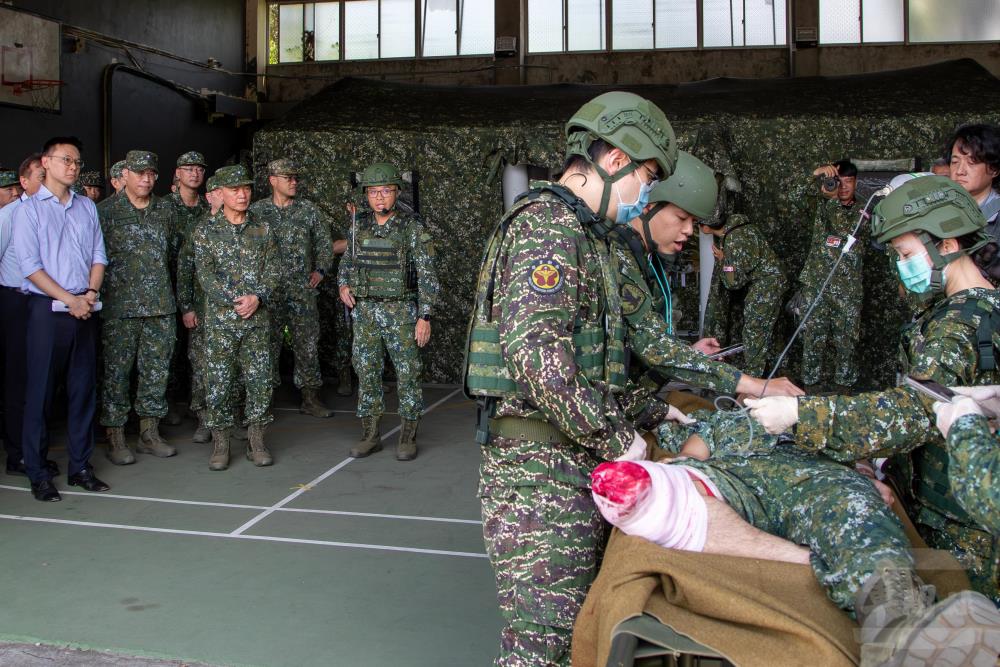 Vice Minister Chung Inspects Fifth Theater of Operations Integrated Medical Exercise, Validating Wartime Medical ResilienceVice Minister of National Defense General Chung Shu-ming today inspected the Armed Forces’ 2026 Fifth Theater of Operations “Military, Public, and Private Medical Integration” Exercise. Designed around realistic combat scenarios, the exercise tested the theater’s medical response capabilities under threat conditions. Participants responded calmly in accordance with standard operating procedures, fully demonstrating the resilience of the integrated medical system. Accompanied by National Security Council Deputy Secretary-General Lin Fei-fan, Vice Chief of Army Lieutenant General Chang Tai-sung, Fifth Theater of Operations Commander Lieutenant General Shao Chih-chun, and Medical Affairs Bureau Director-General Lieutenant General Chen Yuan-hao, Vice Minister Chung visited Taichung Tianhou Temple, the Central Region Resources Branch of the Water Resources Agency, Asia University Hospital, and Taichung Armed Forces General Hospital this morning to observe the exercise. The exercise covered combat casualty care; medical operations at casualty collection points and battalion aid stations; operations at casualty evacuation control points and by forward surgical teams; the delivery of blood products and medical supplies by drone; mass-casualty response; the establishment of underground treatment facilities and walking blood bank operations for the immediate use of freshly donated blood; and the admission and treatment of patients at veterans homes. These activities tested the medical integration mechanism across military, public, and private institutions, as well as the effectiveness of medical support operations. Vice Minister Chung thanked the Taichung City Government, Taiwan Blood Services Foundation, Quanta Computer, and other private-sector participants for contributing to the exercise, which showcased the results of cross-sector cooperation among the military, government, and private sector. Guided by the principle that “even if there is no war for a century, combat readiness cannot be neglected for a single day,” the Armed Forces will continue integrating the capabilities of central and local government agencies and the private sector to strengthen societal and medical resilience and ensure comprehensive wartime preparedness. Vice Minister Chung noted that an integrated military, public, and private medical system must be planned comprehensively in line with each theater’s overall operational concept, assessed threats, and national resilience requirements. Medical resources from the Armed Forces, the Ministry of Health and Welfare, and local providers must be integrated and appropriately allocated according to the different phases of operations and mission requirements. Civilian expertise in smart healthcare, blood supply, and drone logistics should also continue to be incorporated to enhance wartime medical support and overall medical resilience. Chung explained that the exercise not only tested medical support procedures and interagency coordination, but also provided an important opportunity to determine whether medical resources had been allocated according to actual needs. Its results will be systematically compiled through observation, analysis, and after-action reviews (AARs) to inform further improvements in training and preparedness. He further emphasized that the lessons learned should be used to develop standard operating procedures shared by military and civilian medical systems, giving every theater of operations a consistent framework to follow. Medical integration and support capabilities must continue to be refined, while exercise experience should be institutionalized. This will ensure that medical resources from all sectors can be rapidly integrated during wartime, maximize the effectiveness of medical rescue efforts, and strengthen overall emergency response capabilities.2026/07/22
 -
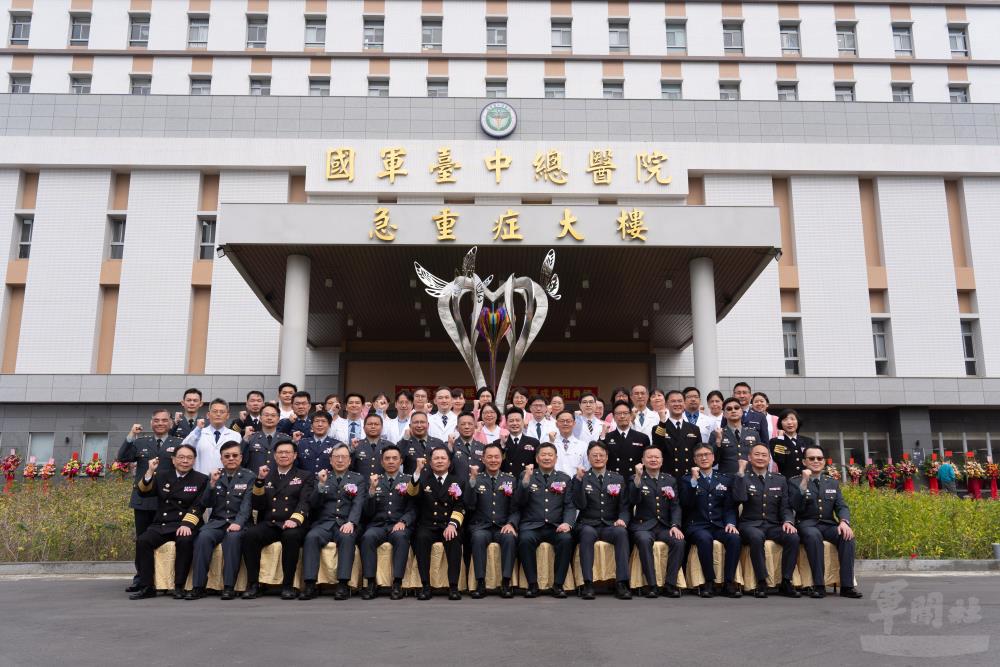
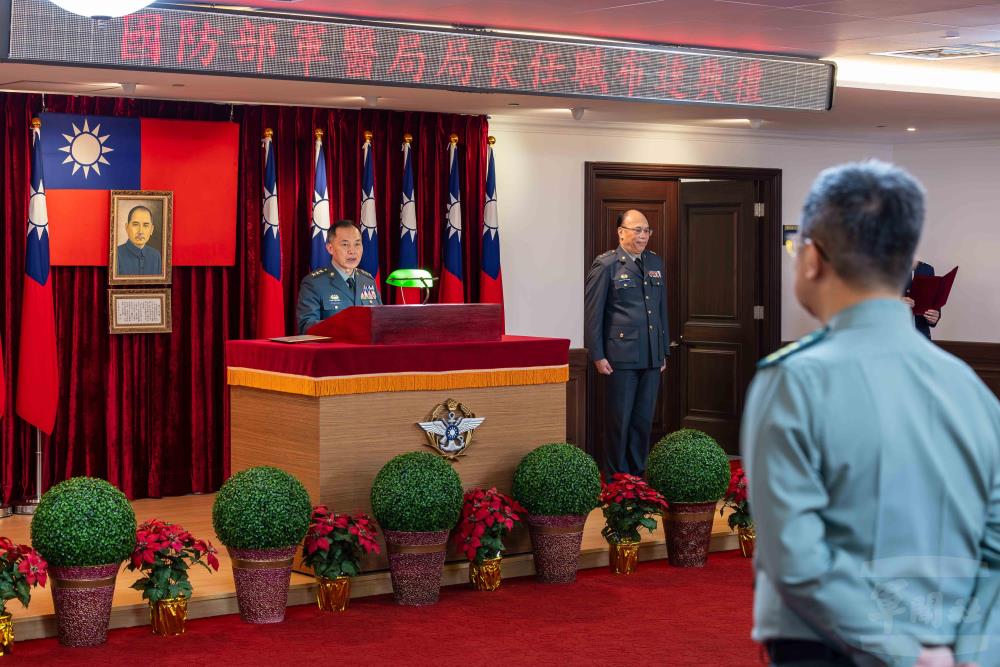 Vice Minister Chung Presides over Medical Affairs Bureau Director-General Assumption of Office Ceremony, Encourages Strengthening of Medical ResilienceVice Minister for Armaments Chung Shu-ming presided over the assumption of office ceremony for the Director-General of the Medical Affairs Bureau today. He encouraged the Medical Affairs Bureau, under the leadership of its new Director-General, Lieutenant General Chen Yuan-hao, to continue advancing four key priorities: strengthening medical resilience, enhancing healthcare quality, sustaining research and innovation, and expanding international exchanges. Through these efforts, he expressed hope that the Bureau would further improve the quality of military healthcare services and medical support operations. The assumption of office ceremony for the Director-General of the Medical Affairs Bureau was held this morning at Bo’ai Camp. During the ceremony, Vice Minister Chung first read the appointment order, after which Lieutenant General Chen took the oath of office and formally assumed his new position. Vice Minister Chung stated that Director-General Chen graduated from the National Defense Medical Center, Class of 1994, and earned a Doctor of Medical Science degree. Throughout his career, he served in several key positions, including Director of the Health Protection Division of the Medical Affairs Bureau, Superintendent of the Songshan Branch of Tri-Service General Hospital, President of the National Defense Medical Center, and Superintendent of Tri-Service General Hospital. Having previously served as Deputy Director-General of the Medical Affairs Bureau, Director Chen was promoted to Director-General and concurrently advanced to the rank of Lieutenant General. Vice Minister Chung noted that Director-General Chen’s extensive professional expertise and leadership experience would enable him to build upon the Bureau’s solid foundation and continue enhancing the quality of military healthcare services and medical professionalism. Vice Minister Chung pointed out that President Lai Ching-te recently presided over the inauguration ceremony of the Emergency and Critical Care Building at the Taoyuan Armed Forces General Hospital and affirmed the Ministry of National Defense’s commitment to safeguarding the health of service members and their dependents. He also noted that the transformation of the National Defense Medical Center into National Defense Medical University demonstrated the military medical system’s significant achievements in talent cultivation, medical education, and military medicine development. Vice Minister Chung emphasized that healthcare and medical support services constituted an essential component of the Armed Forces’ overall logistics system. From disaster response exercises and environmental sanitation maintenance within military units to battlefield triage, casualty treatment, and field medical support operations, all relied on the close cooperation of military medical personnel and medical units. He further noted that medical professionals serving in military hospitals and units at all levels provided daily healthcare and wellness support to service members, making important contributions to sustaining morale and maintaining combat readiness. Finally, Vice Minister Chung encouraged military medical personnel to continue upholding the spirit of serving service members and safeguarding the medical rights and interests of their dependents. He urged them to continuously improve the quality of healthcare services, keep pace with future developments in military medicine, integrate military operational requirements with civilian medical resources, and strengthen military medical technologies and capabilities. Through these efforts, he said, the military medical community would continue providing strong support for the Armed Forces’ combat readiness missions and achieve even greater success in the future.2026/06/01
 -
 Ministry of National Defense: Vice Minister General Chung Shu-ming Presides over Inauguration of Taichung Armed Forces General Hospital New Medical Building, Commends Outstanding Contributions of Military Medical PersonnelOn presiding over the inauguration ceremony of the “New Medical Building” at the Taichung Armed Forces General Hospital today, Vice Minister of National Defense General Chung Shu-ming emphasized that the completion of this building symbolized an overall upgrade in medical services in Taiping area, enabling local residents and service members to enjoy the highest quality and most comprehensive medical care at the Taichung Armed Forces General Hospital. Vice Minister Chung, accompanied by Navy Administrative Deputy Minister of Vice Admiral Huang Yu-min, Medical Affairs Bureau Director-General Lieutenant General Tsai Chien-sung, presided over the building inauguration ceremony this morning. After receiving a briefing, Vice Minister Chung offered guidance on enhancing medical capacity. Vice Minister Chung pointed out that “holistic patient care” as its core principle, the new Medical Building fully incorporated smart green building to optimize medical workflows and operational spaces. The hospital featured modular operating rooms and intelligent nursing stations equipped with digital electronic whiteboards, smart bedside cards, and bedside service systems, creating a safe and efficient medical environment. Since 2016, the Ministry of National Defense has promoted the “Soaring Medicine Project,” and the results are now evident. The completion of this new building represents an important milestone in the military medical system’s modernization and smart healthcare transformation. During the inspection of the new building, Vice Minister Chung interacted cordially with military medical personnel and specially encouraged them with the mottos “history, responsibility, mission,” urging them to inherit the excellent tradition, shoulder the responsibility of caring for comrades, and take safeguarding public health as their highest mission. Vice Minister Chung reminded military medical cadres, “Military medical personnel should treat patients as family,” whenever service members suffer major injuries or illnesses, the entire military feels deep sorrow, and therefore he expects the military medical system to play a pivotal role in providing the most timely and professional medical assistance. In addition, during his remarks at the ceremony, Vice Minister Chung praised Lieutenant General Tsai Chien-sung, Director-General of the Medical Affairs Bureau, who was to retire with honor on February 1. Vice Minister Chung referred to Director-General Tsai as his “good classmate” and stated that during his more than three years as Director-General, he led sustained improvements in the military medical system, achieving a balance between “field military medicine in combat theater command” and “civilian medical care” in both peacetime and wartime, making indispensable contributions to military medicine. Vice Minister Chung invited all attending guests to give Director-General Tsai a warm round of applause on the spot, publicly commending his noble spirit of dedication to medical practice. Vice Minister Chung retraced Director-General Tsai’s tenure, during which he not only promoted the transformation of the National Defense Medical Center into National Defense Medical University, established forward surgical teams, and deepened exchanges with the U.S. Indo-Pacific Command for talent cultivation, but also, with a spirit of “selflessness and dedication,” let the world see Taiwan’s medical technology. He encouraged all personnel to inherit this spirit and jointly build resilient, high-quality medical capabilities.2026/01/30
 -
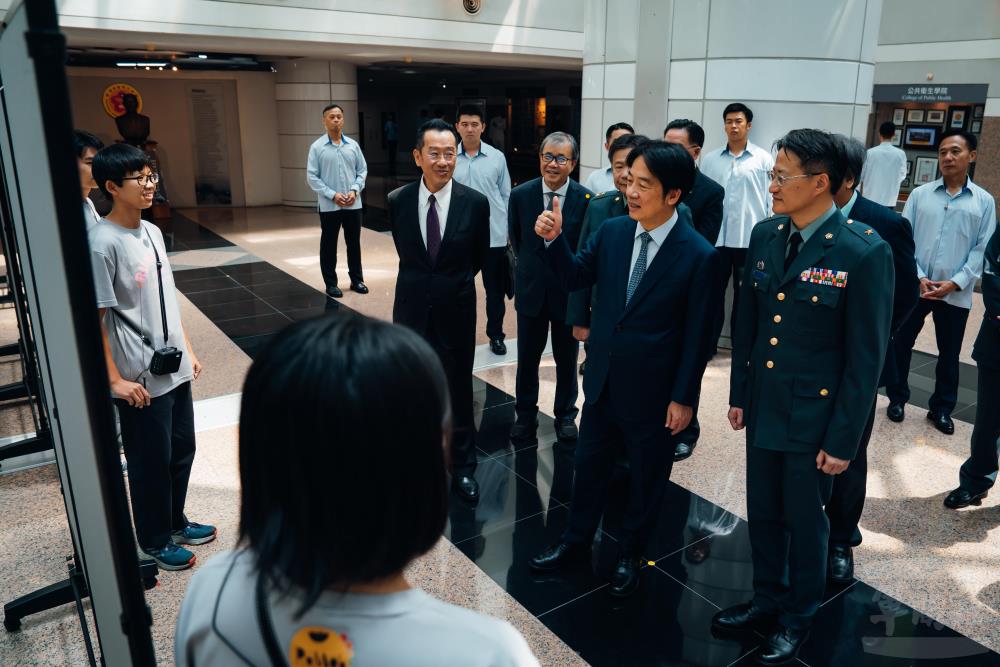 President Presides over Inauguration of National Defense Medical University – Expects Continued Enhancement of Medical and Health Capabilities to Serve the NationPresident Lai Ching-te this morning presided over the “Inauguration Ceremony of the National Defense Medical University,” commending the decades-long profound contributions of the National Defense Medical Center to the development of military medicine and offering three expectations for the newly elevated National Defense Medical University: 1. Cultivate medical students with global vision, humanistic literacy and the school motto of “universal love and loyalty” 2. Continuously advance Taiwan’s public health research and infectious disease prevention capabilities to contribute to the nation 3. Continuously improve field military medicine drawing on the combat casualty care experience of the United States and other countries to enhance ROC Armed Forces combat effectiveness and strengthen overall societal defense resilience The ceremony was held this morning at National Defense Medical University. President Lai joined distinguished guests in unveiling the plaque for “National Defense Medical University,” inspected the Combat Trauma and Disaster Medical Training Center and the Medical Technology Education Center, and received briefings on service activities from international volunteer teams from Nepal, Indonesia, Cambodia, Mongolia, India, and Malaysia, gaining insight into combat casualty care training missions and the application of medical technology courses and teaching methods. In his address, President Lai stated that the National Defense Medical Center was officially upgraded to “National Defense Medical University” on August 1, 2025. After decades of effort by the National Defense Medical Center, its achievements have greatly benefited the nation, society, and the people, earning widespread recognition. The elevation to university status today further demonstrates the nation’s strong support for military medicine development. He felt honored to personally preside over the inauguration ceremony, witnessing this historic moment together, and on behalf of the people extended congratulations, wishing the university continued prosperity. He believes the university will shoulder even greater missions in the future, continuing to serve the nation, society, and the people. During the event, President Lai commended the contributions of all physicians from the former National Defense Medical Center to society, noting that residents of Jinshan, Wanli, and Keelung areas often choose Tri-Service General Hospital for serious illnesses, demonstrating that its primary care services are deeply trusted. Furthermore, National Defense Medical University is the only higher education institution in the nation that combines military missions with medical education—a cradle for cultivating dual-mission heroes. As a president from the medical profession and Commander-in-Chief of the Armed Forces, he will shoulder the responsibility to support the university’s development without reservation. He also looks forward to Major General Lin Chih-yuan, President of National Defense Medical University, building on the solid foundation laid by previous presidents to elevate contributions even further. President Lai encouraged National Defense Medical University to continue refining its efforts in cultivating medical students with global vision, humanistic literacy, and the school motto of “universal love and loyalty” while deepening community service. Military hospitals, including Tri-Service General Hospital, were not established solely to serve the armed forces; in peacetime they also care for public health. He hopes they will continue to improve and expand in the future. President Lai pointed out that National Defense Medical University is the only institution in the nation equipped with a Biosafety Level 4 laboratory—a rare asset. He noted that global infectious diseases emerge roughly once every one or two decades, varying in scale, such as SARS in 2002 or COVID-19 in 2019, all of which posed threats to Taiwan as well. He hopes the university will make good use of this resource to continuously advance Taiwan’s public health research and infectious disease prevention capabilities, contributing to the nation. President Lai further stated that what distinguishes National Defense Medical University from ordinary medical universities is its expertise in field military medicine and combat casualty care training. Continuous improvement in these areas will greatly benefit ROC Armed Forces combat effectiveness and even overall societal defense resilience. Taiwan should continue to advance field military medicine, learn from the combat casualty care experience of the United States and other countries through international cooperation, and utilize AI, AR, and VR as learning tools. Finally, President Lai once again encouraged National Defense Medical University, following its elevation, to continue advancing in three major areas: medical services, infectious disease prevention and control, and field military medicine and combat casualty care training, extending these efforts nationwide. He believes this will greatly benefit the nation. Attendees included Presidential Office Senior Advisers Tong Yong and Shen Rong-tsong, Strategic Adviser Huo Shou-yeh, National Security Council Secretary-General Joseph Wu, Minister of National Defense Koo Li-hsiung, Minister of Education Cheng Ying-yao, Minister of Health and Welfare Chiu Tai-yuan, Veterans Affairs Council Chairman Yen Te-fa, Director-General of the Medical Affairs Bureau Major General Tsai Chien-sung, and President of National Defense Medical University Major General Lin Chih-yuan.2025/08/19